This new favorite hanging basket plant is prettier than pothos and even easier to grow than spider plant
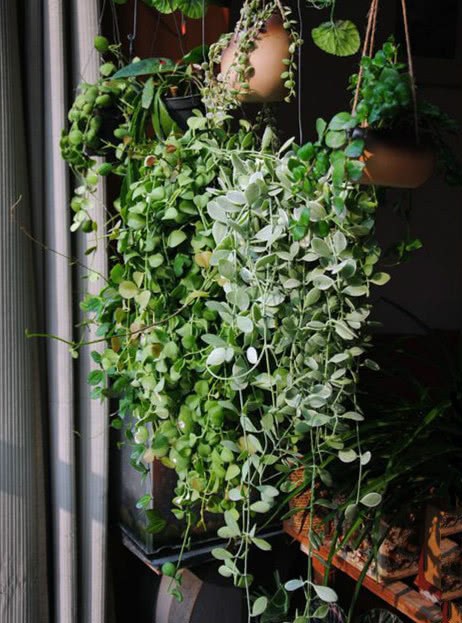
Trailing plants have gained a new favorite: they out-cute spider plants and form cascades more easily than pothos - these are the ones.
Button String of Beads
Button String of Beads, scientific name Dischidia nummularia. The leaves are silvery green, thick and succulent, growing in opposite pairs, small and adorable, with a leaf shape resembling a "button." In spring it produces yellow-white flowers, though the blooms are tiny and less eye-catching than the plump round leaves.
In its native environment, Button String of Beads climbs on tree trunks, so it needs a growing medium with good drainage and aeration. In addition, Button String of Beads has extremely strong drought tolerance, as its plump round leaves store ample moisture, so the medium must not stay wet for long periods. Especially during hot summer weather, overwatering increases humidity, and high humidity can easily cause root and stem rot, so it is best to follow the principle of watering thoroughly only after the soil has dried out.
Million Hearts
The entire Million Hearts plant is light green, with tiny little leaves densely attached to the stems, cascading down like a waterfall. The heart-shaped leaves grow in opposite pairs along long vines, and with sufficient light they even develop yellow or pink gradients, which is a wonderful surprise. Each summer, several small white flowers emerge between the leaves, giving a fresh and delicate look.
To make Million Hearts grow lush and full, getting the light right is very important. Million Hearts is a shade-tolerant plant, so follow the principle of weaker light rather than strong light. It is best to use partial sun, or place it under a shaded eaves. Especially in summer, avoid direct sun exposure, otherwise it can easily get sunburned.
Diamond Jade Spider Plant
Diamond Jade is a fancy, high-end commercial name given by sellers; its scientific name is white-veined peperomia, and it is a relative of the baby rubber plant. Leaf veins have silvery white patterns crisscrossing, and the stems are red. It blooms twice a year, from February to April and from September to October. The flowers of Diamond Jade are also the typical spike inflorescences of the pepper family; the flower shape does not look like a flower. From the middle of the leaves extend little sticks, easily mistaken for new buds, but that is not the case. On closer observation, you will find that the spike inflorescences are densely covered with tiny flowers, light green with fine pollen on them.
Do not be fooled by the fancy name - it is merely a cultivar name given by sellers. Diamond Jade is actually quite easy to care for and suits rough, low-maintenance management. It likes a sunny, cool and dry growing environment, is not cold-tolerant, and is drought-tolerant. Give it appropriate light and protect it from freezing, and it will keep growing well.
String of Hearts
String of Hearts has gray net-like patterns on the leaf surface, and the undersides of the leaves are purplish red. It can creep along the ground and can also be hung as a trailing pot plant. The most important thing is that it is easy to grow; normally it needs little care, and as long as you are not an over-enthusiastic waterer, it is hard to kill. String of Hearts has strong drought tolerance and fairly strong adaptability to the environment. Also, do not expose it to direct sun; it will easily grow heart after heart into a trailing cascade.
Another interesting thing is that from time to time a few "little potatoes" sprout from the leaf axils. These are round tubers called bulbils, which store nutrients and water and serve for propagation. If you cut them off and bury them in soil, new stems and leaves will soon grow. In spring and summer, mature plants also produce small reddish-brown, urn-shaped white flowers, and after flowering they form horn-shaped fruits.
Welcome to follow Plant Fanatic. Only when flowers and plants look beautiful and are grown for a long time do you develop feelings for them!