Orychophragmus violaceus symbolizes modesty, plainness, and a spirit of selfless dedication.
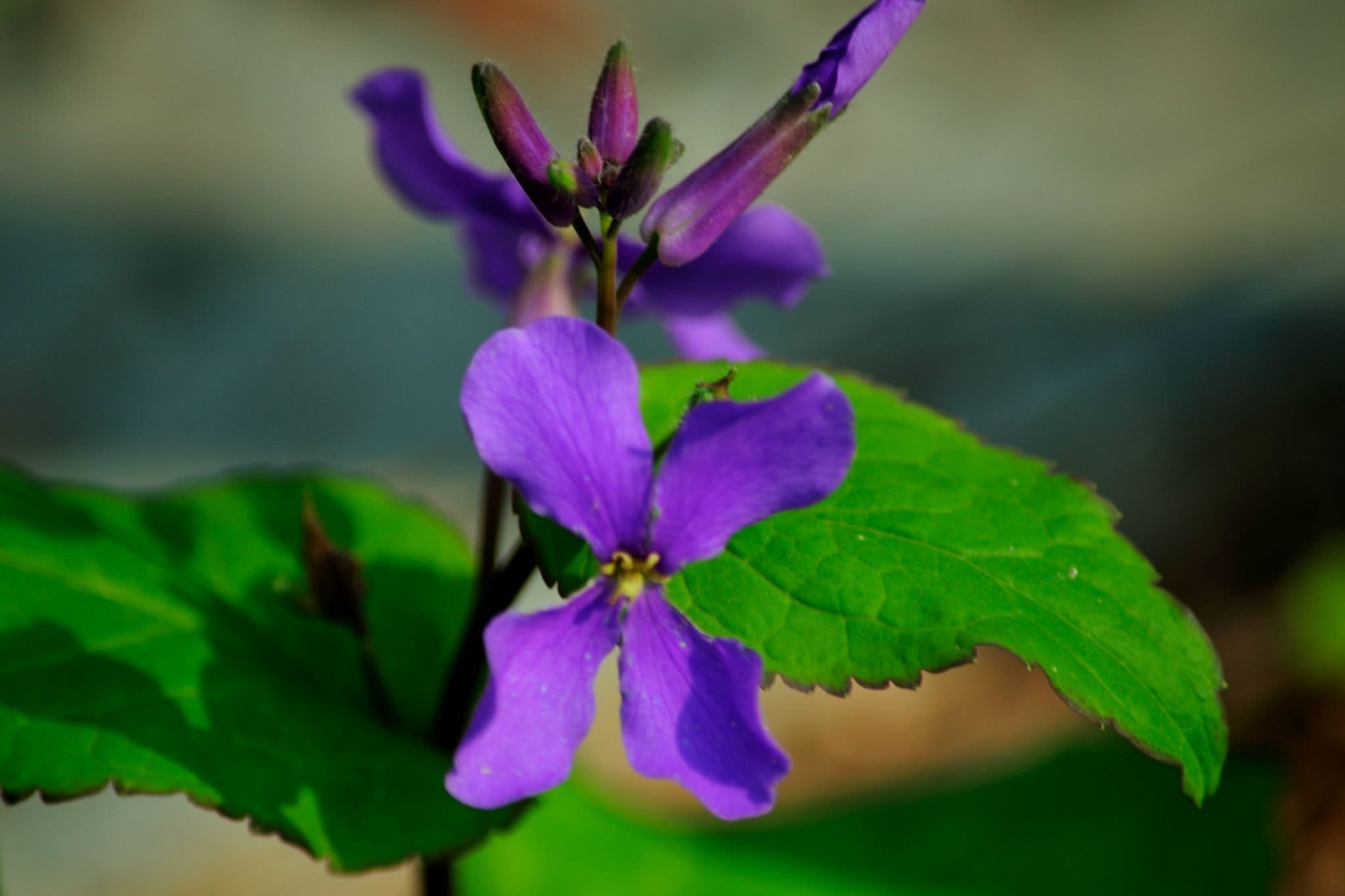
Orychophragmus violaceus belongs to the genus Orychophragmus in the Brassicaceae family and is an annual or biennial herbaceous plant. Because it begins to bloom with blue-purple flowers around the second lunar month, it is also called February Blue. It grows in plains, mountains, roadsides, and field edges. It has low requirements for soil, light, and other conditions, is cold- and drought-tolerant, and has tenacious vitality.
Orychophragmus violaceus
Growth characteristics:
Strong cold tolerance. It is also relatively shade-tolerant, and when used as ground cover it has a good covering effect, with lush green leaves forming a sheet of verdant color. It has strong adaptability. It can grow from Northeast China and North China all the way to East China and Central China. In winter, if there are heavy frosts and snow, some leaves may still be damaged by freezing, but in early spring it can still sprout new leaves, bloom, and set seed as usual. It is not strict about soil requirements.
The purple flowers open successively from bottom to top, blooming continuously from February to May or June, especially when planted in masses, when they look like a sea of blue-purple. If planted beside rivers or on seawalls, green leaves, a sea of flowers, seawater, and blue sky interweave, creating a spectacular sight.
Orychophragmus violaceus has a strong ability to self-propagate, and once sown it can form its own community year after year. After the seeds mature each year from May to June, they fall into the soil on their own, green seedlings emerge in September, the young seedlings overwinter, bloom in late spring, set seed in summer, and continue year after year. Because the seed source is abundant and the price is cheap, with sowing costing only a few jiao per sq m, it is used by many landscaping projects, parks, and tourist attractions.
Orychophragmus violaceus
Ornamental value:
The life cycle of February Blue plants runs from September each year to June of the following year, and even in cold winters they can still remain green rather than withering, providing relatively good ground cover. In the Beijing area, it generally blooms from late March to May, and some flowering periods can extend into summer. The flowering area of one population can last more than two months, and the best ornamental effect can last as long as one month. February Blue is a rare ground cover plant in northern China for viewing flowers in early spring and greenery in winter, so it is deeply loved by people and was once nominated as a candidate flower for the city flower of Shanghai, China, but there are few examples of its use as a landscape feature in gardens, and it still mainly occurs in the wild state.
Landscape uses:
It can be used for lawns and ground cover because Orychophragmus violaceus has lush green leaves in winter, soft and pleasing spring flowers, and blooms in sheets in early spring with a long flowering period. It is suitable for large-area ground cover, or as a background plant for green spaces that do not require intensive management. It is a good ground cover plant for shady garden areas or under trees, and can also be cultivated in flower borders. It can also be planted on slopes, along both sides of roads, and similar sites.
Orychophragmus violaceus
Nutritional value:
As a common wild vegetable in early spring, the young stems and leaves of Orychophragmus violaceus have a relatively large growth volume and are rich in nutrients. According to measurements, every 100 grams of the fresh product contains 3.32 mg of carotene, 0.16 mg of vitamin B2, and 59 mg of vitamin C. The seeds have an oil content of more than 50%, and especially a relatively high proportion of linoleic acid, making it a very good oilseed plant.
Culture:
Orychophragmus violaceus is one of the most common wildflowers in early spring in northern China, so the plain Orychophragmus violaceus often appears in literary works with the stance of a grassroots class. Among literary works featuring Orychophragmus violaceus as the main subject, the most famous is surely the prose "February Orchid" written by Ji Xianlin.
There is a lesson text titled "What the Flowers Say," a fairy tale by Zong Pu. Using flowers as a medium, this article focuses on praising the modest, plain, and selflessly dedicated spirit of February Blue.