The flower language of the aster is missing someone far away
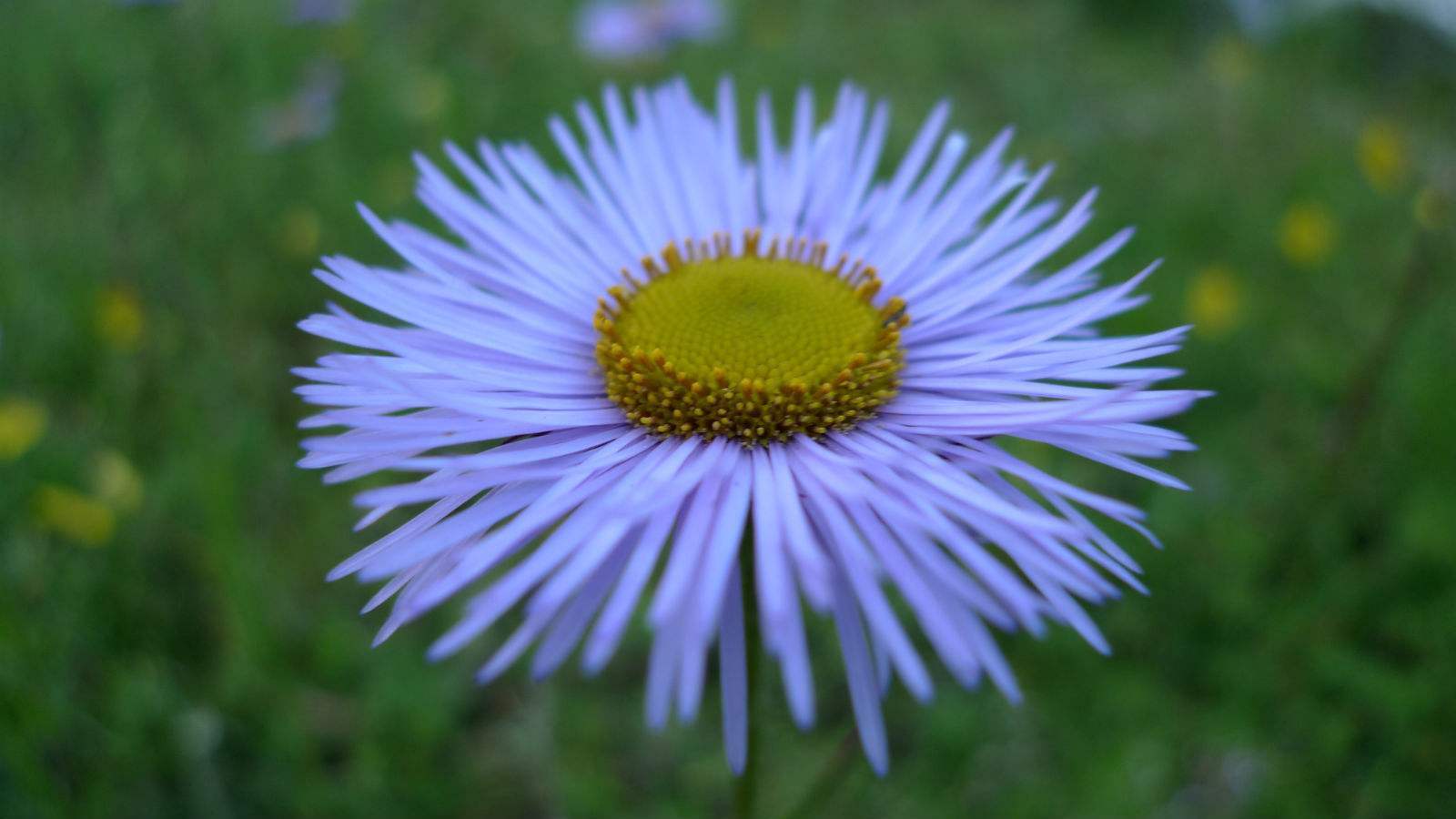
The aster has sparse purple petals, and its place of origin is in the region of China, the Korean Peninsula and Japan. In Japan it is called "Jugoyagusa" and is a perennial herbaceous plant that can grow even in shady places and is very easy to cultivate. It also has the alias "Yeqianniu", is light purple, and the whole plant is more than one meter tall. The stems and leaves are very rough and harsh, and if touched by the hands or feet, they cause a stinging, itchy sensation, so it belongs to the wild chrysanthemum category. According to traditional Chinese medicine theory, the lung meridian governs the respiratory, nasal, large intestine and skin areas.
Aster
Morphological characteristics:
Perennial herb, rhizome oblique and ascending. Stem erect, 40-50 cm tall, stout, with fibrous withered leaf remnants and often adventitious roots at the base, angular and grooved, sparsely hirsute, with sparsely borne leaves. Basal leaves withered and fallen at flowering time, oblong or elliptic-spatulate, gradually narrowed in the lower half into a long petiole, 20-50 cm long including the petiole, 3-13 cm wide, apex acute or acuminate, margin with mucronulate crenations or shallow teeth. Lower leaves spatulate-oblong, often smaller, gradually or abruptly narrowed below into a broadly winged petiole, acuminate, margin densely serrate except near the apex; middle leaves oblong or oblong-lanceolate, sessile, entire or with shallow teeth, upper leaves narrow and small; all leaves thickly papery, short-strigose above, somewhat sparsely hairy beneath but more densely short-hirsute along the veins; midvein stout, raised beneath together with 5-10 pairs of lateral veins, reticulate veins obvious. Capitula numerous, 2.5-4.5 cm in diameter, arranged in a compound corymb at the ends of stems and branches; peduncles long, with linear bracts. Involucre hemispherical, 7-9 mm long, 10-25 mm in diameter; phyllaries in 3 layers, linear or linear-lanceolate, apex acute or rounded, outer layer 3-4 mm long, 1 mm wide, wholly or upper part herbaceous, densely short-hairy, inner layer up to 8 mm long, up to 1.5 mm wide, margin broadly membranous and purplish red, with a herbaceous midvein. Ray florets about 20 or more; tube 3 mm long, ligule blue-purple, 15-17 mm long, 2.5-3.5 mm wide, with 4 to many veins; tubular florets 6-7 mm long and slightly hairy, lobes 1.5 mm long; style appendages lanceolate, 0.5 mm long. Achene obovate-oblong, purplish brown, 2.5-3 mm long, with 1 or rarely 3 veins on each side, sparsely hirsute above. Pappus dirty white or reddish, 6 mm long, with many unequal rough bristles. Flowering period July-September; fruiting period August-October.
Aster
Flower language 1: Wit
The aster was chosen to be dedicated to Frumentius, the earliest missionary in Ethiopia. At the time, Frumentius could be said to be a quite witty person, and his journey to a pagan country to complete the difficult missionary work relied on his wit to persuade others. Therefore, the flower language of the aster is - wit.
People born under the blessing of this flower are exceedingly witty and eloquent. Moreover, their lovers are always obedient to them in every way.
Aster
Flower language 2: Lying
Long ago, farmers always firmly believed that drying aster leaves and burning them could drive away mosquitoes, fleas and other pests, but in fact it was just the opposite, as mosquitoes seem to very much enjoy this smoky scent. Therefore, its flower language is "lying". People blessed by this flower are good at lying. However, this does not represent any malice; it is simply that they lack confidence in interpersonal relationships, so that inadvertently they will repeatedly revise what they want to say before expressing it. Please be sure to try the feeling of truly loving someone - you will find that after giving genuine sincerity, you can gain the confidence to interact with others.
Flower language 3: Missing someone far away
In episode 14 of the classic animated series "Flower Fairy", a story about longing is told. At the end of this episode is the aster, representing: missing someone far away.