Why does the monkshood flower symbolize malice? Understanding the meaning of its flower language
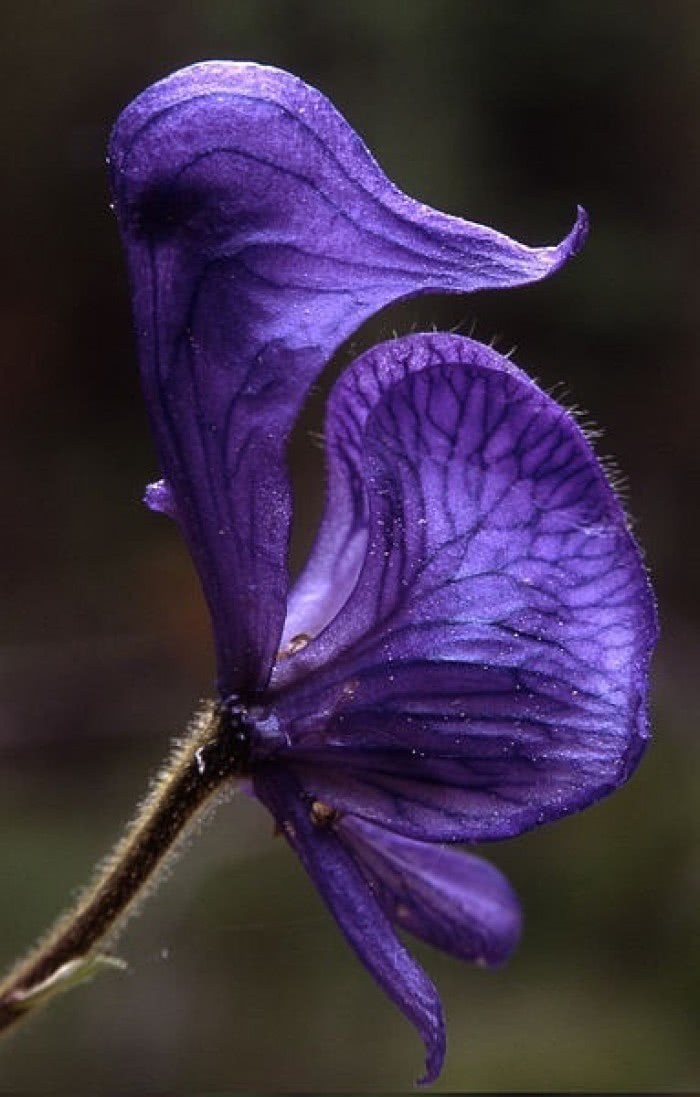
May 19 birthday flower - monkshood (Aconitum), a plant in the buttercup family Ranunculaceae. The roots of this plant are highly toxic. In ancient times, people coated arrows with its sap to make poisoned arrows. Perennial herb. Stems 100-130 cm tall, leaves alternate, leathery, ovate, stalked, palmately divided 2 to 3 times, with notched lobes. After the Beginning of Autumn, blue-purple flowers bloom in the leaf axils at the top of the stem, the corolla resembling a helmet, in panicles; 5 sepals, 2 petals. The follicle is oblong, formed from 3 divided ovaries. Seeds yellow, numerous and tiny. Flowering period June-July, fruit ripening period July-August.
Monkshood
Growing characteristics:
It prefers a warm, humid climate. It is highly adaptable and can be cultivated at altitudes of around 2000 m without degeneration. Cultivate in deep, loose, fertile, well-drained sandy loam. Plant in sunny, high, flat land; the best preceding crops are rice, corn, vegetables and wheat. Avoid continuous cropping, otherwise the variety degenerates; for breeding, choose sunny, relatively lean sandy loam, where the tubers are robust with fine branch roots, for use as seed stock. The plants grow well, with few diseases, high yield and good quality.
Monkshood
Toxicity:
The toxic components are diterpenoid alkaloids, of which the most toxic is aconitine; just a few milligrams can kill a person, and like tetrodotoxin, it is a neurotoxin. After ingestion it causes a general disturbance of nerve activity (as well as muscle activity) throughout the body: places that do not hurt feel painful, places that hurt feel painless, the muscles no longer obey, the heart beats irregularly, there is drooling and diarrhea, and the final cause of death is either paralysis of the respiratory center or severe cardiac arrhythmia.
The toxins of monkshood can enter the body through the mouth or the skin. Once poisoned, symptoms appear almost immediately, including a burning and numbing sensation, stiffness of the tongue, throat and face, nausea, vomiting, blurred vision, a prickling sensation of the skin, paralysis of the respiratory system, chest tightness, dizziness, night sweats and convulsions. As the toxin gradually spreads, body temperature gradually drops, the body feels cold, and the patient feels as if ice water is flowing through the blood vessels. Finally, severe pain arrives, and the facial muscles become paralyzed. Breathing is initially rapid, then gradually slows and finally stops, and the heart muscle also gradually becomes paralyzed, causing death. Patients often remain conscious until the very end, and some report that their vision turns yellow-green, accompanied by tinnitus. After contact with monkshood, a person can die within ten minutes a few hours later.
Monkshood?
Flower language: malice
The roots of this plant are highly toxic. In ancient times, people coated arrows with its sap to make poisoned arrows. Therefore, the flower language of this flower represents "malice". People who receive the blessing of this flower are mostly two-faced, like a femme fatale. They like to toy with other people's feelings, yet in fact they are the ones more easily hurt. So it is better to mend your "evil" ways early and earnestly give true feelings with all your heart!