Causes of Flower and Fruit Drop in Fruit Trees and Measures to Improve Fruit Set Rate
Causes of Flower and Fruit Drop in Fruit Trees and Measures to Improve Fruit Set Rate
1 Causes of Flower and Fruit Drop
1.1 Genetic Factors of Tree Species and Varieties
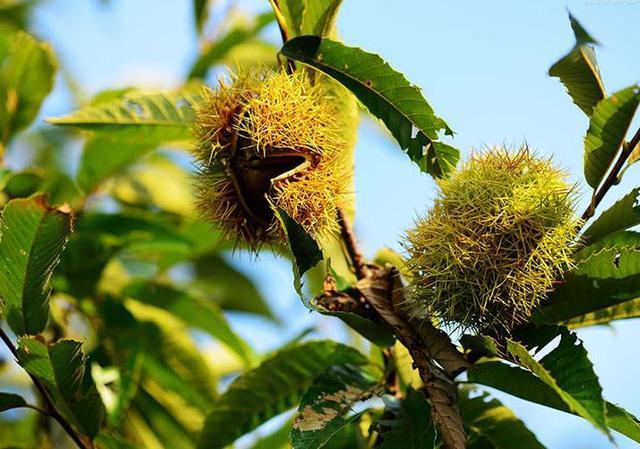
Different species and varieties of fruit trees differ in their genetic characteristics. In fruit tree cultivation and management, neglecting these characteristics easily leads to serious flower and fruit drop. For dioecious species, such as kiwifruit and ginkgo, female plants need male plants for pollination in order to set fruit. For monoecious species with unisexual flowers, such as walnut and chestnut, although female and male flowers are borne on the same plant, the vast majority of varieties exhibit dichogamy, where the flowering periods of female and male flowers do not overlap or overlap for only a very short time, so the male flowers cannot pollinate the female flowers. Self-incompatibility: most fruit trees can differentiate complete flowers, but many varieties are self-incompatible or have a low self-fruit-set rate. For example, the vast majority of apple varieties have a low self-fruit-set rate, and some are even self-incompatible (Delicious strain varieties). Abortive flowers: among cultivated fruit tree varieties, some have a high rate of pollen abortion; such varieties are self-incompatible and cannot serve as pollinizers either. Examples include the peach varieties Cangfang Zaosheng and Annong Shuimi. Cross-pollination compatibility: cross-pollination of fruit trees generally shows compatibility, but the degree of compatibility varies greatly. For example, with the apple varieties Golden Delicious x Fuji, both the direct and reciprocal crosses give a very high fruit set rate; with Fuji x American No. 8, the direct cross on Fuji gives a very high fruit set rate, while the reciprocal cross on American No. 8 gives a low fruit set rate.
1.2 Problems in Fruit Tree Management
(1) Lack of water and fertilizer, extensive management, few flowers formed, poor flower bud quality, and flower and fruit drop caused by nutrient deficiency at flowering and fruit set. Improper fertilizer and water management, overly frequent watering, one-sided application of nitrogen fertilizer, and excessive vegetative growth cause flower and fruit drop due to nutrient competition. (2) Improper pruning, pruning too heavily or leaving too many flower buds, causes an imbalance between vegetative growth and reproductive growth, affecting flowering and fruit set. (3) The flowering period and young fruit period are sensitive periods for pollination, fertilization and young fruit development; even slight impropriety in management such as spraying fertilizer, spraying hormones or spraying pesticides can cause abnormal flower and fruit drop. (4) Damage from diseases and pests causes root injury, trunk and branch rot, leaf lesions, mutilation and even defoliation, affecting the growth and development of fruit trees and affecting flowering and fruit set. When flowers and young fruits are infected, their development is blocked and they may even become mummified and drop. For example, infection by blossom blight causes flower buds or flowers to wither; young fruits turn brown and rot, dehydrate and become mummified fruits. During the flowering period, damage often occurs from apple flea beetle, small green flower chafer, aphids, pear fruit sawfly and the like, which gnaw (suck) on floral organs and young fruits.
1.3 Influence of Climatic Factors
(1) During the flowering period and young fruit period, late frost and low temperature are one of the main causes of flower and fruit drop; late frost and low temperature easily freeze and injure floral organs and young fruits, so that the floral organs cannot complete pollination and fertilization and the young fruits cannot continue to develop. (2) During the flowering period, frequent rain and high air humidity mean that pollen soaked in water for a long time easily ruptures, rain washes away the stigma, pollen is hard to disperse and spread, and pollinating insects work sluggishly due to wet and cold conditions, all of which are unfavorable to pollination. (3) Dry hot winds during the flowering period cause scorched flowers (for example, jujube flowers); the stigma dries out and cannot catch pollen; sandstorms cover the stigma with dust, affecting pollination. (4) In particular years, absolute low temperature, drought, waterlogging and the like affect flower bud formation, flower bud quality, and flowering and fruit set.
2 Measures to Preserve Flowers and Fruits
2.1 Strengthening Comprehensive Orchard Management
Strengthening comprehensive orchard management, raising the tree's nutritional level, promoting robust growth of fruit trees and improving stress resistance are the basic measures for differentiating good flower buds, opening good flowers and setting good fruit. (1) Soil management. Deep plowing and hole expansion in orchard soil, good soil and water conservation in mountain orchards, and soil pressing or sand mixing for improvement in sandy or clay orchards. (2) Fertilizer and water management. Pay attention to increasing the application of organic fertilizer, and according to fruit tree growth, soil conditions and growth phenological periods, pay attention to the combined application of fertilizers of different elements. Pay attention to foliar topdressing during the growing season. According to soil moisture and the growth phenological periods of fruit trees, irrigate reasonably, so that water can be supplied in drought and drained in waterlogging, and carry out grass mulching or film mulching on the tree disk to preserve moisture and prevent weeds. (3) Reasonable pruning. Use winter pruning and summer pruning to regulate the relationship between growth and development; prevent heavy pruning that cuts back drastically, and also avoid light pruning that is overly sparing of branches and flowers. (4) Disease and pest control. According to the occurrence patterns of the main diseases and pests in the orchard, formulate a disease and pest control calendar; usually pay attention to observation and investigation, do a good job of forecasting and forecasting, and spray pesticides or adopt other control measures at key times. Advocate integrated control combining chemical control, biological control, manual control and other measures. Prohibit pesticides during the flowering period and use pesticides cautiously during the young fruit period to avoid causing abnormal flower and fruit drop.
2.2 Selection and Arrangement of Pollinizer Trees
Selecting pollinizer trees is a basic measure for improving the fruit set rate, and is especially crucial for tree species and varieties that are dioecious, self-incompatible and lack parthenocarpic characteristics. Choose varieties that form flowers easily, have abundant pollen, have strong pollination compatibility with the main cultivar, have the same or basically the same flowering period, and have high economic value as pollinizer trees. Special pollinizer varieties have been selected for some fruit tree species, such as apple and ginkgo, and it is better to use dedicated pollinizer varieties. For the planting pattern of main cultivars and pollinizer varieties, row and central planting are mostly used; when a relatively large number of pollinizer trees are arranged, row planting is mostly used; when fewer pollinizer trees are arranged, central planting is often used. For varieties with high pollen abortion, more than two varieties should be arranged as pollinizer trees, and the pollinizer varieties are required to have strong mutual pollination compatibility; the arrangement ratio of main cultivars to pollinizer varieties is generally 3-6:1, and for dioecious fruit tree species, the ratio of female plants to male plants is mostly 100:5-10.
2.3 Artificial Supplementary Pollination
Artificial supplementary pollination of fruit trees is an effective measure to overcome poor natural pollination, and is mostly carried out when pollinizer trees are insufficiently or improperly arranged, few flower buds are formed (off year), or disastrous weather occurs. Collect freshly opened flowers or large bell-stage flowers about to open from trees of varieties with strong pollination compatibility with the pollinizer varieties and with a large number of flowers; when picking flowers, follow the requirements of flower thinning. After rubbing off the anthers, place them indoors at about 25 degrees C to promote anther dehiscence and pollen release. Pollination mostly uses manual point pollination or pollen liquid spray pollination. For artificial supplementary pollination, using a mixed pollen of 2-3 varieties gives better results than using pollen of a single variety. For tree species or varieties with inconsistent flowering times, or trees with few flowers or affected by disastrous weather or disease and pest damage, pollinate 2 or more times. When pollen is stored under natural conditions, 1-2 days has little effect on pollen viability; if it will not be used for a long time, it can be stored in the refrigerator's cold storage compartment.
2.4 Placing Bees During the Flowering Period
Placing bees in orchards (protected cultivation) during the flowering period is an efficient pollination measure. In the past, honeybees were mostly used, but because honeybees have poor ability to adapt to adverse environmental conditions such as low temperature, high humidity and strong wind, and have low flower-visiting efficiency, osmia bees and bumblebees are now mostly used. Osmia bees and bumblebees have strong adaptability to adverse environmental conditions, and their work efficiency is 30-50 times that of honeybees; placing about 100 bees per 666.7 sq m of orchard is sufficient. Honeybee pollination serves both pollination and honey production, so bees can be placed during the flowering period in open-field orchards of late-flowering tree species such as jujube and pomegranate; for 0.6-1.0 hm2 of orchard, one box of a strong honeybee colony (about 20000 bees) can be placed.
2.5 Use of Hormones
Using plant growth regulators to prevent flower and fruit drop has the characteristics of convenient application, low cost, quick action, obvious effect, no environmental pollution and no harm to human health. Currently commonly used regulators include gibberellin (GA3), naphthaleneacetic acid (NAA), PBO, forchlorfenuron (CPPU) and the like; spraying (dipping clusters) GA3 at 20-30 ml/L during the flowering period of jujube, hawthorn, grape and the like significantly improves the fruit set rate. To prevent pre-harvest fruit drop, NAA can be used; spraying 20-30 ml/L NAA 2-3 weeks before harvest on Delicious strain apples can effectively prevent pre-harvest fruit drop. When applying plant growth regulators, strictly control the application period, dosage, frequency and method according to the growth and development characteristics and growth status of the tree species and variety, and meteorological and environmental factors.
2.6 Flower and Fruit Thinning
Flower and fruit thinning reduces the consumption of tree nutrients, ensures a reasonable load, improves the nutrition needed for the development of the retained flowers and fruits, and is beneficial to flowering and fruit set. Determine the amount of flowers and fruits to retain according to tree size, growth status, growth and development habits of the tree species and variety, meteorological factors, management level and the like. The earlier flowers are thinned, the better; during winter pruning, thin out overly dense and overly weak fruiting (mother) branches; begin thinning flowers (clusters) at the bell-flower stage or when obvious inflorescences appear, thinning out weak flowers (clusters), deformed flowers (clusters) and overly dense flowers (clusters), with the retained flowers evenly distributed on the canopy. Fruit thinning is generally carried out 2 times; the first is mostly carried out around 7 days after petal fall, and the second is mostly carried out after physiological fruit drop; for tree species and varieties with a low fruit set rate, or orchards where natural disasters such as late frost occur frequently, retain appropriately more and thin later. For large-fruited tree species such as apple and pear, generally retain 1 fruit per inflorescence; for grape, thin inflorescences or thin out overly dense spikelets or berries. For walnut and chestnut, the number of male flowers is large, so most male inflorescences should be thinned out, which can significantly improve the fruit set rate. Thinning of male flowers is generally carried out when the male inflorescences are 2-3 cm long, thinning out 80%-90% of the male inflorescences.
2.7 Preventing Disastrous Weather
During the flowering period and young fruit period, late frost, rainy and low-temperature weather, and high temperature and dryness are the main causes of flower and fruit drop. The basic measures for preventing disastrous weather are: (1) Strengthen comprehensive orchard management to enhance the fruit tree's own stress resistance. (2) Prevent late frost, especially for early-flowering tree species and for tree species and varieties whose fruit set is particularly seriously affected by late frost. The first preventive measure is to delay the flowering period to avoid late frost, often using ground grass mulching, whitewashing of the trunk and large branches, and irrigation before flowering, which can generally delay the flowering period by 3-7 days. The second is to prevent late frost damage, mainly by the smoke method; according to the weather forecast, set up smoke piles in the orchard, pay attention to nighttime temperature changes, and when the temperature drops to 2-1 degrees C and still tends to fall, begin to light the smoke piles; frost generally forms mostly from 2 to 4 o'clock in the morning. (3) For fruit trees damaged by disastrous weather during the flowering period and young fruit period, adopt various measures to prevent flower and fruit drop and improve the fruit set rate.