Detailed Explanation of High-Efficiency Cultivation Techniques for "Jinfen No. 1" Pisang Awak in Paddy Fields
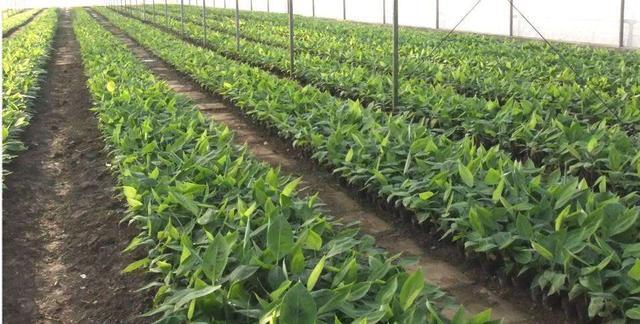
High-Efficiency Cultivation Techniques for "Jinfen No. 1" Pisang Awak in Paddy Fields
Fund project: Special funds for the construction of the National Modern Agricultural Industry Technology System (CARS-32-15); Guangxi Academy of Agricultural Sciences team project (Gui Nong Ke 2015YT54); GuangxiAcademy of Agricultural Sciences Doctoral Innovation Fund project (Gui Nong Ke 2016JZ03).
Pisang Awak (Musa ABB Pisang Awak) is a banana hybrid cultivar of thegenus Musa, also known as Nai Jiao, Glutinous RiceBanana, Canna, Saigon Banana, etc. [Cyclocarya paliurus]. Because paddy field cultivation yields high per-unitproduction, more and more banana farmers are choosing paddy fields to grow Pisang Awak, butthe cultivation techniques are more demanding than those for other types of farmland, and it is not easy for beginners tomaster. Pisang Awak has a long growth period; the full growth period of tissue-cultured plantlets of the main cropis 14-20 months [Jishan Huayao], and under higher management levels it is 14-16 months. The entire growth period requires at least one overwinteringprocess, and it is frequently subjected to damage from low temperatures, frost and snow, and wind, and is extremelysusceptible to infection by Fusarium oxysporum wilt (FOC1, race 1physiological race). Cultivation carries a certain risk, which has limited the developmentof Pisang Awak planting area. In response to the problems existing in Pisang Awak production,the author has continuously carried out investigation and research, and through years of planting, improvement,summarization, and re-practice, together with Guangxi Jinpin AgricultureCo., Ltd., Guangxi Fenghao Agricultural Technology Co., Ltd. and other partnerenterprises, jointly conducted a series of experiments on high-quality and high-yield cultivation techniques for Pisang Awak,and integrated a complete set of disease-controlled cultivation and management techniques, which canuse paddy fields to grow Pisang Awak to increase output value and production efficiency, ensuringthat under certain low-temperature or light-frost climate conditions the fruit can set and safelyoverwinter, with the incidence of Fusarium wilt in one crop of Pisang Awak controlled below 3.0%.Using this technique, Pisang Awak production can be developed according to local conditions in southern Guangxi, southeastern Guangxi, and central Guangxiin areas with suitable conditions, which is conducive toimproving the market competitiveness of Pisang Awak, promoting industrial efficiency, and increasing farmers'income. It is conducive to the adjustment of the banana industry's variety structure, meetingthe market's demand for diversified banana varieties, and plays a positive role in banana production periodadjustment and industrial optimization.
1 Variety Selection
"Jinfen No. 1" is an excellent variety of Pisang Awak, and in 2010it passed the crop variety approval of the Guangxi Zhuang Autonomous Region (GuiShen Guo 2010005). The fruit is relatively large, with a high edible rate; theflesh is milky white, with a tender, smooth, sweet taste, excellent flavor, and rich nutrition.It is relatively resistant to cold and drought, resistant to black sigatoka, bunchy top, and heart rotdisease, with good marketability and great market potential. In recent years, in Nanning,Qinzhou, Fangchenggang, Yulin, and Baise cities in Guangxi, it has been planted at scale,and has expanded to Guangdong, Hainan, and Yunnan provinces. Theminimum field price is above 4.0 yuan/kg, with the highest reaching 8.4yuan/kg, with an output value of 10,000-18,000 yuan per 667 sq m, and highplanting efficiency.
2 Banana Orchard Planning and Design
2.1 Banana Orchard Selection No ratoon bananas are retained; a planting model of planting one generationof Pisang Awak and then rotating to other crops is adopted. Select paddy fields with a soil layerthickness of more than 1 m, a groundwater level of more than 1 m, no standing water,good wind-sheltered and cold-sheltered conditions, sufficient sunlight, convenient transportation, and where the previous ⟧51⟧crop was not bananas, Pisang Awak, or other banana-type crops.A paddy field where no banana, plantain, or other Musa crops have ever been grown.
2.2 Deep Plowing and Land Preparation Spread 100-150 kg of quicklime per 667 sq m to adjust soil pH, reduce the number of pests and diseases parasitic in thesoil or on crop residues, and use mechanical deep plowing ofmore than 60 cm to improve soil water permeability, aeration, and water and moisture retentionperformance, increase the thickness of the plow layer, deeply bury trees, weeds, andcrop residues in the banana orchard, and plow and expose to the sun for more than 20 d.
2.3 Land Leveling and Orchard Construction Dig ditches and raise beds; bed width is 4.3-4.5m. Set up drainage ditches 1 m wide and 80 cm deep around the periphery of the banana orchard,and set up bed ditches 1 m wide and 60 cm deep between planting beds.The bed ditches must connect with the drainage ditches. The size and depth of the drainage ditches can bedetermined according to the terrain and topography to ensure that standing water in the orchard can bequickly drained within a short time.
The bed surface does not need to be raked and broken, to avoid causing secondarycompaction of the surface soil of the bed and inhibiting growth at the seedling stage. Dig holes along the bedaccording to the planting specifications. The planting holes are generally 30-50 cm wide at the top and30-40 cm deep. Apply 3.5-4.0 kg of high-quality decomposed chickenmanure, 0.5-1.0 kg of calcium magnesium phosphate fertilizer, 0.2-0.3 kg of compoundfertilizer, and 10-15 g of 0.5% avermectin granules(to prevent and kill nematodes) into each planting hole, mix well with soil,then fill to half of the planting hole, and then cover with more than 10 cm of bed surface soil,making it level with or slightly higher than the bed surface, to avoid the roots directlycontacting organic fertilizer during planting and burning the root system.
2.4 Irrigation System Installation Dig wells to obtain groundwater for irrigation, and install a water-savingirrigation system according to the terrain and topography, using micro-sprinkler tapeirrigation, with one sprinkler tape laid along each planting row.
2.5 Planting Planting period. Pisang Awak can beplanted in all four seasons, mostly spring planting from February to April, selecting large seedlings with 10-15 leavesfor planting; autumn planting from September to November can also be chosen, selecting medium-to-large seedlings with 8-12 leaves.
Planting specifications.Adopt the wide-bed double-row planting method, taking into accountthe ventilation and shade conditions of the banana orchard. Plant spacing is 2.2-2.4 m,the wide row (row on the bed surface) is 2.8-3.0 m, and the narrow row (row between bed ditches)is 2.3-2.5 m. Planting density is 110-120plants/667 sq m. Adjust the plant and row spacing appropriately according to the harvest time, orchard environmental conditions,and cultivation management level and other actual conditions.
Seedling raising method."Jinfen No. 1" tissue-cultured plantlets produced byGuangxi Plant Tissue Culture Seedling Co., Ltd., when the plantlets have 3-4 leaves and 2-4 ⟧91⟧roots, are temporarily planted in a sand bed in a greenhouse. After the temporary planting and 3-5At 2-4 leaves, heel in on a sand bed in a greenhouse; the new growth after heeling in is 3-5new leaves have grown, they are transferred to seedling bags for temporary planting. Soilless substrate andnon-woven seedling bags should be used.
Planting method.When planting, first remove the seedling bag and donot break up the substrate (if it is a non-woven seedling bag seedling, it does not need to be ⟧97⟧removed), place it into the planting hole, cover with broken surface soil, and press the surrounding ⟧98⟧soil layer firmly. Immediately after planting, use 1,000remove), place into the planting hole, cover with crushed topsoil and press firm the outersurrounding soil layer. Immediately after planting is completed, use potassium permanganatetimes diluted potassium permanganate solution to drench thoroughly as the root-setting water, and water once more the next day. For springplanting, rice straw, leaves, etc. can be used to cover the banana seedlings and the surrounding area, orblack plastic film can be used to cover for moisture retention and weed control; for autumn planting, before the cold wavearrives in December, sky film and white plastic film can be used to cover for cold protection, and the film can be removed when the temperaturerises again in April.
3 Banana Orchard Management
3.1 Seedling Inspection and Replanting Inspect seedlings the next day after planting. If omissionsare found, replant promptly, and straighten and press firm any tilted plants. After heavyrain, also inspect seedlings; dead seedlings and weak seedlings should be replanted promptly.
3.2 Fertilizer and Water Management Water management. During the rainy season, keep drainageditches unobstructed and promptly drain standing water on the bed surface. "JinfenNo. 1" Pisang Awak should avoid flood irrigation. Throughout the entire growth period, thesoil moisture content of the banana orchard should be maintained at about 60%. During the flower bud differentiation periodand the bunch emergence period, the soil moisture content should be maintained at about 80%; stopirrigation 10-15 d before harvest.
Fertilization principles.Bananas require more and more timely nutrients thanother cash crops. In the early vegetative growth stage, nitrogen fertilizer is ⟧117⟧dominant, with potassium fertilizer also applied; after flower bud differentiation, that is, when the corm noticeably thickens ⟧118⟧and newly emerged leaves become larger, the plant enters reproductive growth, and potassium fertilizer should be increased ⟧119⟧to promote fruit development. The principle is frequent application of thin fertilizer, small amounts applied multiple times, and ⟧120⟧fertilization without injuring roots. Water and fertilizer can be applied together to reduce fieldmainly, with potassium fertilizer applied as well; after flower bud differentiation, that is, when the corm noticeably thickens,when newly emerged leaves become larger, the plant enters reproductive growth; apply more potassium fertilizer,to promote fruit development. The principle is to apply frequently and lightly, in small amounts many times, without injuringthe roots when fertilizing. Fertigation can be adopted to reduce fieldFarming operations: avoid root damage that can lead to disease spread.
Fertilization plan.When the first new leaf emerges, every7-10 d, spray each plant with 2 kg of 0.2%-0.5% (the concentrationgradually increases as the seedlings grow) urea aqueous solution, untilthe number of newly emerged leaves reaches about 10. For plants with slightly weaker growth orlate-planted seedlings, increase the drenching amount by 2-3 applications. When the number of newly emerged leaves is10-25, every 10-15 d, at a distance of 50-100cm from the banana stool, apply to each plant a compound fertilizer with a nitrogen-to-potassium ratio of 2:1 (thepotassium fertilizer in the compound fertilizer should be potassium sulfate) at 30-60 g, and gradually increase the amount as the plantgrows; when the number of newly emerged leaves reaches 15,gradually adjust the nitrogen-to-potassium ratio to 1:3. The fertilizer can be sprayed together withthe irrigation system, or broadcast on the bed surface and then leached bysprinkling water. When the number of newly emerged leaves is about 25, the corm noticeablyswells and gradually enters the flower bud differentiation stage; at this time, apply to each plant in a single applicationcompound fertilizer (12-12-21) 250-350 g, potassium sulfate 100-150 g, and calcium magnesium phosphate fertilizer 500 g. When the number of newly emerged leaves is about 40,the pink banana gradually enters the bunch emergence stage; at this time, apply to each plant in a single applicationcompound fertilizer (12-12-21) 250-300 g and potassium sulfate100-200 g. Both heavy fertilizer applications should be broadcast between two plants along the rowand covered with soil taken from the ditch bottom. From bunch emergence to half a month before harvest,every 15-20 d, according to plant condition, drench each plant with compoundfertilizer (15-15-15) 50-100 g; the fertilizer can be sprayed together with irrigation,or broadcast on the bed surface and then leached by sprinkling water. Stop fertilization20-30 d before harvest.
3.3 Plant dwarfing. Pink banana plants are tall, with a pseudostem height of 460-500 cm, and are prone to wind damage, with high routine management costs.When the pseudostem height of the pink banana plant is 1.0 m, for the first time use 25%PP333 suspension concentrate to dwarf the plant, with an amount per plant of4.0-6.0 g (applied in two split applications according to plant growth conditions,the first application at 1.0-2.0 g/plant, the second applicationat 3.0-4.0 g/plant, with an interval of 30d between the two applications), diluted in 200-500 g of water for soil drenching or whole-plant spraying,which can reduce plant height by 20%-30%. The safe interval from the last application toharvest is more than 9 months.
3.4 Bunch management. Bud alignment. During the bunch emergence stage, frequently inspect the bananaplants; for those whose flower buds hang down at a position exactly above the petiole,move the flower bud carefully to one side of the petiole as early as possible so that it hangs down naturallyand grows. At the same time, cut off leaves that are close to or touching the flower bud.
Leaf retention, hand retention, and flower removal.Decisions should be based on the flowering season, plantsize, and the number of functional leaves (usually 1 functional leaf supports 1fruit hand; over-wintering bananas usually have frost-damaged leaves, so 1.5 functionalleaves support 1 fruit hand), fruit development, and climatic conditions,retaining 7-9 fruit hands per bunch, with 8 hands being preferable.When the fingers open and are parallel to the ground, remove allbanana flowers on the fruit hands. When the fingers are about 40%-50% full, retain leaveson the principle of 1 leaf per fruit hand, to accelerate filling of the fruit hands.
Bud removal.Within 15-20 d after hand retention, remove the bud as early as possible toavoid nutrient consumption, cutting off thebud below the last hand while leaving 2-3 nodes. Bud removal should be done on a sunny afternoon, when wounds heal quickly.Spray pesticide promptly to protect the fruit before hand retention and after bud removal.
Staking to support the banana.Before the typhoon season arrives or when the plant is about toemerge its bud, begin staking; bamboo poles or wooden sticks can be used as banana stakes.
When staking, make a hole 15-30 cm from the banana stool, with a hole depth of about40 cm, insert the banana stake into the hole and press it firm, then use ropeto tie the pseudostem to the banana stake, tying securely at 3 sections. For plants that have not yet emergedtheir bud, when staking, the banana stake should be placed on the side toward which the plant leans,so that the banana stake, the plant, and the ground form a stable triangle.The banana stake should avoid the position where the banana bud hangs down; for plants that have already emergedtheir bud, when staking, place the banana stake on the side of the pseudostem and the banana bud (fruit bunch)or on the other side, avoiding scraping and bumping between the banana stake and the fruit; tie the upper part of the banana stakesecurely to the fruit stalk.
3.5 Cleaning the banana orchard. Suckers that continuously grow from the mother plant will consumea large amount of nutrients. When suckers grow to 15-30 cm, usea sharp hook knife to cut them off at the base together with the growing point, and at the same timecut off old, dead, and diseased leaves near the ground and clear them out of the orchard. After cuttingleaves and removing suckers, spray pesticide immediately to sterilize and prevent wound infection by pathogens leading torot. Weeds within 40 cm of the corm should be removed manuallyby pulling; as herbicides, contact herbicides such as paraquatat 500 times dilution can be used for spraying. During the seedling stage, fit the spray nozzle with a protective cover and never sprayonto the leaves. Promptly remove malignant weedsin the orchard and on ditches and banks. After bunch emergence, use of herbicides should be stopped.
4 Pest and disease control
Pest and disease control should adhere to the principle of "prevention first, integratedcontrol"; according to the patterns of pest and disease occurrence, scientifically and rationally usechemical pesticides to effectively control pest and disease damage. Improve the banana orchard ecologicalenvironment, increase application of organic fertilizer and potassium fertilizer to enhance plant disease resistance, strengthencultivation management, and apply various control measures comprehensively. Within1 month before harvest, pesticide spraying should be stopped.
Root-knot nematode disease.Use disease-free soil or sterilized soil in bagsfor seedling raising. Strengthen fertilizer and water management in the banana orchard to promote new root growth.Per 667 sq m, use 10% thiazophos granules or 0.5%abamectin granules 1.5-2.0 kg, applied 3-4 timesthroughout the entire growth period.
Banana Fusarium wilt.Strictly implement quarantine measures; strictly prohibitintroducing pink banana seedlings, propagation materials, etc. from diseased areas; increase application of organicfertilizer and potassium fertilizer to improve plant disease resistance; during routine management,avoid injuring the banana stool or root system as much as possible, and at the same time pay attentionto controlling root-knot nematodes to prevent wounds and nematode openings from being infected by pathogens; where
conditions permit, use paddy-upland rotation; diseased plants found in the field should be promptly destroyed,and quicklime should be spread at the location of the diseased plants. If diseased plants occur in contiguous patches,isolation fences should be set up.
Bacterial wilt.In the early stage of disease onset in banana seedlings, use2% kasugamycin wettable powder at 800 times dilution, 88% streptomycinsoluble powder at 2,000 times dilution, 23% copper ammonia complexaqueous solution at 400 times dilution, or 20% agricultural streptomycin wettable powderat 3,000 times dilution for root drenching. Apply once every 7-10 d, for a totalof 2-3 applications, drenching 1 kg of pesticide solution per plant each time; when banana plantsare relatively large, appropriately increase the pesticide amount.
Sooty mold.When the bracts open, use 70% thiophanate-methylat 800 times dilution or 75% Dacotech (chlorothalonil) wettablepowder at 800 times dilution + 25% azoxystrobin (Amistar)at 1,500 times dilution to spray the bud bracts and young fruit, once every 30 d.
Pseudostem weevil.After fruit harvest, clean up remaining plant residues and search out and killinsects in various stages hidden within them. Combined with orchard cleaning, regularly peeloff the outer leaf sheaths of the pseudostem that carry eggs, and capture adults. From late Novemberto early April of the following year, during the peak period of larval occurrence, use pesticide to kill them.Use 20% Yishubao granules, applied at 10 g per plant to the bananaroots; alternatively, use 80% dichlorvos emulsifiable concentrate or 40.8% chlorpyrifosemulsifiable concentrate at 1,000 times dilution, poured into the grooves of the upper leaf sheaths,150-200 mL per plant.
Skipper butterfly.When the larvae first appear, remove the leaf rolls and kill the
larvae inside;From winter until before the warmth of spring, compost the dead leaves into ash fertilizer or compost,to eliminate the dormant larvae and pupae. From June to October, when larvae occurat peak levels, apply chemical sprays to the leaves during the early larval instarsfor control; the chemicals can be 90% trichlorfon crystalat 1,000 times dilution, 50% phoxim emulsifiable concentrate at 1,000 times dilution, or40% fenvalerate emulsifiable concentrate at 4,000 times dilution.
Spider mites.When spider mite damage is severe from August to October, use1.8% abamectin emulsifiable concentrate at 4,000-5,000 times dilution, 73%propargite at 1,000 times dilution, or 5% hexythiazox emulsifiable concentrate at 2,000-3,000 times dilution, spraying the undersides of leaves, focusing on the middle and lower leaves.
5 Cold protection measures
Before the onset of winter, apply to each plant 1 kg lime + 1 kg calcium magnesium phosphate fertilizer+ 5-10 kg decomposed pig manure + 0.5 kg cake fertilizer, and cover the bed surface with whiteplastic film to retain heat, enhancing the cold resistance of the plants to help themoverwinter; for banana trees that have already emerged their buds, before the cold snap arrives, use their ownshort leaves or kraft paper and other materials to wrap the exposed stalk, and bag more than30% of the banana fruits for cold protection. First spray once with 70% thiophanate-methylat 800 times dilution + 70% imidacloprid at 800 times dilution to controlpests and diseases; after the spray dries, bag the fruit, using pearl cotton (innerbag) + blue polyethylene film (outer bag) double-layer bags to cover the fruit bunch,to prevent mechanical abrasion; use an open-top-and-bottom bagging style to avoid excessivehumidity inside the bag causing disease. After mid-February, as temperatures graduallywarm up, remove the bags in time and spray 25% pyraclostrobin + 45%beta-cypermethrin at 800 times dilution to control banana fruit diseases.
6 Fruit harvesting and post-harvest handling
When the fullness reaches 90%, when the fingers are plump and round and the angles are not obvious,they can be harvested, leaving a stalk head length of 10 cm; after cutting, place them gentlyon a soft pad; during the harvesting process, the fruit bunch must not be bumped orscraped, nor stacked together in a way that bruises them.