Don't Panic About Succulent Lignification - Prune This Way for Healthy, Beautiful Succulents
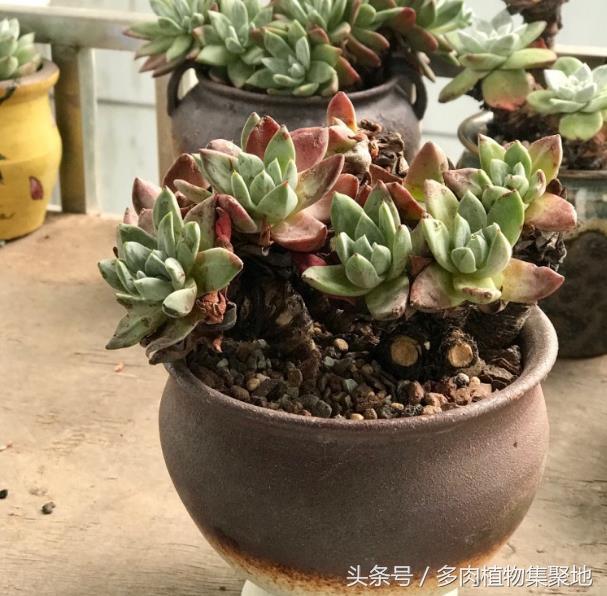
Most succulents have thick, fleshy, juicy leaves, but as for their roots: many Sedum-type plants have fine, dense fibrous roots, unlike Haworthia, which has thick, solid roots. In order to support the increasingly heavy upper body as the plant keeps growing, the roots or stems of succulents produce lignin, which keeps accumulating and hardens, thereby strengthening and reinforcing the stem's support and load-bearing capacity - this is what we call lignification.
During routine care, if a succulent develops tea-colored stems, it indicates a tendency toward lignification. This mostly happens in old specimens and upward-growing varieties. The main reason is that old succulents, in order to support the added weight of their upper body, gradually turn into woody stems like tree trunks by strengthening their stems' load-bearing capacity - but this also shows that the plant is in a normal state of growth.
For succulents, a certain amount of lignification is a fairly common phenomenon, so there is no need to worry too much, as long as none of these three conditions appear: lignified black rot, lignified mold, or lignified wateriness. If these three conditions do appear, they can still be dealt with. First, cut off the branches and stems where the roots have changed, so as not to affect other parts. Once done, let them dry for a day, then plant them in new soil. Add a little diluted carbendazim to the new soil, then maintain normal ventilation, light and other care conditions - and of course, avoid high-temperature exposure to strong sun.
Lignification is a fairly common phenomenon in succulent growth, so you can rest easy. For lignified stems exposed relatively high above the soil surface, you can keep them and plant them directly. If the roots below the soil surface are too numerous, too large, or even have aged lignified parts, or if you simply don't like lignification, you can directly cut off or excise the lignified root and stem portions, let them dry, and then plant them - this will not hinder the plant's normal growth and health. Take the creeping Isodon rugosus below: many of its stem portions have already become severely lignified, so you can simply behead it and replant.
In plain terms, succulent lignification means the stem of the plant becomes as hard as a tree branch. Put that way, it should be easier to understand. To describe it more formally: the cell wall becomes hard and solid due to the polymerized deposition of lignin or derivative units produced by the cells, which increases the plant's ability to support gravity. The woody cells inside a tree trunk are the result of lignification.
Some growers like lignified succulents and find them rather unique, while others feel the opposite. For lignified stems exposed relatively high above the soil surface, you can keep them and plant them directly, but if you don't like lignification, you can simply cut off the lignified parts, let them dry, and then plant them - this will not hinder normal growth and health.
This is a gathering place for succulent lovers, sharing succulent care tips. Welcome to follow and join the conversation.