A detailed explanation of bonsai wiring techniques, understand the relevant knowledge in one article
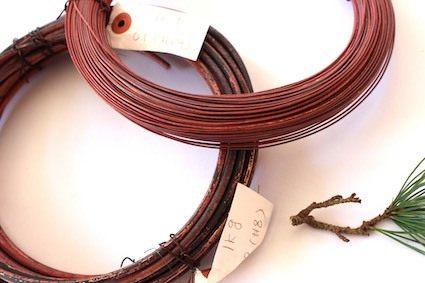
In bonsai, if you want a good shape, wiring is indispensable. Wiring is the most basic and also the most important part of making bonsai. Without wiring, no large-tree bonsai can take shape. Of course, if you say you just don't wire, and can create it with nothing but a pair of scissors, I believe you too. But combining pruning and wiring has always been the only reliable approach in the bonsai-making process. Today let's go over some things related to wiring.
What is wiring? Never mind, let's skip this.
How do you wire? Never mind, let's skip this too. Ah, forget it, let's just ramble a bit. Forget it, let's ramble about something else first.
Materials needed for wiring. First, you have to have a tree, there's nothing wrong with that, right? Without a tree, what are you wiring? Then you need metal wire. In principle any wire will do, as long as it's not a spring. But currently the commonly used ones in the trade are copper wire and aluminum wire. Copper wire is harder, aluminum wire is softer; the hardness of aluminum wire is only about 1/4 that of copper wire. Usually, deciduous tree species use aluminum wire, while pines and cypresses can use copper wire. Copper wire is hard and easily damages the bark. Metal wire is classified by diameter, 1-8mm. Ordinary hobbyists don't need to buy every size; it's recommended to buy 1mm, 1.5mm, 2.5mm and 4mm. For thick branches, if one wire isn't enough you can use two or three. In addition, hemp rope or raffia rope may also be used.
How thick should the wire be? About 1/3 of the starting wiring point.
How do you wire? The metal wire advances along a 45° angle, and toward the front end the spacing can be widened a bit. Ideally one metal wire is wound around two branches, so both ends can be fixed. It can't be wrapped too tightly, and there can't be any gaps.
How do you wire?
When do you remove the wire? Removing the wire has nothing to do with time; it depends on the depth of wire bite. When the wire bite reaches 1/3 or 1/2 of the wire diameter, it should be removed.
The wire in the picture below has been on for 6 years already, but it doesn't need to be changed.
This wire, some parts are wrapped tightly, some loosely, and it has already bitten in severely in places, so it must be removed immediately.
The wire in the picture below is wrapped very well, but it has already bitten in 1/2, so remove it immediately.
How do you remove the wire? It's best to cut it with pliers, so it falls off piece by piece and won't damage the bark. If you peel it off, it may damage the bark. Think about it: a finished bonsai can sell for several hundred to tens of millions, so don't worry about the little bit of money spent on wire.
Let's stop rambling here for today. I've said too much, and then there'll be nothing left to talk about later.