What are the common ornamental varieties of the Aesculus genus?
What are the common ornamental varieties of the Aesculus genus?
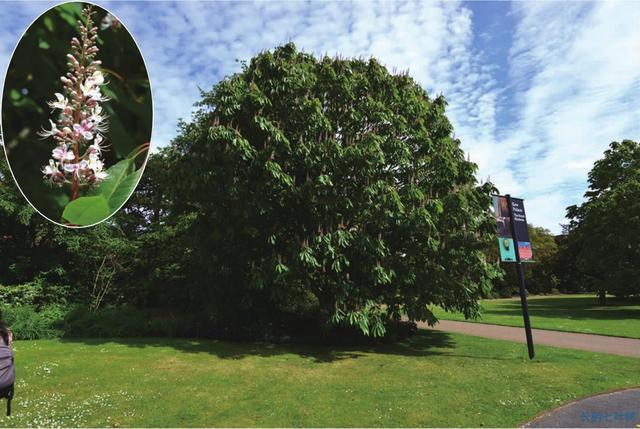
Aesculus assamica
Aesculus genus plants (Aesculus) are deciduous trees, rarely shrubs. Leaves opposite, palmately compound with 3-9 (usually 5-7) leaflets, with relatively long petioles; leaflets oblong, obovate or lanceolate, with serrate margins. Cymose panicles terminal, erect, lateral cymes scorpioid. Petals 4-5, obovate, oblanceolate or spatulate. Capsule. Flowering period usually spring. The genus has 23 species, widely distributed across Asia, Europe and America. In China, the distribution center is the subtropical region of the southwest, reaching north to the Yellow River basin, east to Jiangsu and Zhejiang, and south to northern Guangdong. Often grows in moist broad-leaved forests at altitudes of 100-1500 m.
Aesculus genus plants have upright trunks and elegant tree forms, with both flowers and leaves having high ornamental value. Flower colors are rich, including yellow, red and white, and some autumn leaves can turn red or yellow, achieving the effect of enjoying both flowers and foliage. Cultivation is extremely common in Europe, North America and Japan, with limited application in Chinese gardens. Suitable for parks and courtyards as solitary plantings used as shade trees, forming a landscape on their own, and can also be planted along roadsides as street trees or used in scenic forests. Aesculus also has a deep connection with Buddhism; legend says the place where the Buddha first preached to his disciples was under an Aesculus tree. Aesculus wood is dense and can be used for making utensils and construction.
1. Aesculus assamica
Aesculus genus deciduous tree, often up to more than 10 m tall. Palmately compound leaves, leaflets 6-9, subleathery, oblong-lanceolate, apex acute, base broadly cuneate. Inflorescence terminal, basal cymes with 5-6 flowers. Flowers polygamous, petals 4, white with purple-brown blotches. Capsule. Native to China; also found in Vietnam, Thailand, Myanmar, Bhutan, Bangladesh and India. (See the title image)
2. 'Briotii' red horse chestnut Aesculus x carnea 'Briotii'
'Briotii' red horse chestnut
Aesculus genus deciduous tree, up to 10-15 m tall, crown rounded. Palmately compound leaves, leaflets 5-7, sessile, serrate. Panicles up to 25 cm long, flowers dark red. Horticultural variety, a hybrid of European horse chestnut and North American red buckeye. Fruit nearly spherical, capsule.
3. Chinese horse chestnut Aesculus chinensis
Chinese horse chestnut
Deciduous tree, up to 25 m tall. Palmately compound leaves composed of 5-7 leaflets, leaflets papery, oblong-lanceolate to oblong-oblanceolate, base cuneate or broadly cuneate, margins with blunt-tipped fine serrations. Inflorescence cylindrical, cymes usually composed of 5-10 flowers, petals 4, white. Capsule. Wild only in the Qinling Mountains.
4. Dallimore horse chestnut Aesculus dallimorei
Dallimore horse chestnut
Aesculus genus deciduous tree. Leaflets 5, oblong-obovate, leaves dark green, leaf underside tomentose. Inflorescence terminal, flowers white to pale yellow, with chestnut-colored spots. Graft hybrid.
5. Yellow buckeye Aesculus flava
Yellow buckeye
Deciduous tree, plant height 15 m. Compound leaves, leaflets 5-7, ovate, glossy, dark green, turning red in autumn. Flowers yellow, capsule, round. Native to the United States.
6. European horse chestnut Aesculus hippocastanum
European horse chestnut
Aesculus genus deciduous tree, usually up to 25-30 m tall. Palmately compound leaves opposite, with 5-7 leaflets; panicles terminal, flowers relatively large, petals 4 or 5, white, with red markings, claw initially yellow, later turning brown, outer side with sparse short pubescence. Capsule. Native to Albania and Greece.
7. Large-flowered horse chestnut Aesculus x hybrida
Large-flowered horse chestnut
Aesculus genus deciduous tree. Palmately compound leaves, leaflets 5, long obovate, green, margins serrate. Panicles terminal, flowers relatively large, flowers pale red. Capsule. Horticultural hybrid.
8. Indian horse chestnut Aesculus indica
Indian horse chestnut
Aesculus genus deciduous tree, plant height 20 m. Palmately compound leaves, leaflets usually 7, smooth, narrowly ovate, green, young leaves bronze-colored, autumn leaves orange or yellow. Panicles, petals 4, white to pale pink, with red or yellow spots. Native to the Himalayas.
9. North American red buckeye Aesculus pavia
North American red buckeye
Also known as small horse chestnut, Aesculus genus deciduous tree, sometimes shrubby, plant height 5 m. Palmately compound leaves, leaflets 3-5, narrowly ovate, smooth, dark green. Panicles, petals 4, red. Capsule. Native to North America.
10. Japanese horse chestnut Aesculus turbinata
Japanese horse chestnut
Deciduous tree, usually up to 30 m tall. Palmately compound leaves opposite, with 5-7 leaflets, obovate, oblong-obovate to obovate-elliptic. Panicles terminal, erect, petals 4, rarely 5, white or pale yellow, with red spots, changing from yellow to red when flowering. Capsule. Native to Japan.