How to make a stump bonsai? A full breakdown of practical tips and bonsai knowledge
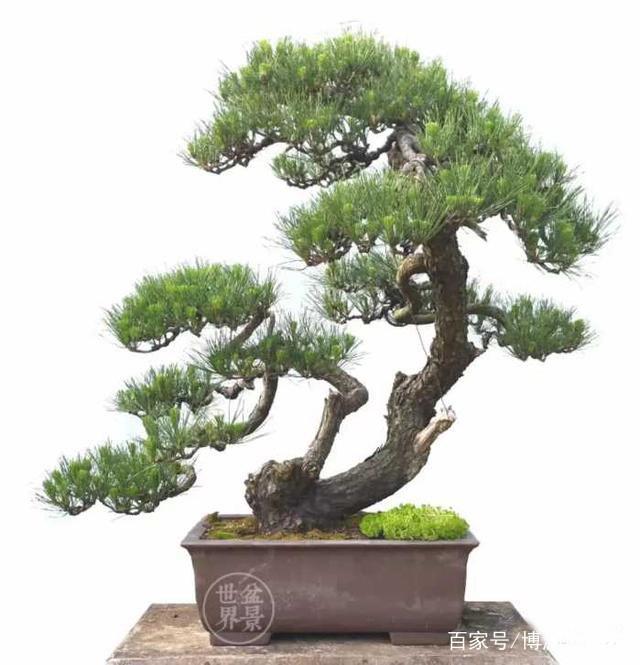
Making bonsai is a great art. There are many bonsai schools, and I prefer Lingnan bonsai. What follows is mainly about making stump bonsai.
In my view, to do bonsai well, the two most important things are: first, the design of the bonsai's styling. Second, the care of the stump.
Let's talk about the stump first. There are two sources of stumps: wild and cultivated. Many plants are suitable for bonsai; any shrub or tree with these traits can be used for bonsai, as long as it is easy to keep alive, has small and glossy leaves, sprouts readily, and has supple branches that are easy to wire and bend. Bonsai material is in fact constantly being developed, and the more common ones include pines and cypresses, Sageretia thea (Chinese sweet plum), Murraya paniculata (orange jasmine), Serissa japonica (snowbush), elm, Chinese hackberry, maple, Vitex negundo (Chinese chaste tree), banyan, and so on. Cultivated stumps have the advantage of being easy to keep alive, but in styling they are less distinctive than wild ones. When digging wild stumps, pay attention to the season; mostly in spring and summer, bring plenty of the native soil, shade them after planting, and only gradually increase light intensity after more than a month of budding; if the plant is shade-loving, do not expose it to direct sun.
Styling is very important. After the stump survives, begin the styling design. There is also far too much knowledge about styling design to explain clearly here in a moment; for beginners, I think you should read more books, look at more pictures, think more, and exchange ideas more. There is also a great deal of related bonsai styling material online.
Bonsai technique mnemonic 1. No branch is straight for an inch; one inch, three bends; (branches should not stay straight for a full inch; a distance of one inch with three bends looks best. This inch should be the ancient inch.) Open the Baidu App to see more beautiful pictures 2. Where sparse, a horse can pass; where dense, wind cannot pass through; (where there are few branches and leaves, it should be as open as if a horse could run through; where branches and leaves are dense, it should be so dense that wind cannot pass through, meaning the emptier places the better, and the denser places the better) 3. One branch shows twists and turns, two branches split into long and short; (if there is only one branch, it should have bends and turns; two branches should have one long and one short, not roughly the same length) 4. Three branches speak of gathering and scattering, many branches have exposed and hidden; (three branches should have some gathered together and some farther apart; if there are many branches, some should be hidden, for a sense of layering and artistic mood) 5. Straight, long positions should be hidden rather than exposed; straight and curved positions should be exposed rather than hidden; (straight places are best hidden with leaves, and curved places look good exposed) 6. For plum bonsai, prefer breaking to bending, prefer slanting to straight. (For plum, choose breaks rather than bends, that is, choose the turns of the branches, and choose slanting rather than straight up and down) Bonsai is a wordless poem, a three-dimensional painting, a living sculpture. On the day the scene is complete, the work lies in ten years! Do not fear cutting the wrong branch, fear setting the wrong position. Remove the strong and keep the weak; remove the coarse and keep the fine. Judge accurately, cut ruthlessly.
Master Liu Zhongming's hand-drawn "Illustrations of a Hundred Forms of Lingnan Bonsai" is a rare must-see resource.