5 Flowers That Get Addicted to Eating Insects: Keep One at Home and Skip the Mosquito Coils and Insecticides
Before you know it, summer has arrived. Those annoying little flies and moths are out again, and when there is no other way, you have to light mosquito coils to keep the mosquitoes away. But sometimes you really cannot stand the smell of those coils! Do not worry, here are flowers that can wipe out mosquitoes and flying insects. One pot at home is enough, and they will devour mosquitoes and insects like crazy!
These 5 flowers get addicted to eating insects. Plant 1 pot and you can even skip the mosquito coils!
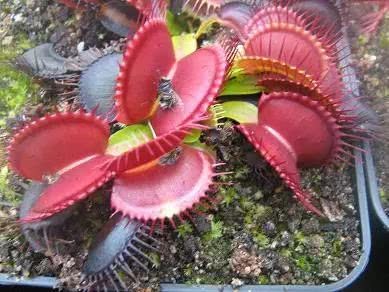
I. Venus Flytrap
The Venus flytrap is truly a worthy insect-eating "miracle tool." Do not be fooled by how small and unremarkable it looks. Once mosquitoes and insects encounter it, they are really out of luck.
Venus Flytrap
1. Prey
The Venus flytrap is the nemesis of small mosquitoes and insects. Once it encounters pests such as bees, flies, mosquitoes and small moths, it will immediately close its leaves to kill them. At this time, it gains sufficient nutrients to grow better.
2. How It Catches Prey
Never underestimate the Venus flytrap's small pod-like leaves, for they are lethal weapons for catching mosquitoes and insects. When a small mosquito or insect unknowingly crawls onto its leaves, the two leaf halves instantly snap shut and secrete a special liquid to kill the pest.
3. Care
The Venus flytrap prefers a humid and slightly warm environment, so a sunny balcony or windowsill is most suitable. To maintain a moist growing environment, just mist around the plant once a day. The Venus flytrap will catch small insects and mosquitoes very well, but it will absolutely not harm people. So gardening friends can care for it with peace of mind!
II. Pitcher Plant (Sarracenia)
The pitcher plant gets its name from its shape. A single plant can produce red, green and yellow "pitchers," and the bright colors look adorable.
Pitcher Plant
1. Prey
Compared with the Venus flytrap, the pitcher plant is a little bit more powerful. Its prey range is not limited to mosquitoes and small flies; small crawling insects can also be eliminated by it, such as spiders, ants and so on.
2. How It Catches Prey
The pitcher plant looks quite interesting, and most importantly, the pitcher body is its key weapon for catching pests. As long as a small insect crawls into its pitcher, it truly cannot escape.
3. Care: The pitcher plant is a plant that loves sun and moisture. The best way to care for it is to mix ordinary garden soil with an appropriate amount of sand for planting, and a suitable amount of moss can also help retain moisture. Although its patterns may look a little unnatural, it is absolutely safe, so just care for it with peace of mind. The fragrance of the pitcher plant is also harmless to the human body!
III. Sundew
Sundew does not sound all that appealing at first, but it is indeed a carnivorous plant with fairly high ornamental value. Whenever it blooms, its many small flowers are very charming, giving people a beautiful and fresh feeling. Sundew
1. Prey
The sundew is quite capable when it comes to catching pests. Small moths, rove beetles, moth flies and so on, all winged small insects are its delicacies.
2. How It Catches Prey
The sundew also catches pests by secreting sticky fluid. All of its branches, large and small, are covered with countless glandular hairs, which are specially for secreting sticky fluid. When a small insect comes near, it will be trapped tightly, and at the same time the branch will curl to capture the prey and kill it.
3. Care
The more humid the growing environment for the sundew, the better. Placing it in a shaded spot is quite suitable, and an indoor bathroom also works. In the hot, dry summer now, it is fine to give it a convenient bag to cover it, and this care method works. Gardening friends, remember that all of its fine hairs and secreted liquid are non-toxic and harmless, so just care for it with peace of mind.
IV. Butterwort
At first glance, you really want to say how beautiful it is. Not only is it beautiful, it can also eliminate pests!
Butterwort
1. Prey
The butterwort will not eat just any pest; it just happens not to like small mosquitoes. It will eliminate small flying insects and small flies, so it is a bit of a picky eater!
2. How It Catches Prey
The butterwort's way of catching prey
is not especially inventive. When a pest comes near and crawls onto it, the sticky fluid it secretes firmly traps the insect, and even the most desperate struggle is futile. In the end, it is slowly digested.
3. Care
Keeping the potting soil moist is very important, because the butterwort likes a humid environment. If you want few small flying insects in your home, remember to place it in the bathroom and bedroom, and it is best if the surrounding plants are the kind that easily attract insects. Simply perfect. Remember that it absolutely must not be exposed to strong sun.
V. Pitcher Plant (Nepenthes)
In the past, quite a few gardening friends did not really like Nepenthes. But now that does not seem to be the case. More and more gardening friends are growing Nepenthes. Do not be put off by its strange appearance; it is also quite good at eating insects.
Nepenthes
1. Prey
Nepenthes really can eat a lot. All kinds of flies, mosquitoes, spiders and so on, large and small, will all be eaten. It accepts every comer, and its appetite is astonishing.
2. How It Catches Prey
Nepenthes' insect-catching skill is also somewhat different. Its inner wall secretes a kind of sweet juice, first to attract all kinds of small insects passing by. Once an insect crawls near, it will naturally be eliminated.
3. Care
Nepenthes has no excessive requirements for its growing environment. An appropriate amount of leaf mold mixed with garden soil is enough. Doing a thorough watering once a day and misting to retain moisture well will make it grow faster. Placing it in a sunny spot is most suitable. Nepenthes really looks interesting, and a cheap pot costs just over ten yuan. Keep a few pots at home, and they are really effective at repelling mosquitoes and insects!
If you like growing flowers, please follow the WeChat public account: Balcony Garden Vegetable Garden