A devoted pair, one died, and the survivor refused to eat.
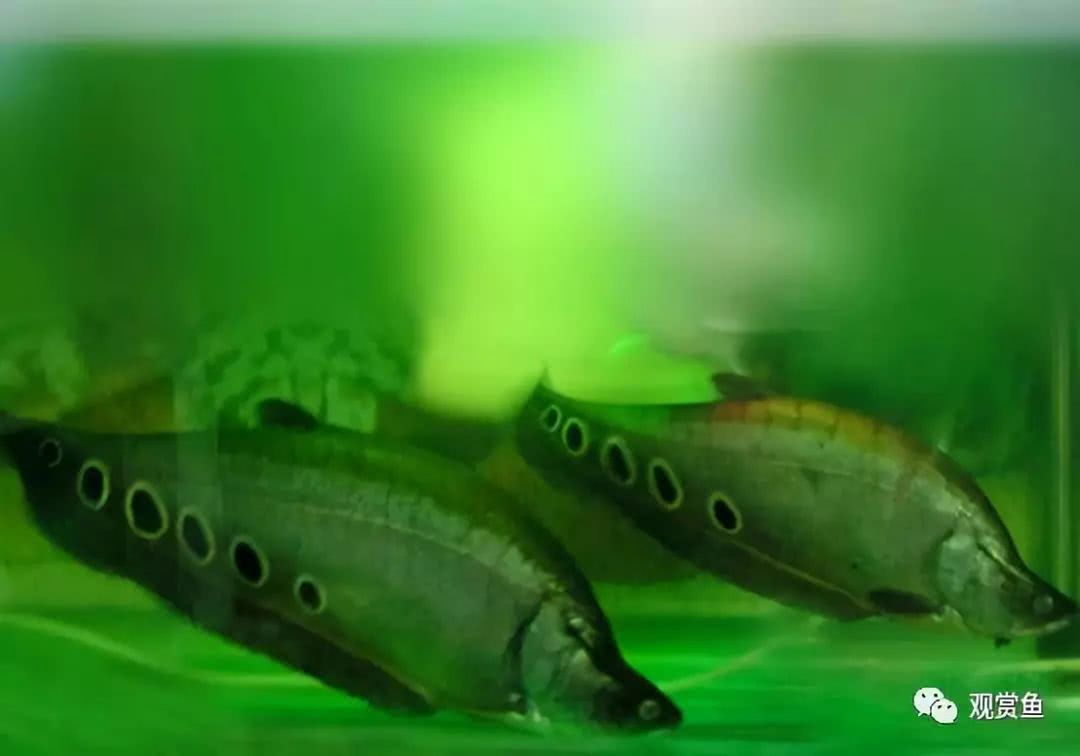
My two silver arowanas and two clown knifefish are kept together. The two species each have their own territory in the water: the arowanas stay in the upper layer, the knifefish in the lower layer. They do not disturb each other and get along peacefully. The clown knifefish is native to Japan and is also called the East Asian knifefish, or humpback fish.
My clown knifefish is 1 chi 4 cun long. Its dark gray body is flat, as soft and glossy as silk. On its small head are a pair of eyes like night-luminous pearls; it can forage at night and is a nocturnal fish. The dorsal fin is very small, and the pelvic fin and tail fin are joined together. Its flat, broad body is dotted with many ink-colored round spots edged in white, like stars. It can swim forward and also backward. When swimming backward, the pelvic fin makes wave-like movements and the body glides lightly backward. It is like a black silk ribbon dancing in the water, extremely beautiful, absolutely wonderful.
The pair of clown knifefish never separated; when swimming they were inseparable, and when resting they lay motionless on the bottom, bodies pressed close and nestled together, head to head. Last winter one clown knifefish fell ill, neither eating nor moving. I tried every way to treat it, but there was no improvement, and in the end it collapsed, while the other drew close and pressed tightly against it. The sick fish struggled up, leaned for a while, then fell again. Finally the sick fish stopped moving, belly up and back against the bottom; at that moment the other one was still head to head with it, but could no longer be shoulder to shoulder... Seeing this, I was extremely sad. I could not bear to scoop out the dead fish and leave the living one without a companion, enduring loneliness.......
From then on this clown knifefish stopped eating, for as long as two months, gradually growing thin and rarely swimming up. Every day it quietly kept watch alone on the territory they had shared, keeping watch..... Every day I gently stroked it for a while, and it would passively swim a few times. Later I thought I should find it another companion. So I went and bought a small one. A few days later it began to eat, and I was overjoyed. Before long they were head to head again....... Now the small clown knifefish has grown larger than the original one.
When I think of the clown knifefish I lost, I still miss it to this day. When I bought it, it was only 8 cm long, and the seven-star spots on its body were only the size of grains of rice; when it died, the seven-star spots on its body were already the size of quail eggs. I kept it for 20 months. Yet it left; I weighed it at 1.5 jin, and also took its photo and stored it in the computer. Consider it a keepsake. In memory of that devoted pair of clown knifefish.
Reading this, you must surely want to say, how good it is that this "original mate" is still alive and well. So when a clown knifefish stops eating, what should we do?
There are many reasons a clown knifefish stops eating. Do not blindly medicate; try letting it go hungry for a few days and see. In keeping clown knifefish, you need a general understanding of their habits. Clown knifefish are nocturnal fish and prefer live bait; very few clown knifefish will eat prepared feed. As for the situation where a clown knifefish stops eating, it mainly falls into the following cases:
1. New fish entering the tank
A newly purchased clown knifefish has a period of adapting to the environment, about a week or so, during which it moves little and eats little. There is no need to worry excessively about this; you need to maintain good water quality and give it as quiet an environment as possible. At the same time, do not feed it in broad daylight; clown knifefish are a nocturnal species and eat at night.
2. Poor water quality
If a clown knifefish suddenly becomes inactive and stops eating, besides the first case, you need to consider what you have recently done that changed the clown knifefish's environment, such as adding water purifiers or nitrifying bacteria, and at the same time observe the water quality and whether the clown knifefish has any external signs of illness. If water quality is ruled in as the cause, change the water as soon as possible and maintain good water quality.
3. Being startled
When a clown knifefish is startled, it will hide in a corner or at the bottom of the tank, swim poorly, and eat less. At this point you should think about whether there has recently been any loud noise in your home or whether children have come to visit.
4. Overfeeding or feeding the wrong food
If you suddenly feed too much food that is hard to digest, in the following days the clown knifefish will be in low spirits, eat less, or stop eating. Sometimes it may also be that the food you feed is wrong. I have seen many fish keepers ask: what feed do clown knifefish eat? Then they starve it for many days to force the clown knifefish to accept artificial feed. This is a very incorrect practice. Among clown knifefish, very few can accept feed; such clown knifefish will compete for feed on their own without being starved to the point of eating it, so I suggest everyone not do this again in the future.
5. Illness
If the above cases are ruled out, then the clown knifefish may be sick, and the most likely possibility is internal parasites. The external signs of such a disease are not obvious. If you are certain it is internal parasites, you can use drugs such as Baibichu or trichlorfon, dosing a certain amount according to the size of your tank and the condition of the fish.
There are many reasons a clown knifefish stops eating. The most commonly used method is to starve it for a few days first and see, and although this is relatively safe, it is still recommended to treat the specific cause, lest the illness be delayed and lead to death. Keeping clown knifefish likewise requires patience and care.
The above content comes from the internet, and the copyright belongs to the original author.