The secret to roses blooming profusely lies in one rub, one pluck and one cut
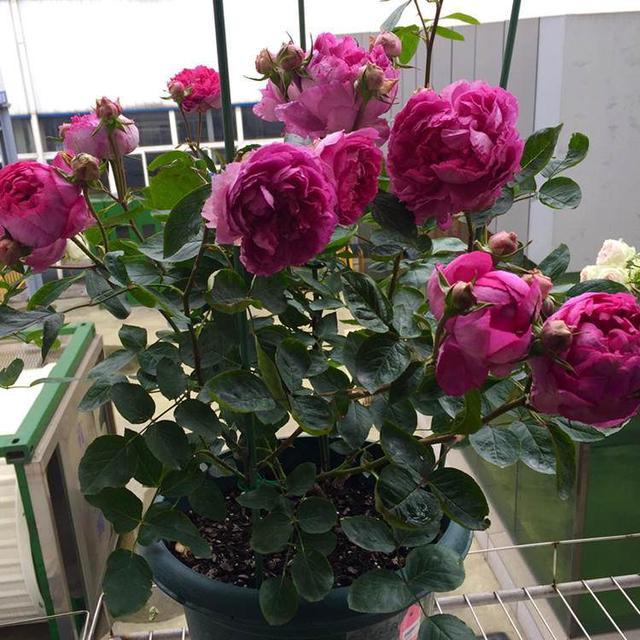
Roses have brilliant colors and a vast number of varieties, and can bloom multiple times a year. But growing roses is truly a troublesome business: if you want a profusion of blooms, you have to keep rubbing out buds, plucking off flower buds and pruning. And mastering this "one rub, one pluck and one cut" is the secret to a rose bursting out of its pot.
"One rub" means rubbing out buds
In spring, for rose shoots that are growing too densely, do not be reluctant to part with them; steel yourself and remove them promptly. Only 2~3 buds need to be kept on each main branch. When removing buds, first rub out by hand the buds that grow inward and would produce branches crossing the middle of the plant.
"One pluck" means plucking off flower buds
For variegated fragrant roses and the like that bear one flower per branch, the side buds can be removed, keeping only the single central main bud. For cluster-flowered, strong-growing rose varieties that bear many flowers on one branch, the main bud and overly dense small buds can be removed so that the flowering period is concentrated. For miniature roses, do not remove the flower buds; just let them grow naturally.
For young rose plants, when the first small flower buds form in early spring, the buds should be plucked off so that the plant accumulates nutrients and promotes the development of new branches. At the same time, the roses need supplementary nutrients; you can use an organic nutrient solution specially made for roses, diluted 500 times with water, and water it on once every 7 days to promote nutrient supply, so the roses grow better.
"One cut" means pruning off spent flowers
When growing roses, you must also remove spent flowers promptly. After the flowering period, the spent flowers should be cut off immediately. Generally, count downward from the flower and cut about 0.5 cm above the compound leaf with the second pair of small leaflets, cutting away the upper shoot tip and the spent flower, and keeping the axillary bud of the second compound leaf so that it sends out new branches. But do not cut off too long a flower stalk, because removing too many branches and leaves is bad for the plant's growth.
For potted roses, dormant-season pruning is best done at the end of the plant's dormancy, when the axillary buds begin to swell. For gardeners in the south, it is recommended from early to mid-January to the end of February; for gardeners in the north, pruning is recommended from February to the end of March.
In addition, dormant-season pruning is very important for large roses more than two years old. It mainly involves cutting off at the base dead branches, diseased and pest-infested branches, crossing branches, thin and weak branches, and soil-borne shoots that sprout after autumn.