Plant hydrangeas in the yard, and when they bloom in clusters, the beauty is simply breathtaking.
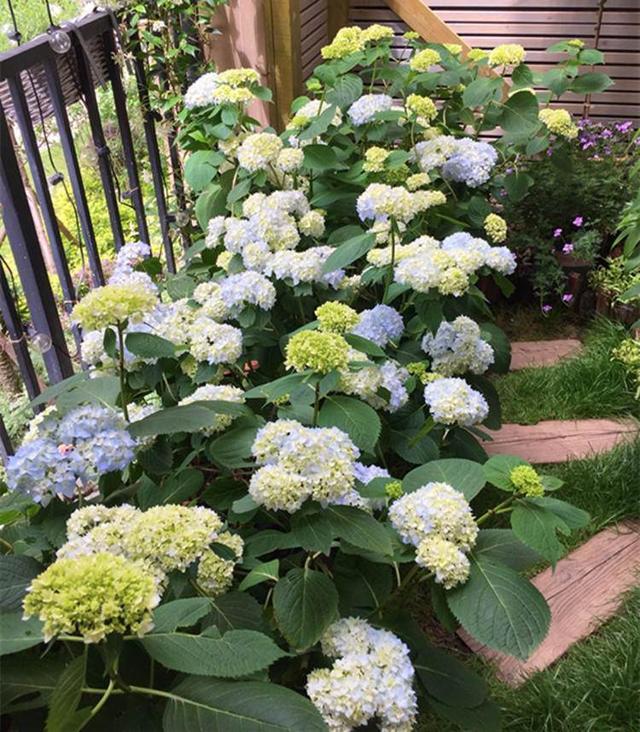
Hydrangea, also called bigleaf hydrangea, is something gardeners with a yard will probably all plant. As long as the care methods are right, once hydrangeas bloom, with their big flower balls in clusters and vivid colors, they are even more beautiful than "fairies."
So, how can hydrangeas be grown well, with abundant and beautiful blooms?
First, gardeners need to transplant rooted cuttings in early spring into cylindrical pots, using equal parts garden soil and leaf mold mixed together, with a small amount of sandy soil added as potting soil (or mix 4 parts compost soil, 5 parts sandy soil, and 1 part cake fertilizer residue evenly).
After potting, water thoroughly and keep indoors for care, then move outside in early May. Hydrangea likes shade. After moving outside in spring, it should first be placed in a semi-shaded environment for care. In midsummer, move it to a well-ventilated shady spot to prevent sunscald on the leaves. After September, as light intensity gradually weakens, to promote flower bud differentiation, the pot should be moved to a place with more light.
Hydrangea likes fertilizer. During the growing period, generally apply a dilute organic nutrient solution once every half month, diluted 500 times with water for watering. To keep the potting soil consistently acidic, add 100 grams of ferrous sulfate per 100 kilograms of fertilizer water, turning it into alum fertilizer water for irrigation. During the bud stage, applying 1-2 additional rounds of 800-times organic nutrient solution will promote larger flowers and brighter colors.
Hydrangea leaves are relatively large and need more water. Aside from winter, when low temperatures require strictly controlling watering, watering in spring, summer, and autumn should be sufficient to keep the potting soil consistently moist, especially in the hot midsummer, when even more water should be given. Before Frost's Descent, move it indoors and control watering, keeping the room temperature at around 5°C to promote dormancy. Before bringing it indoors, remove the leaves to prevent leaf rot.
Starting in mid-December, gradually move it to a sunny spot, and move it outside again after Grain Rain the following year. Hydrangea should be repotted once every 1-2 years in early spring, replacing it with new potting soil. When repotting, remove some old soil and rotten roots, and prune as part of the repotting. Because hydrangea flower heads are too large, supports should be set up in time. This not only keeps the flower stems upright but also makes the plant look fuller.