The Complete Guide to Flower Growing Knowledge and Practical Care Tips
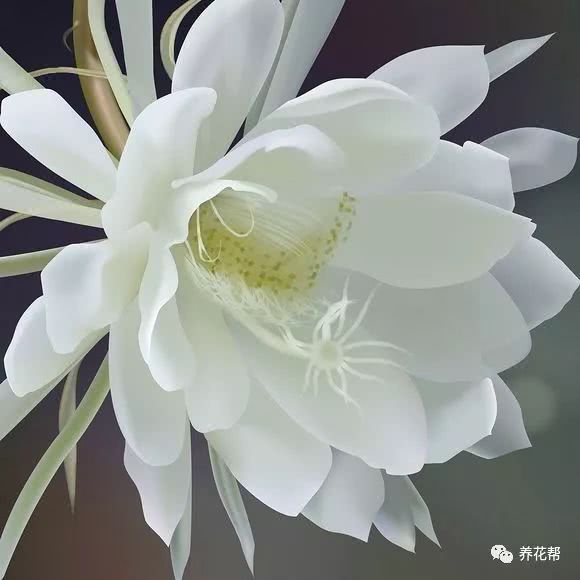
Flowers are the most beautiful spirits in the world, and many flowers also carry their own unique meanings. In growing flowers, what matters most is not skill but whether you understand them with your heart. Have you ever tried growing flowers yourself? What do you think of it?
The Effect of Temperature on Flowers
Temperature is an important condition for the survival of all kinds of flowers. No matter how suitable other environmental conditions are, if there is no suitable temperature condition, flowers will find it hard to survive. The growth and development of each kind of flower has its own optimum temperature, maximum temperature and minimum temperature. The editor lists a few categories.
1. High-temperature types: such as Milan (Aglaia odorata), poinsettia, cineraria, gloxinia, fuchsia, etc. When grown in North China, the winter room temperature must be kept at least above 12°C.
2. Medium-temperature types: such as white orchid (Michelia alba), jasmine, hibiscus, geranium, etc. The winter room temperature must not be lower than 5°C.
3. Low-temperature types: such as oleander, osmanthus, kumquat, bitter orange (Citrus aurantium 'Daidai'), sago palm, etc. The winter room temperature only needs to be no lower than 0°C. If the temperature is too high or too low, the normal physiological activities of the flowers will be disrupted, growth will stop, and in severe cases the whole plant will die.
The Effect of Light on Flowers
The purpose of cultivating flowers is to make them bloom more, and light is the most effective external factor in promoting flower bud formation. Yellow flowers are divided into three categories for explanation.
1. Long-day flowers: generally, flowers that need more than 12 hours of sunlight per day to form flower buds are called long-day flowers. Many flowers that bloom in spring and summer mostly belong to long-day flowers, such as iris, aster, impatiens, etc.
2. Short-day flowers: flowers that can only form flower buds under the condition of less than 12 hours of sunlight per day. Poinsettia and chrysanthemum are typical short-day flowers.
3. Day-neutral flowers: flowers whose flower bud formation does not strictly depend on the length of daytime sunlight are called day-neutral flowers. Such as calla lily, carnation, zinnia, Chinese rose, hibiscus, etc. They have no obvious response to the length of light time; as long as the temperature is suitable, they can bloom all year round.
What Happens When Potted Flowers Are Under-Watered
Because potted flowers have little soil and do not hold much water, during the growing season they need frequent water replenishment to ensure normal growth. If the water supply is insufficient, the leaves and leaf stalks will shrivel and droop, and the flowers will show signs of wilting.
If flowers are supplied with insufficient water for a long time, the older leaves and the leaves at the lower part of the plant will gradually turn yellow and dry up. If most herbaceous flowers remain in a drought state for a long time, the plants will be stunted, the leaves will lose their fresh green luster, and the whole plant may even wither and die.
Do Not Water Flowers with Cold Water at Noon in Midsummer
At noon in midsummer, the temperature is very high, and the temperature of flower leaf surfaces can often reach around 40°C. Transpiration is strong, and water evaporation is also fast. The root system needs to continuously absorb water to replenish the loss from leaf transpiration. If cold water is poured at this time, although water is added to the potting soil,
because the soil temperature suddenly drops, the root hairs are stimulated by the low temperature and will immediately hinder the normal absorption of water. This phenomenon is especially obvious in herbaceous flowers, such as geranium, cypress vine, aster, etc., which most avoid being watered with cold water at noon in hot weather. For this reason, in summer it is best to water flowers in the morning and evening.
One: Watering Flowers with Rice Water
For people who do not grow flowers, rice water is of no use at all and is directly poured down the drain, but they do not know the benefits of using rice water to water flowers. Regularly using rice water to water flowers such as Milan (Aglaia odorata) can make their branches and leaves lush and their flower colors vivid. This flower-growing tip is also the simplest and easiest to do.
Two: Watering Flowers with Warm Water
In winter, for some flowers with poor cold resistance, it is best to use 35°C warm water for watering. Second, in winter, use water kept at room temperature for watering, so as to avoid freezing and damaging the roots of these flowers.
Three: Watering Flowers with Cool Boiled Water
This method is also a relatively commonly used flower-growing tip. In daily life, we always habitually pour cool boiled water into flower pots. This can make flowers and trees leafy and brightly colored, and can promote earlier blooming. If used to water asparagus fern, it can make its branches and leaves grow horizontally, and become short and dense. Although doing this is good, it must not be excessive.
Four: Watering Flowers with Spoiled Milk
After milk spoils, add water and use it to water flowers; it is beneficial to the growth of the flowers. But add more water to make it relatively diluted. Unfermented milk is not suitable for watering flowers, because it produces a large amount of heat during fermentation, which will "burn" the roots (root rot). This flower-growing tip is also a less commonly used watering method.
Five: Watering Flowers with Leftover Tea
Tea contains a variety of chemical substances. Using leftover tea to water flowers can add nutrients such as nitrogen to plants and can also maintain soil moisture. However, this flower-growing tip can only be done in moderation and on a regular basis, and cannot be done arbitrarily.
Six: Long-Term Watering Method with a Plastic Bag
Everyone may find this name very strange. Indeed, not only is the name of this method strange, but even the method itself is incredible. It is suitable for use when no one is at home for a long time, such as on a business trip or visiting relatives, being away for ten days to half a month. In order not to let the flowers wither and die, this flower-growing tip method is shared with everyone here. Find a plastic bag, fill it with water, then tie the bag opening tightly to prevent water from spilling out, then use a fine needle to prick a small hole in the plastic bag, and place the pricked hole facing downward into the flower pot, letting water slowly seep into the soil through the small hole to maintain soil moisture. Be sure not to make the hole too large, otherwise the consequences are self-evident.