How to grow potted hydrangeas? Master these tips to grow full, round, bursting pots
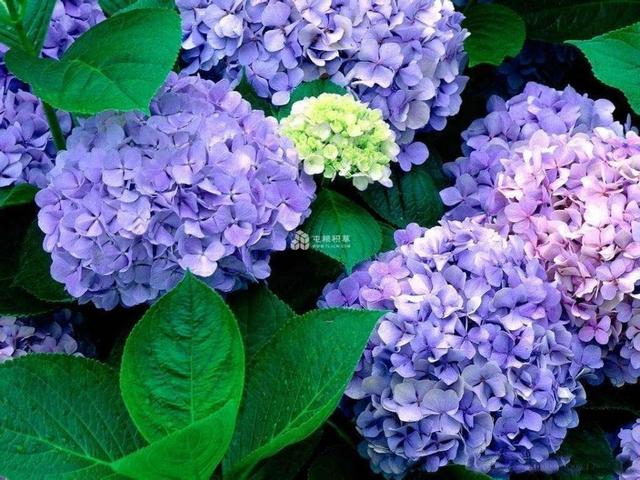
Hydrangea, as the name suggests, has a flower shape that is full and round like a hydrangea, with large and beautiful blooms, and elegant, lovely colors that delight the eye. It is often widely grown as a potted plant or a garden ornamental flowering shrub. However, hydrangeas have extremely high environmental requirements, and many people do not know how to grow hydrangeas. Today, the Tunliang Jicao website editor will introduce some hydrangea cultivation methods, so that friends who like hydrangeas know how to grow them.
Hydrangea cultivation methods:
1. Soil:
Hydrangea is suited to loose, fertile, well-drained acidic soil rich in humus. Its flower color is affected by soil pH: if the soil is acidic, the flowers are blue; in alkaline soil, the flowers are red. As the soil acidity and alkalinity change, the flower color can change from white to red, and to blue. It can be adjusted with acidic aluminum sulfate or alkaline lime.
2. Watering:
Hydrangea likes moisture but also fears waterlogging. Generally, just keep the potting soil moist, and follow the principle of watering only after the soil has dried out, and watering thoroughly when you do. In the hot summer, according to the condition of the potting soil, water 1-2 times a day; when the air is dry, you can spray water on the leaves. In winter, growth stalls, so it is better to keep the potting soil relatively dry. In the rainy season, reduce the frequency of watering, and at the same time pay attention to drainage to prevent root rot caused by waterlogging.
3. Light:
Hydrangea likes light but avoids scorching sun. It can be placed in a semi-shaded spot on a balcony or in a bright indoor area for growing, and at the same time pay attention to ventilation. Avoid an overly shady environment or a small pot with a large plant, which can lead to yellowing leaves and difficulty in blooming.
4. Temperature:
Hydrangea is not tolerant of high temperatures and is suited to a relatively warm temperature for growth. The suitable temperature is 15-25°C. Especially in summer, keep it ventilated and cool. In winter, the climate is cold, so pay attention to cold protection, and the minimum temperature should not be lower than 5°C.
5. Pruning:
During the seedling stage, pinch the tips 2 times to promote branching. Usually, withered and yellow leaves at the base of flower branches should be cut off in time. If there are too many new branches, some overly dense branches and weak branches can be pruned. After the flowers fade, the branches can be shortened, but do not overdo it; just cut off 1/3 of the branches that grew in the current year. Do not cut off the branch sections that have grown flower buds, so as to facilitate blooming the next year. Before repotting in spring, the plant can be pruned again, leaving only 3-4 nodes per branch, which is beneficial for the sprouting of new branches.