A Complete Guide to Summer Leaf-Plucking Techniques for Japanese Maple Bonsai to Help It Safely Through the Hot Summer
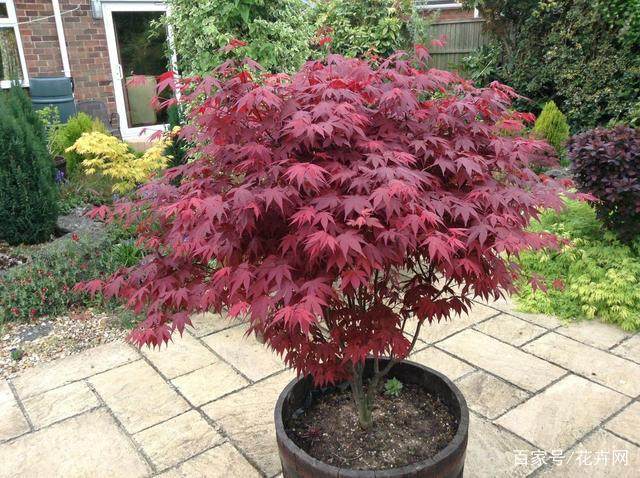
As a precious and highly ornamental bonsai, the Japanese maple bonsai demands a great deal of time and effort in its care. Especially as a bonsai, one very important aspect is its pruning. So when it comes to the Japanese maple bonsai, because it is famous for its fiery red and gorgeous leaves, the most important part of its pruning should be leaf-plucking.
So how do you pluck the leaves? This question is indeed quite troubling. For most people, they only know how to do some simple pruning, such as trimming branches and roots that have grown crooked. So next, let us introduce the specific steps of leaf-plucking.
Generally, the time for leaf-plucking is at the turn of spring and summer, or at the turn of summer and autumn, which means it is best done in June or September. Before plucking the leaves, we need to fertilize it first, and only then can we prune and pluck the leaves. Only by replenishing water and fertilizer can it grow new leaves.
In midsummer, the leaves of the Japanese maple are easily scorched by the sun. We usually choose August to pluck the leaves that have already been scorched. Then we place it in a semi-shaded spot to prevent it from being sunburned again. After plucking, you can fertilize it once to help it grow new leaves better.
Replace with a high-definition large image
Place it in a semi-shaded spot only during the summer. At other times, it is best to place it in the sun. When there is insufficient sunlight, it cannot effectively carry out biological reactions, and its leaves will not grow such a vivid red. And in summer, it needs sun protection to avoid sunburn.
Replace with a high-definition large image
While plucking the leaves, we also need to pay attention to the growth of its branches. If the branches are not growing very well, they should be pruned together with the leaf-plucking. Cut off the old, weak, diseased and dead branches. First, this makes future management easier, and second, it can prevent some pest and disease problems. It can be said to achieve twice the result with half the effort.
After plucking the leaves, we also need to carry out follow-up care. Its watering needs to be done every day. It rather likes to grow in a humid environment, so whether before or after pruning, it needs a certain amount of water maintenance. Watering must not be excessive; excessive watering will cause waterlogging, and too much waterlogging will lead to root rot. But because its growth habits determine its high water demand, watering must not be too little either; too little will cause it to dry out.
After reading this article, I think you must understand much more than before about leaf-plucking for red-leaf bonsai, and about the care and management before and after leaf-plucking. So, are you tempted? If you are, you can grow one yourself. Only by gaining practical experience will you have a deeper understanding.
If you need to learn more about the care and management of red-leaf bonsai, you can comment or leave a message below.