The "dung melon" once disgusted farmers, now it brings in 20,000 yuan per mu and has become a money tree
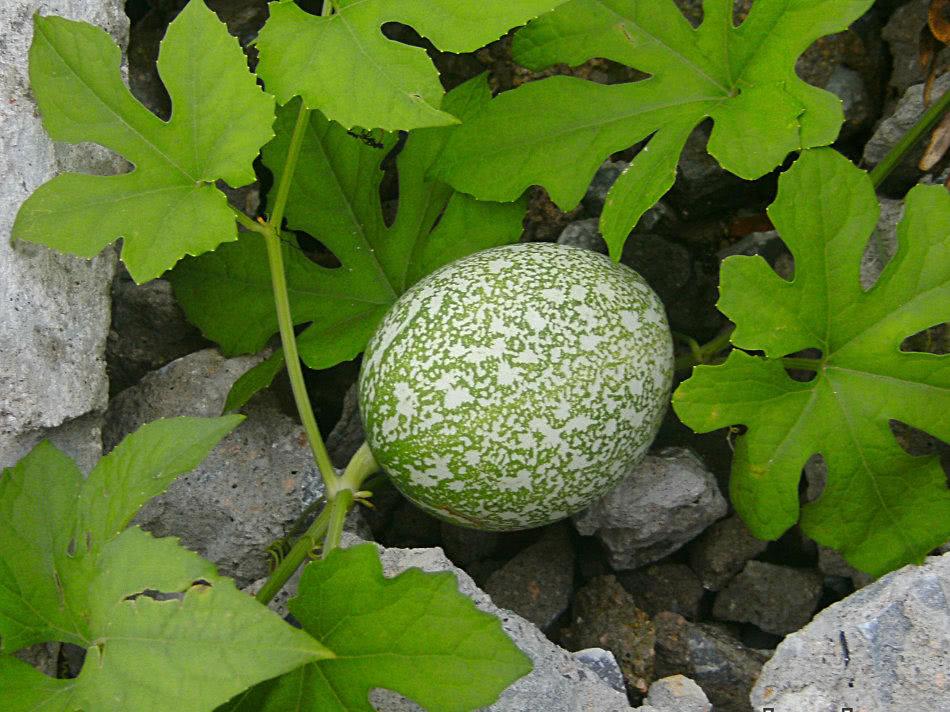
As the weather gets hotter and hotter, many fruits are starting to hit the market. Speaking of fruit, one fruit is very famous in summer, and that is watermelon. Watermelons are deeply loved by people. They are not only delicious and full of water, but eating them in summer can also relieve heat, quench thirst and cool you down. Today, in a farmer's field in the village, the author found a peculiar watermelon. Its skin is covered in patterns, it is oval-shaped, and it actually looks a bit like a muskmelon. Many friends may have seen it but do not recognize it. This kind of "small watermelon" is Trichosanthes kirilowii.
As for Trichosanthes kirilowii, the author also asked a few friends in the city, and none of them had heard of it. The reason is that this Trichosanthes kirilowii, which looks like a watermelon, is not a fruit and cannot be eaten, so it is generally rarely seen on the market. Moreover, Trichosanthes kirilowii used to be very unwelcome among farmers. First, it cannot be eaten. Second, Trichosanthes kirilowii looks quite nice on the outside, but in fact it is very ugly inside, and it was once jokingly called "dung melon" by farmers. You can imagine how ugly it was.
Third, according to the farmer in the village who grows Trichosanthes kirilowii, it used to be a harmful weed. Trichosanthes kirilowii is a climbing plant, and it was once wild, basically growing without any control. In order to grow, Trichosanthes kirilowii often climbed onto other trees and crops, causing these trees and crops to grow poorly. Therefore, Trichosanthes kirilowii was once regarded by farmers as a harmful weed, and it disgusted many farmers.
However, now that the value of Trichosanthes kirilowii has been discovered, it has also made it more and more popular among farmers.
The main reason is that every part of Trichosanthes kirilowii is a treasure. Its fruit, peel, kernels (seeds) and rhizomes are all fine traditional Chinese medicinal materials. When used as medicine, it has the effects of clearing heat and eliminating phlegm, broadening the chest and dispersing nodules, and moistening dryness and lubricating the intestines. It can be used to treat lung heat cough, thick yellow turbid phlegm, chest impediment and heart pain, bind chest and stuffiness, breast abscess, lung abscess, intestinal abscess swelling and pain, constipation and many other symptoms. Precisely because of this, Trichosanthes kirilowii is now deeply loved by farmers, and many farmers have begun to grow Trichosanthes kirilowii and become rich from it.
According to Old Zhao, the farmer who grows Trichosanthes kirilowii whom the author visited, Trichosanthes kirilowii is really a good thing. The planting and management techniques for Trichosanthes kirilowii are very simple, basically the same as growing vegetables and melons in rural areas. It can be planted in both spring and autumn each year, and can be propagated by seeds, root division, layering and many other methods. It can be harvested after Trichosanthes kirilowii matures in late autumn. The yield of Trichosanthes kirilowii seeds is 350 to 400 jin per mu, at 30 yuan per kg. The yield of Trichosanthes kirilowii shells is 280 to 300 jin per mu, at 10 yuan per kg. In addition, there are also the roots and fruits of Trichosanthes kirilowii. Apart from costs, the annual income from Trichosanthes kirilowii is basically 20,000 yuan per mu. It would not be an exaggeration to call it a "money tree."
Actually, the author also looked into the market for Trichosanthes kirilowii, and in recent years the fluctuations have been relatively stable. Dear friends, do you know about Trichosanthes kirilowii? You are welcome to leave a message and share your thoughts!