How is tomato fusarium wilt caused? Causes and control methods
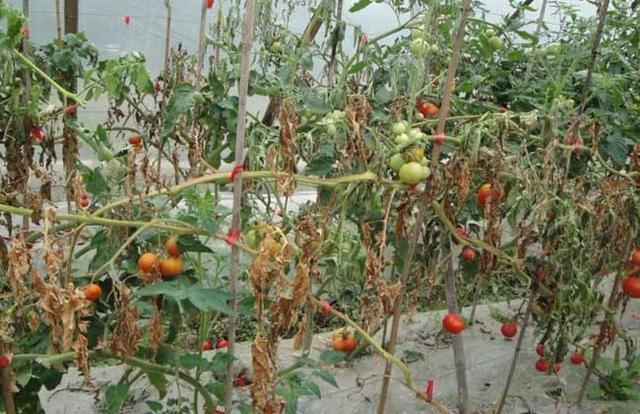
Causes of tomato fusarium wilt and control measures
Around the 2017 Chinese New Year, many vegetable growerssought help from plant protection stations. Large patches of tomato wilting appeared in greenhouses. Afteron-site observation and diagnosis by technicians, from the pulled-up stems, the rootvascular bundles had turned brown and necrotic, confirming it was caused by tomato fusarium wilt. Immediatelythe technicians conducted on-site training and technical guidance, explaining thecauses of the disease and providing control measures.
1 Damage symptoms
Tomato fusarium wilt, also known as wilt disease, is a soil-bornedisease that is relatively difficult to control. It often occurs together with bacterial wilt, mostly during the flowering and fruiting stage. At thebeginning it is not easy to detect, and plants die during the full fruiting stage. It spreads from the middle and lower leaves upward.In the early morning and evening the plants can recover, but afterward the wilting symptoms gradually worsen. Sometimesleaves on one side turn yellow while the other side remains normally green. In severe cases, the leaves of the entire plantwither and die, but do not drop off. Diseased leaves are yellowish-brown. When humid, pink mold appears on the stem near theground surface. When the stem is cut open, the vascular bundles are yellowish-brown, with no milkywhite sticky fluid flowing out, which distinguishes it from bacterial wilt. Especially when tomatoes have 2 to3 clusters of fruit, the demand for water and nutrients is high. After the vascular bundles are blocked, water and nutrients cannot besupplied in time, and the disease becomes severe.
2 Causes of the disease
There are many causes of this disease, especially in continuous cropping land, which is the mostsevere. In continuously cropped land with heavy clay and slightly acidic soil, a large amount of fusarium wiltfungi accumulates in the soil. Fields with excessive nitrogen fertilizer and insufficient phosphorus and potassium are prone to the disease. When there area certain number of nematodes and other underground pests in the soil, the pathogen enters the roots throughwounds caused by the pests. In addition, soil containing raw manure and soil where crops such as cotton have been plantedmay all transmit the pathogen. Fusarium wilt can survive in the soil for manyyears and can also be transmitted through infected seeds.
In the greenhouse vegetable growing area of Shahe City, most tomatoes are planted in autumn(September to October). At planting time, the temperature inside the vegetable greenhouse is exactly the most suitable temperaturefor fusarium wilt pathogen activity (20 °C to 30 °C). At this time the pathogen invadesthrough root wounds and slowly multiplies within the vascular bundles, blocking the vascularbundles, causing the plant's water and nutrient uptake to be obstructed. The plant becomes infected with fusarium wilt, andtomato leaves wilt or die.
3 Prevention and treatment of fusarium wilt
3.1 Biological control
3.1.1 Key points of control. The amount of drenching solution is determined according to "soil dryness and moisture and plant size",with the goal of "thoroughly drenching the crop's rooting zone".Generally, 100 to 400 ml of professional fungicide is applied per plant.
3.1.2 Preventive scheme. Use 50 ml of Qingkulike mixed with 15 kg of water forroot drenching, once every 7 to 10 d, for 2 to 3 consecutive applications.
3.1.3 Treatment scheme. First use mefenoxam and fludioxonil, mix in the proper ratio,and spray on the roots or drench the roots, applying twice in 5 d, with good treatment results.
3.2 Agricultural control
3.2.1 Clean the greenhouse. After harvest, remove weeds in the field and around it, andburn them in a centralized manner or compost them; deep plow the land to destroy stubble and sun the soil, promoting decompositionof diseased residues and reducing sources of disease and pests; do not remove the film. In summer during high temperatures, plow theland, block the air vents for 15 d, and use high-temperature greenhouse sealing to kill mostpathogens.
3.2.2 Soil disinfection. Before planting, select disease-resistant varieties and usedisease-free, coated seeds. If not coated, the seeds must be sterilized with a seed dressing agent or seed soakingagent. Do not use immature manure. Apply compost fermented with enzyme bacteria ordecomposed organic fertilizer to promote robust crop growth and improve crop diseaseresistance. Soil pathogens mostly accumulate in fields with severe underground pests. Before sowing,broadcast or apply in furrows sterilizing and insecticidal medicinal soil. At planting time, in the plantingholes for tomatoes, use biological bacterial agent containing more than 200 million per gram. Forseedling raising and transplanting, cover with medicinal soil after sowing, and spray an insecticidal and fungicidalagent once before transplanting. This is the key to disease prevention.
3.2.3 Grafting for disease prevention. Use wild water eggplant, poisonous eggplant or red eggplant as rootstock,and cultivated eggplant as scion. Using the cleft grafting method can provide high resistance to fusarium wilt.
3.3 Timely chemical control. After planting, control pests in time to reduceplant wounds and reduce transmission routes of the pathogen; when the disease occurs, promptly remove diseased leavesand diseased plants, take them out of the field and burn them, and apply medicine or quicklime to the diseased holes.
Fusarium wilt is easy to prevent but difficult to treat. Vegetable growers are reminded to focus onprevention, combine prevention with treatment, promptly remove diseased plants and disinfect the original holes;when watering, irrigate healthy plots and diseased plots separately; when drenching with medicine,thoroughly drench the entire root zone of the crop.