Causes of Alternate Bearing in Pecan and Measures to Overcome It
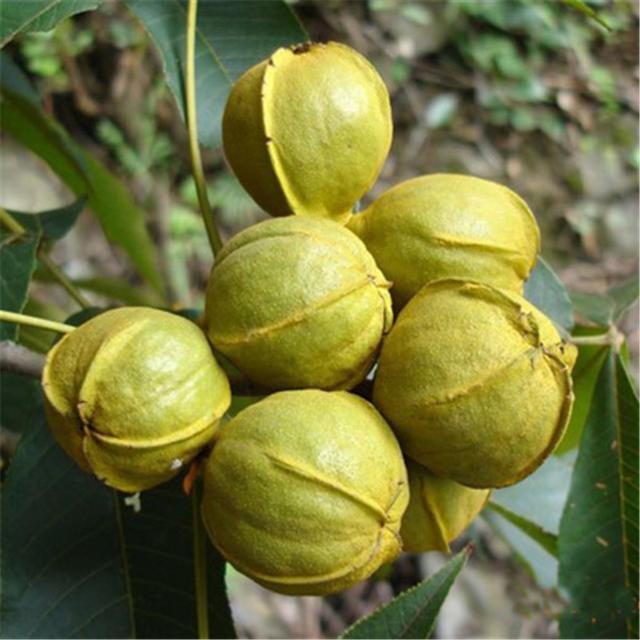
Causes of Alternate Bearing in Pecan and Measures to Overcome It
1 Causes of Alternate Bearing in Pecan and Technical Measures to Overcome It
1.1 Current Status of Alternate Bearing in Pecan and Its Harm
The phenomenon of alternate bearing in pecan is a lack of coordination between tree growth and fruiting, and between nutrient accumulation and consumption, manifested as differences in fruit yield between years. The phenomenon of alternate bearing in pecan often occurs in alternating years; this is a physiological response by which the tree automatically regulates the balance between vegetative growth and reproductive growth under conditions of similar climate and low cultivation levels in the production area. In some cases, because the tree vigor is particularly weak, or because of successive years of damage from pests, diseases, drought, or waterlogging and other natural disasters, several consecutive off-years may occur before an on-year returns; in other cases, because of several consecutive years of favorable weather and proper management, several consecutive on-years may occur before an off-year appears. In an on-year the yield is high, while in an off-year the yield is extremely low or even nonexistent; the average annual yield of an on-year plus an off-year combined is far lower than that of stable annual production. The alternate bearing phenomenon not only causes direct economic losses to forest farmers, but also prevents production tools, storage warehouses, and packaging materials from being fully utilized; for consumers, it cannot guarantee a normal and stable supply of fruit on the market, affecting the normal development of the food industry.
1.2 Causes of Alternate Bearing in Pecan
1.2.1 Nutrient Imbalance
During the year, the shoot growth and leaf development of pecan trees generally proceed simultaneously with flowering and fruiting. The carbohydrates produced by the leaves and the nutrients absorbed by the root system, in addition to meeting the needs of current-year branch and leaf growth and fruit development, also leave surplus nutrients for current-year flower bud differentiation and the following spring's flowering and fruiting. If nutrition keeps up, stable annual production can be achieved. If too much fruit is set in the current year, nutrient consumption is excessive, and there are not enough nutrients for flower bud differentiation or flower bud differentiation is incomplete, then the next year becomes an off-year. When flowers and fruits decrease in an off-year, the tree again has the capacity to produce a large number of shoots and form many flower buds, and by the third year it becomes an on-year again, thus forming a vicious cycle of alternate bearing.
1.2.2 Hormone Imbalance
Flowering and fruiting in fruit trees are regulated not only by nutrition but also by the types and amounts of hormones in the plant. In an on-year, flowering, fertilization, and fruit development all produce relatively large amounts of gibberellins that remain in the tree, so fewer flower buds form and the following year becomes an off-year. Conversely, in an off-year, when the number of flowers and fruits decreases, gibberellin formation and content are both lower, the content of hormones that promote flower bud formation is relatively increased, and flower bud formation also increases, so the third year becomes an on-year again.
1.2.3 Damage from Natural Disasters, Pests, and Diseases
Typhoons, freezing damage, drought, waterlogging, and severe pests and diseases can all cause premature leaf fall in autumn, reducing nutrient synthesis and nutrient accumulation in the tree. The tree becomes weak and unable to form flower buds, causing the following year to become an off-year.
In addition, severe soil erosion and low organic matter content, together with heavy fruiting in an on-year, are also among the main causes of alternate bearing.
1.3 Technical Measures to Overcome Alternate Bearing in Pecan
1.3.1 Growing Grass and Planting Green Manure to Improve the Soil
Pecan orchards should also, like fruit orchards, promote green manure planting every year to increase soil organic matter content, improve soil structure, and cultivate deep, extensive, and dense root systems. This is the fundamental measure for overcoming the alternate bearing phenomenon caused by nutrient imbalance. Where conditions permit, natural grass growing or artificial grass planting can be promoted.
Advantages of natural grass growing: first, it can prevent typhoons and heavy rain from strongly washing away soil and leaching nutrients; second, it can stabilize the temperature and humidity of the soil layer where roots are distributed, favoring root growth; third, it can increase soil organic matter content; fourth, it can save labor. However, the disadvantage of natural grass growing is that it easily creates a conflict between the grass and the trees competing for fertilizer and water. The solution is to mow the grass with a mower during the vigorous growth period of pecan, especially during the peak root growth period.
The key to artificial grass growing and green manure planting is selecting good grass species. At present, the grass species more suitable for planting in pecan orchards include: false indigo (Amorpha fruticosa), clover (Trifolium spp.), ryegrass (Lolium spp.), and bahia grass (Paspalum notatum), etc. False indigo is called "iron-stem green manure"; every 500 kg of young branches and leaves of false indigo contains 6.6 kg of nitrogen, 1.5 kg of phosphorus, and 3.9 kg of potassium, and it also contains relatively many rhizobia, making it fast and effective for improving soil. It should be planted in strips along contour lines between rows; small patches can also be planted in forest gaps, and planting density can be appropriately increased on steep slopes. Within 1 to 2 years after planting, nitrogen and phosphorus fertilizer should be added to promote growth. It should not be cut in the year of planting; it can be cut in the following winter at a height below 10 cm. Starting from the third year, cut once each in late May and late July every year, applying it as green manure directly as mulch or shallowly buried in the orchard; it can also be planted along orchard work paths and the edges of horizontal terraces. Among clovers, red clover, white clover, and subterranean clover are suitable for planting in the mountainous areas of Jiangnan. In mountainous areas without irrigation conditions, clover often dies back above ground after rain in the dry season, and in the autumn rainy season its perennial roots and seeds sprout and grow again. In the first year of planting clover, if other weeds can be suppressed, then after 10 months the perennial roots and seeds of clover grow vigorously and it becomes the main ground-covering grass species in winter. Ryegrass is most suitable for growth at pH 6.0-6.5; it is moisture-tolerant but not cold-tolerant, grows rapidly and very luxuriantly in spring, can quickly cover the whole orchard, has fine and soft stems, shallow but well-developed roots, begins to wither in late June, completely dies back by mid-July, and self-propagates the following year. Bahia grass stems and leaves are rich in various nutrient elements and are extremely suitable for planting in mountainous red-yellow soils.
On the basis of artificial grass growing and green manure planting, local green manures such as rapeseed, radish, Chinese milk vetch, and daylily should be planted. Except for sites with high gravel content, shallow soil layers, and poor drought tolerance, rapeseed should be planted under pecan trees, but it should not be harvested. Sow from late August to early September, and cut before full bloom in early April of the following year, directly laying it down in the orchard or covering it around the root zone. Sites with high gravel content, shallow soil layers, and poor drought tolerance can be sown with radish, etc. Places with good soil moisture, deep soil layers, and relatively fertile soil can choose to plant Chinese milk vetch, daylily, etc.
1.3.2 Scientific Fertilization to Coordinate the Imbalance Between Vegetative Growth and Reproductive Growth
According to the growth of branches and leaves and the status of fruit development, promptly supplement the lacking nutrient elements, do not apply nutrients that are excessive in the tree or soil, promote robust tree growth, and ensure the nutrient needs for current-year fruiting and flower bud formation. When planting pecan, it is best to apply base fertilizer; 0.5-1 kg of organic fertilizer can be mixed with 0.25-0.5 kg of superphosphate, applied, and then covered with soil for planting. From the current year to the third year, cut grass in blocks each year and cover it around the root zone. From the fourth year to the seventh year, organic fertilizer or organic-inorganic compound fertilizer can be applied in early March, with 0.5-1 kg of pure organic fertilizer (such as cake fertilizer) per tree, or 0.25-1 kg of organic-inorganic compound fertilizer, with the amount increased year by year. After the seventh year, apply 0.5-1 kg of organic-inorganic compound fertilizer per tree, while increasing potassium fertilizer by 0.05-0.1 kg year by year.
1.3.3 Flower and Fruit Thinning and Flower and Fruit Retention
In an on-year, according to canopy size and growth vigor, retain an appropriate amount of fruit and thin out excessive and overly dense fruits to prevent an excessively heavy load in the current year and the appearance of an off-year the following year. In an off-year, while reducing nitrogen application, the tips of overly vigorous pecan branches can be pinched or the shoots removed to increase fruit set rate and yield.
1.3.4 Rational Pruning
In an on-year, cut away excessive flowering branches to reduce the current year's fruit load, promote the growth of vegetative branches, and increase the rate of flower bud formation and the following year's yield; its effect is the same as flower and fruit thinning and flower and fruit retention.
1.3.5 Spraying Hormones and Nutrients
Two are used more often in mature pecan orchards: first, the physiologically active substance triacontanol; spraying 0.01-4 mg/kg triacontanol on the canopy during the flowering period increases the average fruit set rate by more than 28%, among which the 0.05 mg/kg concentration has a stable effect, and spraying during the young fruit stage also works well. Second, ethylene-type substances, mainly ethephon, which inhibit cell division and elongation, can loosen the fruit stalk, promote earlier fruit ripening, and facilitate harvesting. In tall mature pecan trees, combined with the application of harvest nets, it can minimize the occurrence of injuries and fatalities among pickers.
1.3.6 Strengthening Prevention and Control of Pests, Diseases, and Natural Disasters
The focus is on the control of pecan flower bud gall midge, pecan canker, root rot, branch blight, and leaf-eating pests. Prevention and control should gradually shift from chemical control to mainly biological and physical control, using as much as possible low-toxicity, high-efficiency, residue-free biological pesticides and physical control represented by hanging frequency-vibration insect-killing lamps.
2 Improvement of Low-Yield Pecan Orchards
2.1 Rejuvenation of Weak Pecan Trees
2.1.1 Causes of Formation
First, poor site conditions, thin soil layers, organic matter content below 1%, and poor soil water- and fertilizer-holding capacity; second, extensive management, low fertilization levels, unreasonable intercropping of tall-stem crops and tuber crops with strong nutrient absorption capacity, as well as weeds with extremely strong natural growth competitiveness, competing with pecan for fertilizer and water and affecting pecan growth; third, heavy fruiting, poor root development, poor absorption capacity, weak shoot growth, and low photosynthetic capacity, leading to premature aging in young and middle-aged fruiting pecan trees.
2.1.2 Technical Measures for Rejuvenating Weak Pecan Trees
(1) Turning the soil and pressing in green manure, improving the soil: establish a soil management system that uses the land to nourish the land. Within 5-7 years from planting pecan, intercrop green manure in both winter and spring each year. For winter green manure sown in winter and turned in spring, Chinese milk vetch, black medick, etc. can be selected; for spring green manure sown in spring and turned in summer, peanut, leguminous plants (containing nitrogen-fixing bacteria), etc. can be selected.
When sowing green manure, apply base fertilizer and topdress appropriately during the growing period. For leguminous green manure, pay attention to increasing phosphorus fertilizer to increase fresh grass yield and achieve the goal of "using phosphorus to exchange for nitrogen." The cutting period should be at the flowering stage, when fresh grass yield and nutrient content are highest; cut and turn it in, or compost or ferment part of the green manure before application to improve fertilizer use efficiency.
For turning in green manure, about 20-30 kg per tree each time, while applying an appropriate amount of cake fertilizer, barnyard manure, etc. in layers. In more acidic mountainous soils, when burying and pressing green manure, add 1-2 kg of lime per 100 kg of green manure to neutralize the organic acids produced during green manure decomposition and reduce the acidity of the mountain soil, so as to favor pecan root growth.
The method of turning the soil should be carried out separately according to the slope of the orchard. On steep slopes above 25°, adopt a no-till method of only cutting grass and spreading it on the ground each year without loosening the soil, to favor soil and water conservation; on slopes below 25°, fish-scale pit–style soil turning can be adopted, and the turning depth should not exceed 15 cm; on slopes of 10°-25°, combined with repairing terraces and horizontal belts, use the method of digging above and filling below along contour lines according to tree spacing, gradually transforming sloping land into horizontal belts; on slopes below 10°, the tree-basin expansion method is generally used. Starting from the edge of the planting hole, gradually expand outward, digging 10-20 cm deep within the canopy range each year and 30 cm deep outside the canopy range, expanding year by year to promote deep and extensive root development. When turning the soil, injure as few coarse roots thicker than 1 cm in diameter as possible. Surface soil and subsoil should be piled separately; use surface soil to fill the bottom layer and the root distribution layer, and spread subsoil on the surface to promote weathering. At the same time, combining this with base fertilizer application gives better results.
(2) Rational fertilization: apply quick-acting fertilizer in March-April of spring to favor spring shoot growth, flowering, and fruiting. Apply organic fertilizer in September to increase leaf assimilation capacity and nutrient accumulation in the tree, laying the foundation for the following year's flower bud differentiation and new shoot growth. The fertilization method is, according to canopy size, to dig a ring-shaped trench around the outer edge of the canopy; on sloping land, dig a semicircular trench above the trunk, fill compost, barnyard manure, and other organic matter into the bottom of the trench, then apply phosphorus and potassium fertilizer, etc.; in acidic soil, additionally apply lime before covering with soil for better results. Remember not to apply too much at one time, otherwise the effect may be counterproductive.
(3) Stopping fruiting to promote shoots: weak pecan trees have poor root development, low absorption capacity, weak shoot growth, few and small leaves, low photosynthetic capacity, and low nutrient accumulation. In the 1-2 years of rejuvenating weak trees, in addition to appropriately cutting away some flowering branches, fruit can be thinned comprehensively during the flowering or young fruit stage to reduce the tree's burden and promote shoot growth.
(4) Promptly cutting away diseased and dead branches: promptly cut away dead branches on pecan trees; thicker dead branches should be sawed off from the base, taking care that the wound is smooth. After pruning diseased and dead branches, apply a wound protectant and promptly carry them out and burn them.
2.2 Methods to Overcome Non-Bearing in Productive Trees
Pecan generally begins to bear fruit 8-10 years after planting and begins to enter full production after 20 years. However, due to extensive management, there are still many pecan trees that should have entered the full fruiting stage but bear very little fruit or fail to bear normally.
2.2.1 Causes of Non-Bearing in Productive Trees
First, due to partial application of nitrogen fertilizer or excessive nitrogen fertilizer, vegetative growth becomes excessive and flower buds are difficult to form; even if a small number of flower buds form and flower and set fruit, by early summer when young fruit development requires a relatively large nutrient supply, fierce nutrient competition occurs with branches and leaves, and the young fruit abscises because of weak competitiveness. Second, continuous rainy weather during the flowering period lacks favorable pollination timing, causing flowering every year without fruiting, or with very little fruit set.
2.2.2 Technical Measures to Overcome Non-Bearing in Productive Trees
(1) Control excessive fertilizer and water: excessive fertilizer and water, especially too much nitrogen fertilizer, causes leggy branches and low nutrient accumulation, making flower bud formation difficult. Fertilizer and water can be controlled in summer and autumn to inhibit vegetative growth so as to accumulate nutrients and promote flower bud formation. Apply spring fertilizer appropriately earlier or reduce it, to help improve flower bud quality and fruit set rate.
(2) Implement methods such as root cutting, girdling, or ring bark inversion: for overly vigorous trees that grow very well but bear poorly, methods such as girdling, ring constriction, or ring bark inversion can significantly increase fruit set rate. Girdling is making several horizontal cuts or chops with a knife through the bark on the trunk at 1-1.5 m, deep to the xylem, to temporarily hinder the downward transport of photosynthetic assimilates, increase nutrient accumulation above the wound, promote flower bud differentiation, and increase fruit set rate and yield. Girdling carried out 2-4 weeks before pecan flower bud differentiation can promote flower bud differentiation; used during the flowering period or at the end of flowering, it can reduce flower and fruit abscission and increase fruit set rate and yield. Trees with few flowers should be treated earlier rather than later; trees with many flowers should not be girdled easily. Personal experience can also be applied depending on the degree of tree vigor and the amount of fruit retained: if tree vigor is strong, more branches can be treated; otherwise, fewer.
(3) Carry out treatments such as pinching, branch bending, and branch propping: vigorous trees have large new shoot growth and an upright posture. Pinching during the period of vigorous new shoot growth can temporarily stop elongation growth, promote branching, and cause the branches to form flower buds and bear fruit. Branch bending generally uses ropes or bow-shaped branch benders to pull branches open; branch propping uses sticks or thick branches to prop open scaffold branches. Both can open the angle of branches and shoots, weaken apical dominance, and moderate tree vigor, so as to favor flower bud formation and fruiting. When using these methods, the opening angle of scaffold branches should be greater than 45°; if less than 45°, the effect is not obvious. After one growing season, the base angle of the branches has been fixed, and the sticks and ropes can be removed.
(4) Artificial supplementary pollination and shaking flower branches: under normal conditions, pecan male flowers shed 3 d after opening, while female flowers still have the ability to be fertilized and set fruit 10 d after maturity. Therefore, when continuous low-temperature and rainy weather is encountered during the flowering period and natural pollination of pecan is affected, artificial supplementary pollination can be adopted to increase fruit set rate. Artificial supplementary pollination can make use of the difference in flowering time at different altitudes: that is, flowering is early at low altitudes, so pollen can be collected in advance and stored; when the flowering period at high altitudes encounters poor weather, the previously collected pollen is used for artificial supplementary pollination; conversely, when the flowering period in low-altitude areas encounters rain, the characteristic of female flowers waiting for pollination can be used, and after the weather clears, pollen can be collected from high-altitude areas for pollination. If a simpler operation is desired, choose clear and windless weather, tie just-opened male flower branches in bundles onto a long bamboo pole, insert it into various parts of the canopy of the tree to be pollinated, and shake the bamboo pole to scatter the pollen for artificial supplementary pollination.
2.3 Renewal of Aging Pecan Trees
2.3.1 Characteristics of Aging Pecan Trees
Some nutrient elements are extremely deficient, organic matter content is low, the soil layer is compact, the surface soil is hardened, and aeration and water- and fertilizer-holding capacity are weak. Therefore, plant root growth is poor, branches are short, leaves are small, and photosynthetic capacity declines. At the same time, old trees have tall canopies and hollow interiors, and after long-term effects of drought, waterlogging, pests, diseases, and other natural disasters, many canopies are incomplete and bear very little fruit. Some have lost economic cultivation value and have to be dug out and replanted, or cut off from 0.2-0.5 m above the ground and regrown from sprouting shoots; some trees are still relatively healthy and can be brought back into bearing and achieve high yield through strengthened water and fertilizer management and canopy renewal.
2.3.2 Technical Measures for Renewing Aging Trees
(1) Soil replacement and adding borrowed soil: after deep plowing the soil of the old orchard, take it out and replace it with new soil. Soil replacement should be carried out in a radial or trench pattern over separate years to avoid injuring too many roots at one time and affecting growth. This is suitable for pecan orchards with convenient transportation and relatively small area. If the original pecan orchard has a shallow soil layer and severe soil erosion, the borrowed soil method can be used to improve the soil, that is, piling fertile soil under the canopy to thicken the soil layer, so as to favor root growth, restore tree vigor, and increase yield.
(2) Increase application of organic fertilizer: by supplementing organic fertilizers such as green manure with complete nutrient elements, branches and leaves, mountain grass, barnyard manure, and compost, to ensure the supply of various nutrient components.
(3) Training and pruning: many mature pecan orchards today have high planting density, tall trunks, and narrow canopies. If training and pruning are not carried out, not only will yield be affected, but unsafe factors during harvesting will also increase. In such pecan orchards, the fruiting layer moves outward and is concentrated in the upper part of the canopy. For old pecan trees more than 8 m tall, the top branches can be sawed off. Pecan wood is hard and wounds heal relatively slowly, so the saw cut must be smooth; apply 1:10 concentration dexon to the wound, cover with tin foil, and bandage it to promote healing and prevent wound rot. The pruning period for pecan can be from after leaf fall in winter to before sprouting in spring. First cut away weak twigs, overly dense branches, and diseased and pest-infested branches, then in late spring cut away spring shoots that bear only male inflorescences or poorly developed female flowers, reducing ineffective nutrient consumption.
(4) Use of root sprouts: after the canopy declines, the characteristic that root sprouts readily occur on scaffold branches can be used; cut off the main branches of aging trees that have died or lost fruiting capacity, and use latent root sprouts below the wound to send out new branches and re-form a canopy and bear fruit. When the canopy is incomplete, root sprouts can also be used by removing sprouts and retraining them to form new scaffold branches, completing the canopy, expanding the photosynthetic area, and increasing yield.