Detailed Explanation of Propagation and Pest and Disease Control Cultivation Techniques for Northeastern Black Pine
Propagation and Pest and Disease Control Cultivation Techniques for Northeastern Black Pine
1 Morphological Characteristics
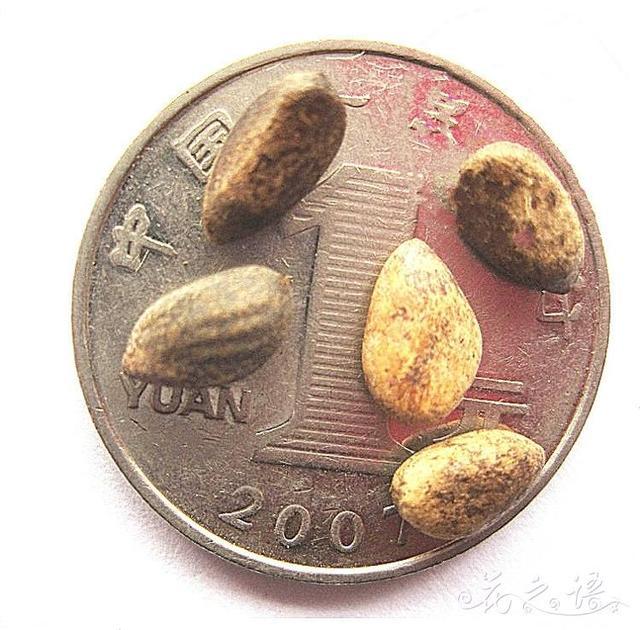
Northeastern black pine is a needle-leaved evergreen tree, reaching a maximum height of 35 m, with a diameter at breast heightof up to 1.2 m. The lower bark is grayish-brown, split into irregular scaly blocks, withcracks and upper bark red-brown; large branches spread horizontally or slant upward, old trees have a flatcrown; branchlets are stout, yellow-brown, glossy, without white powder; winter buds are oblong,with pointed tips, slightly resinous, bud scales red-brown. Needles in 2-needle bundles, darkgreen, relatively thick and stiff, 10-20 cm long, 1.0-1.5 mm in diameter, withfine serrations on the edges, stomatal lines on both surfaces, semicircular in cross-section, subepidermalcells of the discontinuous type in 2 layers, marginal, occasionally mesophyll in the corners and on the back; leaf sheathsinitially light brown, later light black-brown. Male cones cylindrical, 1.5-2.0 cm long, clustered in spikes at the lower part of new branches; current-year young cones ovoid,yellow-brown or yellow-green, upright. Cones ovoid or ovate, 4-8 cm long, with short stalks, nearly at right angles to the branches, yellow-brown when mature,often persisting for several years; middle scale of the cone nearly oblong-obovate, 1.5-2.0 cm long, 1.0-2.0 cm wide, scale shield thick and glossy, flattened rhombicor flattened rhombic-polygonal, transverse ridge obvious, longitudinal ridge almost absent, scale umbo obvious,with a prickly tip. Seeds 5-10 mm long, 1.5-2.0 cm long including wing, wing2-3 times the length of the seed. Flowering in May, cones mature in early to mid-Octoberof the second year. Distributed in Northeast China, North China, Northwest China and Henan, Shan-dong, Jiangsu and other places.
2 Seedling Propagation
2.1 Site Selection
Northeastern black pine seedlings do not like waterlogged, low-lying land, so a plot withflat terrain and good drainage must be selected. Plots with heavy clay soil, high salinity and alkalinity, or low-lyingwaterlogged conditions are not suitable as nursery sites.
2.2 Land Preparation
Carry out land preparation in autumn. Before preparation, apply sufficient decomposed farmyard manure as base fertilizer,1000 kg per mu, evenly broadcast 12 kg of potassium permanganate powder per mu, andplow it into the soil for sterilization and disinfection. Deep plow 30 cm, rake level and fine, makelarge ridges in a north-south direction, ridge height 30 cm, width 1.2 m, set aside for use.
2.3 Seed Treatment
Disinfect seeds by soaking in Bordeaux mixture, soak seeds in 50-60°C warm waterfor 48 h, then mix seeds and sand at a ratio of 3:1 for stratification to promote germination.Generally, germination occurs in about 20 days; when the seed cracking and germination rate reachesover 40%, sowing can begin.
2.4 Sowing
In Northeast China, choose spring sowing. It is better to sow 10-20 days after the soil thaws in spring. Before sowing, water the ridge surface thoroughly, use wide-band drillsowing, open furrows on the ridge surface, furrow depth 5 cm, sowing rate about 0.1 kg per 1 sq m. After sowing,cover with fine sandy soil 2 cm thick, compact, and water thoroughly. Build a smallarch shed on the ridge surface. To prevent rodent damage, before covering the arch shed with film, scattersome rat poison on the ridge surface. Cover with plastic film to increase seedbed temperature and humidity.
2.5 Seedling Stage Management
After the seedlings emerge completely, increase ventilation and light transmission in the seedbed to promoteseedling growth and enhance seedling resistance. Seedlings are relatively shade-tolerant at the seedling stage; remove the plasticfilm and use a shade net to provide shade, preventing poor seedling growth caused byhigh temperatures and sunlight.
In hot and dry seasons, water in a timely manner; the seedbed should bekept alternately dry and wet. Drain promptly during the rainy season. According to the weeding principles of removing early, removing smalland removing completely, weed in a timely manner; when weeding, pull out gentlyto avoid damaging the root systems of seedlings when pulling weeds. After weeding, promptlycover with fine soil and compact it.
During the period of vigorous seedling growth, fertilize in a timely manner. Apply fertilizer 2-3times, mainly nitrogen fertilizer and decomposed farmyard manure, applying 15 kg of farmyardmanure per mu. Apply 5 kg of urea per mu. In the later growth stage, apply additional phosphorus and potassium fertilizer to promotelignification of the seedlings and help them overwinter.
2.6 Transplanting
Production requires many large seedlings; cultivating large-specification seedlings requirestransplanting. Transplant 2-year-old seedlings with soil balls in early spring before the plants begin to grow,plant spacing 25 cm, row spacing 55 cm; do not damage the apical buds of the seedlings during transplanting,and water promptly after planting. For seedlings over 5 years old, asecond transplanting with soil balls can be carried out, plant spacing 60 cm, row spacing 120 cm. During transplanting,apply 5 kg of decomposed farmyard manure per plant, dig holes around the plant and applyit, then cover with soil and water thoroughly once.
When bare-root transplanting 2-year-old seedlings, protect the root system well and avoid exposingthe roots, which can cause physiological drought and death. Planting immediately after digging gives a high survival rate.For large seedlings used for landscaping, the best transplanting time is during winter dormancy and when the soilthaws in spring. Large seedlings must be transplanted with soil balls; the soil balls should be wrapped and fixed with straw rope,and during transport, prevent the soil balls from breaking. After planting, set up stakes forsupport to prevent lodging from strong winds.
4 Pests and Diseases
The main insect pests during seedling cultivation are seed maggots and pine aphids.Seed maggots feed on the endosperm or cotyledons, causing deformed and rotting seed sproutsthat cannot emerge. Control methods: (1) When fertilizing, apply decomposed farmyard manureto control the breeding of insect eggs. (2) During the peak egg-laying period of adults, promptly spray2.5% deltamethrin 2500-fold solution, or 25% Ikasui emulsifiable concentrate 1300-fold solution, or 25% isofenphos-methyl emulsifiable concentrate 1800-fold solution. (3) Chemicaltreatment of soil or seeds. Using 25% phoxim capsule and other organophosphoruspesticides, or seed dressing with insecticidal seed coating agent, can also control underground pests.Pine aphids mainly damage the tender branches and leaves of seedlings, causing tree vigor to decline,affecting growth, and causing plant death. Control method: When the pest occurs,promptly spray 52% phoxim emulsion 2000-fold solution.