A Detailed Explanation of the Characteristics and Cultivation Techniques of Buy-back Orchids
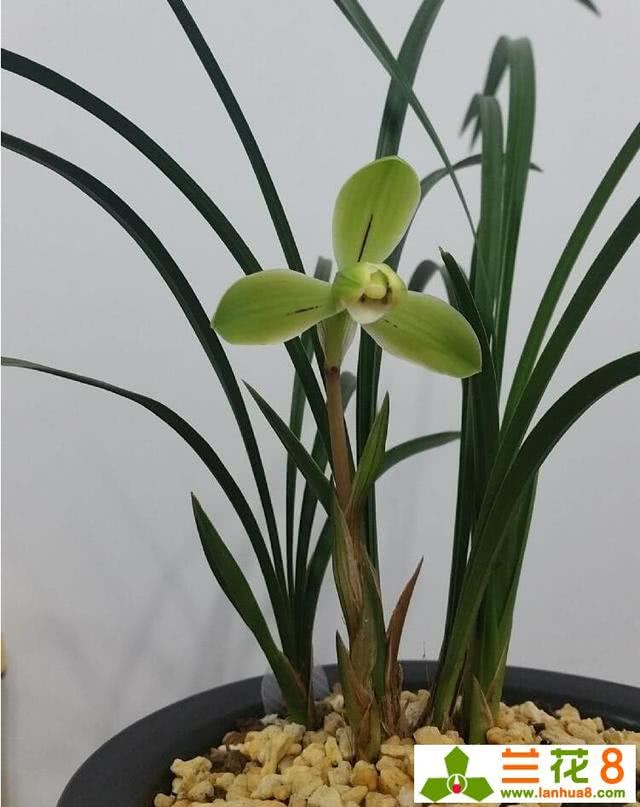
What are buy-back orchids? According to page 372 of the "Dictionary of Ancient and Modern Chinese," "buy-back" means "selling products back to their place of origin." Therefore, the generally accepted concept is that orchids that Japan, South Korea and Taiwan, China send back to mainland China for sale after introducing famous orchids from mainland China that have been rapidly propagated through high-tech means are collectively called buy-back orchids.
Because high-tech means are used, such as tissue culture, greenhouses, hormones and chemical fertilizers, with automated control of light, temperature, humidity and air, orchid production achieves factory-style rapid growth and propagation. Although they are still the same original species and the varieties have not changed, the characteristics and traits of the orchids have changed significantly. It is just like the pork and chicken we eat in daily life: if they are quickly fattened in cages with feed and hormones, their nutrition and taste are clearly not as good as free-range, coarsely raised native pigs and native chickens. Therefore, buy-back orchids have clearly different characteristics and traits. First, their tissues and cells are weak. The leaves are longer and wider, but the leaf texture is thinner; the orchid seedlings look elegant, but also delicate. Second, their tissues and organs are small and weak. The pseudobulbs are smaller, and the roots are thinner, longer and fragile. Some roots are black, and there are few "crystal head roots." Because they are mostly cultivated in granular media, they are often curved in an arched shape. Third, they carry more latent diseases. Buy-back orchids go through packaging, compression, distribution and resale; those not sold for a time must be stored and sold again. After repeated handling, infection with pathogens along the way is unavoidable. Fourth, their adaptability and stress resistance become worse. Because hormones are mostly used to force growth, vegetative growth is too fast and nutrition is overly "overdrawn," so they are prone to root rot and difficult to establish in pots. Even if planted alive, they tend to sprout and produce shoots easily, but are difficult to rejuvenate, bloom and rebloom. Even if they bloom, the floral fragrance is faint and not deep. Therefore, orchid enthusiasts who have introduced buy-back orchids all feel that they are truly difficult to grow.
So how can buy-back orchids be cultivated well? Up to now, there seems to be no monograph on "cultivation techniques for buy-back orchids" (perhaps I am just poorly informed). But judging from the more than 50 orchid books I have purchased and collected, many already include introductions and discussions on this aspect. For example, "Tips for Growing Buy-back Orchids Well" by Xu Bing (Yifeng) of Anhui, "Growing Buy-back Orchids Well Is Not Difficult Either" by Li Fengnian (Muzi) of Shanghai, "Shortcomings of Buy-back Orchids" by Wan Yunkun (Guoxiangju) of Jiangsu in "Little Experiences and Tips on Orchids"; "Maintenance of Buy-back Orchids" by Shou Jicheng of Zhejiang in "A Hundred Tips on Orchid Cultivation," and "Adaptability Cultivation of Buy-back Seedlings" by Shi Meigen of Zhejiang in "A Hundred Experiences in Orchid Cultivation." In addition, books such as "A Practical Treasure Book for Growing Orchids," "Taiwan, China Orchid Cultivation Techniques," and "202 Questions on Appreciation, Cultivation and Introduction Investment of Chinese Cymbidiums" all have some paragraphs or sections specially introducing this topic.
Based on the above orchid book materials and combined with my own cultivation experience, I believe that to cultivate buy-back orchids well, the following points must be done well. First, try as much as possible to create environmental conditions suitable for the growth of buy-back orchids. The air humidity in the orchid-growing site should be higher, and it is best to renovate it into a closed type. This is because most buy-back orchids grow in high-temperature, high-humidity greenhouse environments. If the environmental difference is too great, after introduction they often collapse due to "not adapting to the local environment." I grow orchids on a south-facing balcony on the fifth floor. To increase humidity, I place wooden boards underneath, spread a layer of agricultural film on the boards, and then spread a layer of carpet on the agricultural film. To make full use of space, I use two-layer orchid cultivation: orchid pots on the upper layer and stainless steel water-catching trays below. In addition, with luxuriant camphor trees outside, the effect is quite good. Second, choose granular potting media. I use orchid base stone, ceramsite and Send soil, mixed with decayed tree bark, Yunnan chestnut leaves and sheep manure pellets, then disinfected by sun exposure and sifted, with good orchid-growing results. Third, after introduced seedlings are obtained, they generally should be disinfected with Topsin or carbendazim plus virus-killing agent. Whether or not they are buy-back orchids, after treatment one naturally feels more at ease. Fourth, buy-back orchids should not be divided in the first year after introduction, no matter how many original seedlings there are. My feeling is that the connection between their shoots is not as good as that of original species; with a gentle stir they separate. Potting multiple shoots connected together makes survival easier. If it is a single shoot, it is also best to plant it in the same pot with strong seedlings; the strong orchid bacteria produced by the strong seedlings have a very significant growth-promoting effect. Fifth, water with aerated, oxygen-enriched water. This method is called by Jing Weidong (Konggu Youlan) of Henan "using aerated water to reduce fertilizer in buy-back orchids," see the book "Little Experiences and Tips on Growing Orchids." In the book "Chinese Orchids" by Ding Yongkang, it is called "oxygen-enriched water." A few years ago, I spent 120 yuan at Old Street to buy a small ACO series electromagnetic air pump (made in Zhejiang). Each time, I first draw tap water, put some edible white vinegar in the water, then use it to aerate and enrich oxygen for more than 1 hour, and then use it to water the orchids, with very good results. Sixth, be diligent in management and carefully observe seedling conditions. If it can be confirmed to be buy-back orchids, it is best to place them separately together for observation and management. It is best to inspect the orchid garden once in the morning and once in the evening every day, so that problems can be found and handled in time. Generally, if old seedlings carry latent viruses, it is not easy to discover before cultivation, but the symptoms of new seedlings grown from new shoots are especially obvious. Once discovered, there is no need to panic; you can take it out, and the first thing to think of is to isolate it.
At present, buy-back orchids have bloomed everywhere across the land of China and have in fact been recognized and accepted by the vast number of orchid enthusiasts, and each person has explored their own cultivation techniques like a hundred flowers blooming. In writing this article, I seem to be showing off my slight skill before an expert, but I hope it can play the role of casting a brick to attract jade. In fact, not all buy-back orchids are difficult to grow. They can be divided into three major categories: first, greenhouse orchids; second, tissue-cultured seedlings; and third, natural seedlings. The first two are relatively difficult to acclimatize, but the latter, cultivated under natural environmental conditions, are easy to grow. For example, the treasured island of Taiwan, China, is located in the tropics; with its unique natural environment, orchids grow every day of the year, 365 days a year, so naturally they propagate much faster. As long as you study and explore with dedication, growing them well is no longer difficult. As long as buy-back orchids grow for a few years and adapt to your local environment, they become local orchids. I publish orchid knowledge and pictures every day, taking you to understand orchids in depth and teaching you to grow orchids easily. If there is anything you do not understand about orchids, you can ask me at any time or leave a message below. If my knowledge has helped you, I hope you can give me a like or forward it to help more people!