The crab claw cactus grafting method is very simple; do it this way and it won't rot roots or turn yellow leaves
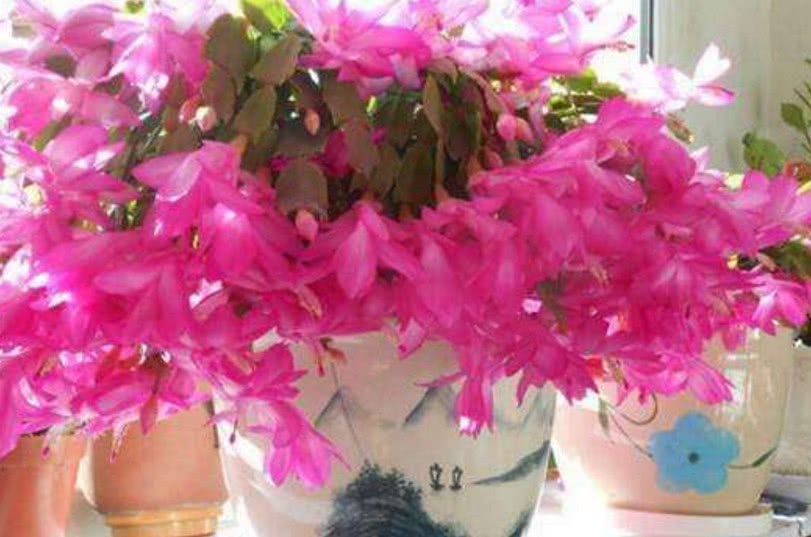
If the crab claw cactus is not grafted, it is very prone to root rot, so it must be grafted. After grafting, the crab claw cactus not only won't rot roots, but also has no dormant period and keeps blooming all the time, very beautiful. The advantage of grafting the crab claw cactus is that the crab claw cactus can be grafted repeatedly. If the graft fails, you can graft again at the failed spot, and it will recover fairly quickly this way
Moreover, the crab claw cactus grows very fast, and in summer it no longer needs to go dormant. We can water and fertilize normally. The method of grafting the crab claw cactus is very simple. First take a Pereskia aculeata branch, then cut an opening. Take a plump crab claw cactus leaf and use a small knife to cut it in one stroke until the white xylem is exposed; you need to cut to the pith. Then insert the crab claw cactus leaf into the cut on the Pereskia aculeata and fix it in place
The grafted crab claw cactus should be placed in a cool, ventilated spot for care, and the soil should be kept moist. After one month, if the scion has not shriveled, it means the scion has already survived. Pereskia aculeata likes a high-temperature environment; a temperature above 25 degrees is the best temperature for growth. It is a short-day plant and must not be placed under lights