What to Do When the Variegated Spider Plant's Roots Rot? Cause Analysis and the Benefits of Growing Spider Plants
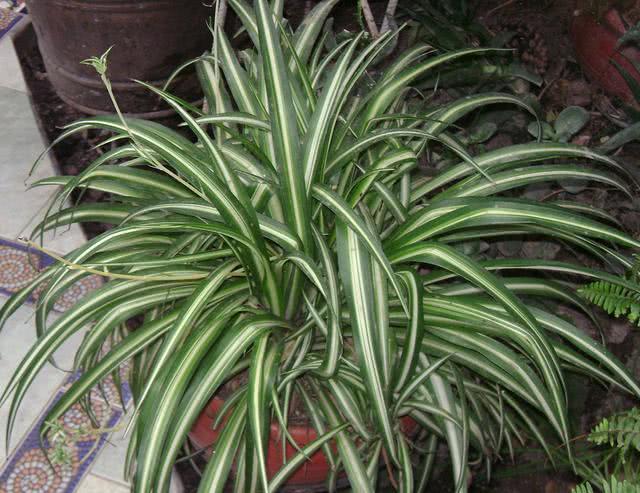
As we all know, there are many varieties of spider plants, and the variegated spider plant we are talking about today is one of them.
Recently many people have been complaining, why do the variegated spider plants we grow suddenly get root rot for no apparent reason? How should this be solved? So is there really no cause for the root rot? Or is there a traceable cause? Below, the editor will answer these one by one for you.
So to understand the causes of its root rot, we first need to know its living habits. The variegated spider plant likes to live in a warm and humid environment, and in seasons like summer and winter, it needs to be placed indoors. Because it likes moist soil, which is more conducive to its growth, watering needs to be done every day, fertilizing once every half month, and repotting once a year.
On the issue of watering, we all know that if the amount of water is too little, it will cause drought and lead to withered leaves, but if the amount of water is too much, it will lead to root rot. Watering too frequently leads to too much water, which results in root rot. Too much water will make the soil too wet, and the roots buried in the soil will lack oxygen.
Secondly, the cause of root rot may be too little light. Because we basically place potted plants indoors, especially in seasons like winter and summer. But being placed indoors for a long time prevents it from receiving light for a short period, which in turn affects photosynthesis, and also affects its survival; water evaporates slowly, so water accumulates, leading to root rot.
When the variegated spider plant shows signs of root rot, these methods can be used to solve it. When the root rot is not very serious, if it is caused by overwatering, then reduce the amount of watering. Watering once a day can be changed to once every two days. Let it receive more sunlight. In this way, the water accumulation will gradually improve, and the root rot will also get better.
For cases where the root rot is relatively serious and cannot be solved by watering less and sunbathing more, then you need to give it nutrient solution. When giving nutrient solution, also pay attention to the appropriate amount; giving too much may be counterproductive. Of course, you should also pay attention to promptly cutting off those rotten roots, to prevent the bacteria produced by the rotten roots from infecting the other good, unspoiled ones. After cutting off the rotten roots, we need to change the soil for it. Only in this way can we ensure its continued healthy growth and development.
The variegated spider plant is widely loved by people. It has high ornamental value, cultivates body and mind, and can also absorb formaldehyde. Of course, it also has some medicinal value, for example, taken internally it can cool and relieve cough, promote blood circulation and remove blood stasis, etc., and used externally it can treat purulent sores, such as hemorrhoids.
After reading this article, I think you should all understand the causes of root rot in the variegated spider plant, and what measures we should take after root rot occurs. If you have other questions, welcome to leave a message or comment below.