Ginkgo bonsai has a long history and is deeply loved; practical care tips shared
Our country has a long ancient history, and its history of cultivating flowers, plants and trees is also very long. It is said that more than 1,000 years ago, the emperor of our country at that time conferred the title of "Earth King Tree" on a large tree over 30 m tall. How famous this large tree was, and how honored it was to have won the emperor's appreciation. It is truly enviable!
The appearance of the ginkgo tree is very magnificent. Its leaves are not green like those of ordinary trees, but golden yellow, very beautiful, giving people a feeling of vitality. The ginkgo tree also has other names: it is also called white fruit, and also called duck-foot tree. Aren't its names especially novel? They are not as ordinary as the names of other commonplace trees.
Generally speaking, ginkgo trees often appear on both sides of roads. These beautiful and magnificent ginkgo trees make the whole road look very magnificent and vast.
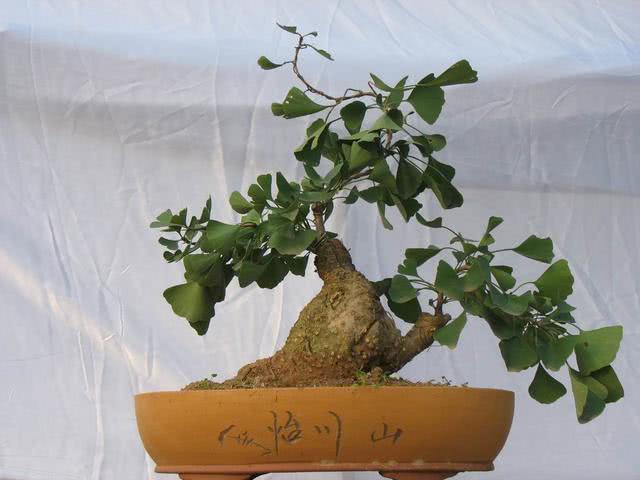
Everyone knows that the bark of the ginkgo tree is grayish brown, and the bark is not very neat but has cracks. The most peculiar thing is its leaves. The leaves grow like fans, are relatively large in area, and spread out in shape. In spring and summer, the color of its leaves is emerald green, making people feel very full of vitality. By the end of autumn, the color of the leaves gradually turns golden yellow, making people feel it is very beautiful and giving a very classical, elegant and distinctive impression.
As for ginkgo bonsai, it is a miniature version of a large ginkgo tree. It looks very small and lovely, like a soldier faithfully guarding his post, always stationed at his post, standing very tall and majestic, showing its unique spirit.
Ginkgo bonsai very much likes places with plenty of sunlight, so it should often be exposed to sunlight. It should also be placed in an open place to keep it ventilated, rather than in a closed space. At the same time, it should also be given enough water to keep it moist at all times. In summer, in fact, the ginkgo tree is not afraid of being exposed to the severe hot sun, and in winter, the ginkgo tree is also not afraid of severe cold, so the ginkgo tree has very strong adaptability.
For people who grow potted ginkgo trees, in winter it is best to place the ginkgo tree indoors, because the indoor temperature is relatively high, but as long as the soil does not freeze, the ginkgo tree can survive.
When the ginkgo tree is growing vigorously, do not water it with too much water, which would cause it to rot. The best time to water is in the morning, and in winter it is still necessary to water less.
In addition, as for fertilizing, it is enough to fertilize it during the growing season; it does not need too many nutrients.