Five criteria for choosing bonsai plants, see if you chose right
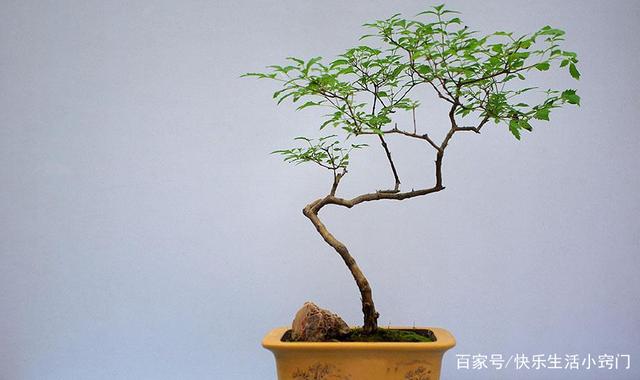
Five criteria for choosing bonsai plants, come see if you chose your bonsai right! 1. Small leaves, short nodes and dense branches, beautiful as a whole. Only by choosing tree species with small leaves, short nodes and dense branches can the bonsai be more natural, full of a sense of reality, and have the artistic effect and mood of "seeing the big in the small". Imagine a bonsai whose leaves are much larger than its trunk, with long nodes and sparse branches; it is hard for it to have an artistic effect that invites deep thoughts. Many tree species have large and small leaves, such as Buddhist pine (Podocarpus macrophyllus), elm, and Fukien tea (Ehretia microphylla). Buddhist pine, for example, has large, medium, small, sparrow-tongue, and pearl-leaf types.
Five criteria for choosing bonsai plants, come see if you chose your bonsai right! 2. Strong adaptability, few pests and diseases. Tree species that can adapt to different growing environments, have few pests and diseases, and have strong stress resistance are easy to care for and manage. Tree species that die at the slightest neglect will make people flinch. This criterion is even more important for ordinary people.
Five criteria for choosing bonsai plants, come see if you chose your bonsai right! 3. Easy to shape, slow-growing, long-lived. Take Buddhist pine again as an example: its branches are very pliable, tolerate wiring, sprout easily, have strong shaping plasticity, and are easy to work with. For thicker branches or trunks that do not meet the shaping requirements, you can cut a "V" notch and bend them. In areas lacking branch pads, you can use nearby whorled branches and adopt the method of suppressing one and raising another to change the position of the emerging branch. Or, by pulling and changing direction, you can directly approach-graft it onto the needed position, and after it survives, cut off the original branch connection, making it an independent new branch pad.
Five criteria for choosing bonsai plants, come see if you chose your bonsai right! 4. Excellent in shape, color, texture, and spirit. The beauty of a bonsai lies in its being alive, able to produce changes in color, shape, and spirit with the seasons, reflecting the sense of rhythm that life presents through seasonal changes. Look at the little buds on the tips of elm branches in early spring, full of vitality, with color gradually turning from tender green to emerald green; in summer the whole tree is emerald green like a canopy, a cool feeling arises at once, appearing mature and vigorous, and you can feel the splendor of summer vegetation; in autumn yellow leaves fall, the autumn wind brings coolness, foretelling the coming of cold winter; in winter the whole tree is bare branches, revealing the fortitude and beauty of strength of the branches, and you suddenly feel the chill.
Five criteria for choosing bonsai plants, come see if you chose your bonsai right! 5. Abundant and sturdy flowers and fruits, lasting and fragrant. Flowers and fruits vary in size, have diverse shapes, differ in number, vary in sturdiness, and range in fragrance from strong to light, and with the seasons and different degrees of ripeness, their color and spirit constantly change. The densely flowered crape myrtle symbolizes wealth and honor, the pure white and elegant plum blossom symbolizes purity, azaleas are a riot of purple and red, pomegranate flowers are like fierce fire, and the small-leaved, many-flowered Serissa japonica is like a sky full of stars.