An Analysis of Why Dutch Greenhouse Cultivation Achieves High Quality and High Yields
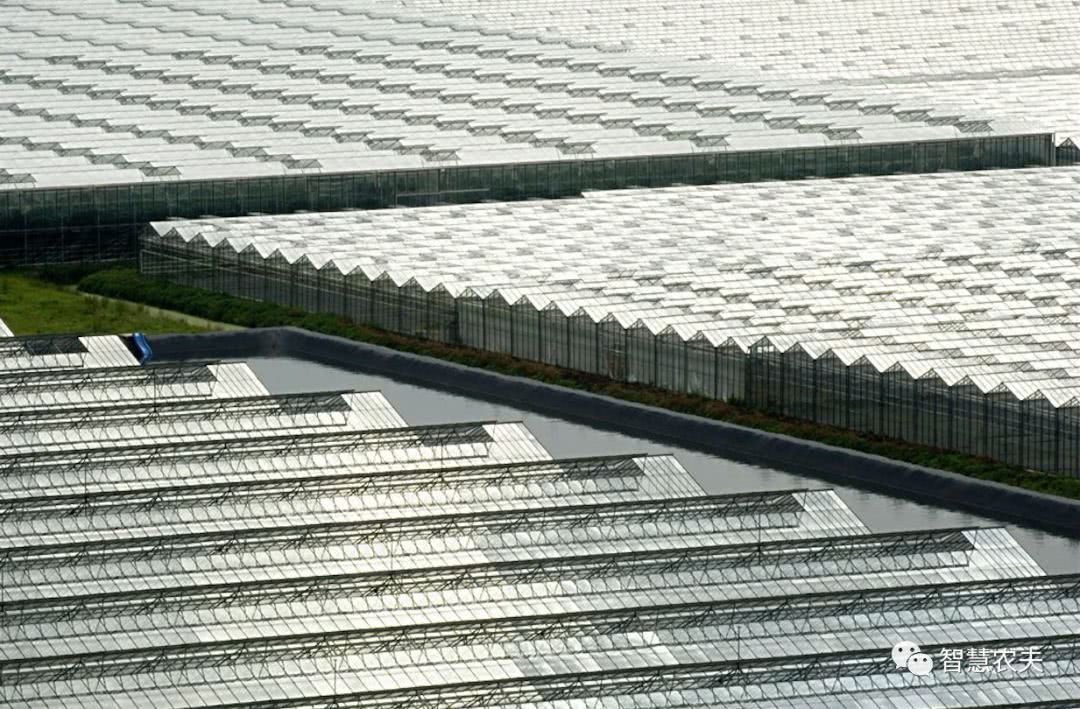
The Netherlands has a small land area. To make efficient use of its limited land, the Dutch government has vigorously developed animal husbandry and high-value horticultural crops. Dutch protected agriculture is a typical representative of advanced agriculture abroad. As early as 2014, its modern greenhouse area had exceeded 10,000 ha, accounting for 0.5% of the agricultural arable land. The protected horticulture sector employed 120,000 people, with an annual output value of 5.6 billion euros, an average annual output value of 600,000 euros per hectare, and an average annual output value of 46,700 euros per person. So, what are the reasons behind the high quality and high yields of Dutch agriculture?
High-standard glass intelligent greenhouses
Dutch protected cultivation is based on high-standard multi-span greenhouses and adopts advanced cultivation techniques along with supporting modern hardware and equipment to increase yields per unit area. Its vegetable crop yield level occupies a leading position in the world.
After many years of development, the structure of Dutch glass greenhouses has become very mature. Taking Red Harvest farm as an example, the farm's greenhouse was built in 2009, and its structure is a typical Venlo-type all-glass greenhouse. This type of greenhouse has a relatively high ridge height, which can not only meet the needs of the greenhouse's hanging-wire cultivation system, but also increase the buffer space and maintain a stable indoor environment. In addition, the area of a single Dutch greenhouse is generally large, which, while increasing buffering capacity, facilitates large-scale and mechanized management.
Intelligent environmental control system
In terms of environmental control, Dutch greenhouses all use automated control, enabling automated monitoring, recording, and regulation of environmental factors such as temperature, humidity, and CO? concentration inside the greenhouse, providing suitable environmental conditions for tomato growth.
01
Light management
Light is one of the key factors for meeting crop growth needs. When other factors are satisfied, increasing light by 1% means increasing yield by 1%. The Netherlands attaches great importance to glass cleaning, generally cleaning 8-10 times a year to ensure that greenhouse light transmittance can reach more than 70%. In addition, Dutch greenhouses generally do not have external shading, and internally usually have only one layer of thermal insulation screen, which also serves as internal shading, greatly improving light transmission efficiency. About 20% of Dutch greenhouses are equipped with supplemental lighting, mainly high-pressure sodium lamps.
02
Heating management
In Dutch greenhouse tomato production, the main heating method is hot water pipe heating, and the hot water pipes at the bottom of the greenhouse also serve as the tracks for trolleys. Dutch hot water is mainly heated by natural gas boilers. Through automatic computer control, the heating boilers can be turned on or off at any time to meet the temperature conditions inside the greenhouse.
03
Ventilation and cooling management
The ventilation and cooling system of Dutch greenhouses mainly includes greenhouse roof vents, circulation fans, internal shading, and other equipment. Ventilation and cooling inside the greenhouse are mainly achieved by opening roof vents. Modern multi-span greenhouses can control whether the vents are opened and the opening angle according to factors such as time, greenhouse temperature, external light conditions, and indoor humidity conditions. To ensure a uniform climate inside the greenhouse, Dutch greenhouses generally have an internal air circulation system. This system turns on or off according to temperature changes at different positions in the greenhouse, keeping the greenhouse climate in a stable and balanced state. To prevent excessively high temperatures in the greenhouse in summer, Dutch greenhouses are generally also equipped with internal shading, which also serves as a thermal insulation screen in winter. It is opened in summer when light intensity and temperature are high to prevent the greenhouse temperature from becoming too high.
04
Carbon dioxide concentration management
Dutch greenhouse production has a CO? enrichment system that can maintain the CO? concentration in the greenhouse at around 900 μmol/mol, which can increase yield by more than 30%. CO? is produced through heating by natural gas boilers and is a byproduct of greenhouse heating.
Modern cultivation technology is the core
After many years of development, Dutch greenhouse production has formed a modern production technology system. Taking tomato production at Red Harvest farm as an example, modern production technologies include variety selection, plant management techniques, soilless cultivation techniques, grafting techniques, and so on. After years of experimentation and practical experience, these techniques have been summarized into standardized production technologies, reflecting a high degree of scientific rigor, practicality, and standardization, and are the core of achieving high tomato yields.
01
Automated irrigation system
Dutch protected cultivation uses a precise control system, which can not only adjust irrigation volume according to different crop stages, but also adjust water supply in a timely manner throughout the day according to solar radiation conditions, ensuring that crop needs are met while avoiding water waste.
02
Precise fertilization
The precision of fertilization in Dutch tomato production is mainly reflected in two aspects. First, in terms of quality, the weekly fertilizer formula is prepared by the producer according to the tested values of the return solution and rainwater, mixing a nutrient solution mother liquor that matches the formula for a specific period. Second, in terms of amount, the amount of tomato nutrient solution is controlled by the fertilization system and varies according to environmental factors such as temperature and light.
Pest and disease control system
Dutch greenhouse pest and disease prevention and control adhere to the concepts of source control and integrated prevention and control. Based on precise regulation of temperature and humidity and the construction of a beneficial insect ecosystem, they give full play to the advantages of natural regulation and ecological regulation, while using scientific chemical control as a necessary supplement. Through regular monitoring and early warning, optimal control strategies are formulated to effectively prevent and control pests and diseases, reduce yield losses, and ensure product safety.
01
Pest and disease isolation system
Dutch greenhouses have long been building a closed crop growth system, and entering the production greenhouse involves a strict disinfection process. Specifically, after workers complete each task, they must also disinfect their tools. After each crop production cycle ends, the greenhouse is generally thoroughly disinfected. A well-developed pest and disease isolation system ensures a clean production environment in the greenhouse.
02
Precise environmental regulation
Controlling suitable temperature and humidity conditions inside the greenhouse is a key factor in ensuring normal plant growth and reducing the occurrence of pests and diseases. Taking tomato production in the Red Harvest greenhouse as an example, through the integrated application of the heating system, CO? supply system, ventilation system, and computer control system, real-time and precise regulation is achieved, providing the best growing environment for plants and avoiding the occurrence of pests and diseases.
03
Rockwool cultivation substrate
Dutch tomato production generally uses rockwool as the production substrate. Because rockwool is made from rock melted at high temperature and drawn into fibers, compared with other substrates it is lightweight, porous, and free of pests and diseases, effectively avoiding the occurrence of soilborne diseases.
04
Integrated application of multiple control methods
Pest and disease control in Dutch greenhouse production is mainly biological control, supplemented by physical and chemical control. Taking tomato production in the Red Harvest greenhouse as an example, the main pest control targets are whiteflies, leafminers, aphids, and so on. Whiteflies are controlled using natural enemies such as mirid bugs and Encarsia formosa; leafminers are controlled using Diglyphus isaea; blue sticky traps are used to control thrips, and yellow sticky traps are used to control whiteflies and aphids.
05
Monitoring and early warning mechanism
Taking tomato production at Red Harvest farm as an example, the farm's plant protection specialist regularly monitors pests and diseases every week. If disease occurs or pests exceed the range that natural enemies can control, pesticides are promptly used for control. For example, whiteflies are monitored using yellow sticky traps, with a trap size of 25 cm x 10 cm. If the number of whiteflies on the same yellow sticky trap increases by more than 80 per trap within two weeks, chemical control methods are used. Through regular monitoring, optimal control strategies are formulated, effectively improving control results.
Intelligent systems reduce labor costs
Labor cost is one of the main costs in Dutch greenhouse production, and reducing labor use and lowering labor intensity have always been goals pursued by Dutch greenhouse production.
01
Supporting hardware systems improve work efficiency
Dutch protected greenhouses use automated control systems to manage environmental control, water and fertilizer management, data monitoring, and other facilities and equipment in a unified way. Taking Red Harvest as an example, the farm's greenhouse automation control system integrates the heating system, CO? enrichment system, irrigation system, ventilation and cooling system, nutrient solution recovery and reuse system, and so on, making it convenient to control the normal operation of the entire greenhouse from a single computer. In addition, the greenhouse is generally also equipped with labor-saving equipment systems such as harvesting trolleys, liftable rail carts, and transport vehicles, further improving worker operation efficiency.
02
Specialized and detailed management improve operational efficiency
To reduce labor costs, in addition to applying automated equipment, Dutch greenhouse production generally adopts specialized division of labor and well-developed management and supervision systems to improve work efficiency.
LOVE. Soilless Farm
Soilless FarmShengguo Mall
Discover the beauty of growing flowers