Heliconia rostrata has a strange appearance, and its sweet flowers are endearing
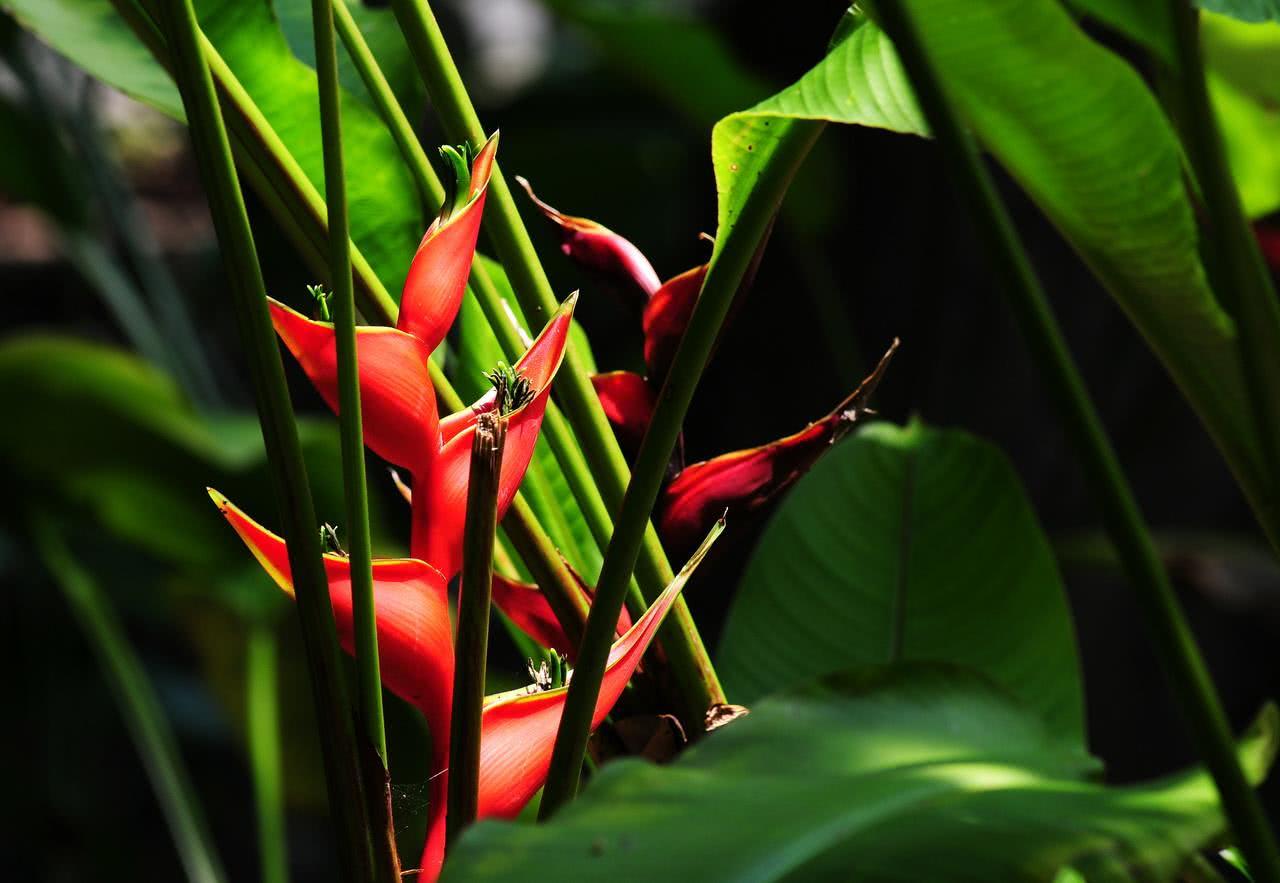
Heliconia rostrata is a perennial herb. Its plant form resembles that of the banana but is smaller, 2 m to 3 m tall; the leaves resemble banana leaves but are smaller; it blooms in late spring and early summer, and after the inflorescence emerges from the leaf cluster it hangs downward. It is native to tropical South America and is widely cultivated in various places.
Heliconia rostrata
Morphological characteristics:
The inflorescence is 30 cm to 50 cm long; the flowers are yellow, and the lignified bracts are red with yellow-green edges, like colorful little birds, very peculiar. It is distributed in tropical America and is commonly introduced and cultivated in tropical regions, while in the north it is mostly cultivated in greenhouses. It is a relatively new type of garden flower. It is propagated by division. It likes high temperatures, humidity and plenty of sunlight. It requires deep, fertile, well-drained soil. It can be planted in large pots with leaf mold or peat soil. It is afraid of cold, and the wintering temperature should be above 10°C. Because of its peculiar flower posture and brilliant colors, it is very popular among people. When in bloom, the inflorescence can be cut off, and it is an excellent flower material for flower arranging. It is a perennial herbaceous plant. Its plant form is like that of the banana, 1.5-2 m tall, with upright narrow lanceolate leaves; the peduncle emerges from the leaf axils and droops, and the inflorescence is about 30 cm long, with golden yellow flowers and bright red bracts with yellow-green edges. The flowering period is from May to July.
Heliconia rostrata
Growing environment:
It likes a warm, humid, semi-shaded environment and avoids direct strong sunlight. The optimum growing temperature is 18-30°C, and the optimum winter temperature required is 10-20°C. It is suitable for growing in loose peat soil.
Main value:
Heliconia rostrata is one of the ornamental flowers popular in the world today. Its flower shape is peculiar, its colors are brilliant, and its flowering period is long; a single inflorescence does not fade for several months. It can be used to decorate halls and is also a top-grade cut flower material.
Heliconia rostrata?
Propagation method:
Propagation by division. Division is usually carried out in early spring when changing the potting soil. Base fertilizer should be applied before the seedlings are potted, and a topdressing should be applied once a month during the growing season, such as soaked liquid of soybean cake or sesame paste residue. A small amount of compound chemical fertilizer can also be applied.