What kind of succulent plant is Senecio haworthii?
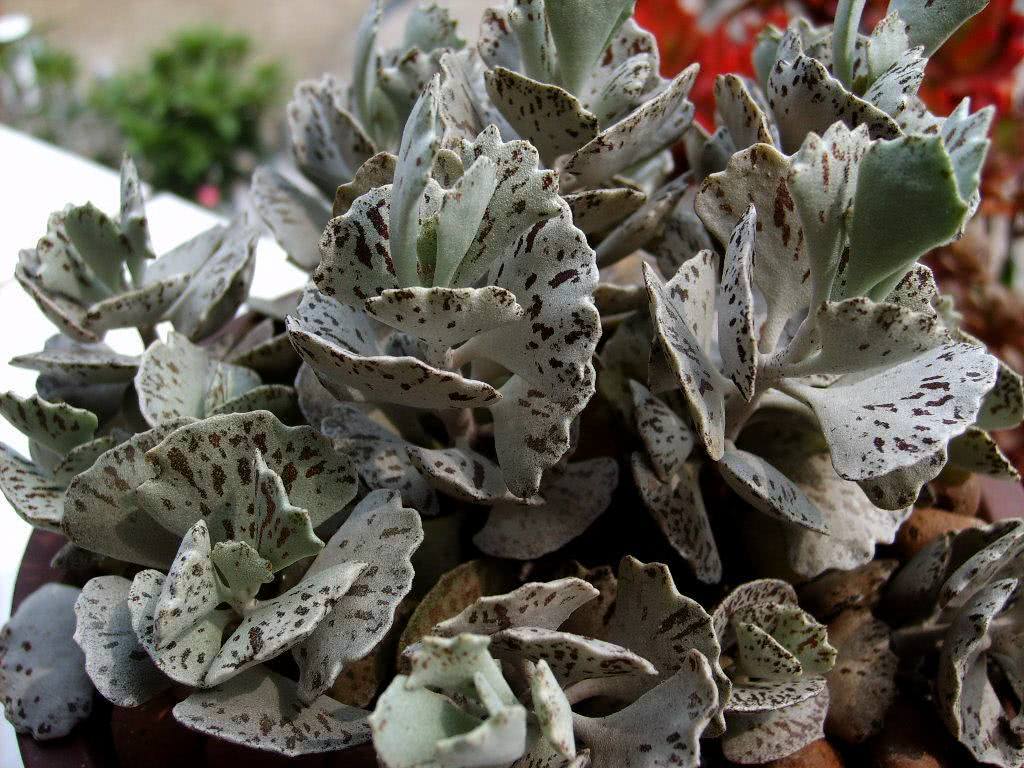
Senecio haworthii, also known as "sparrow fan" or "Hime miya", is a perennial succulent plant (succulent). It has opposite leaves, and its fan-shaped silvery-gray leaves bear brown markings similar to those of a sparrow's plumage, with irregular wavy teeth along the leaf margins. It is often grown as a foliage plant.
Senecio haworthii
Morphological characteristics:
A perennial succulent plant with opposite leaves. Its fan-shaped silvery-gray leaves bear brown markings similar to those of a sparrow's plumage, with irregular wavy teeth along the leaf margins. The leaves are about 10 cm long, blue-gray to gray-green, covered with a thin layer of white powder, and it is often grown as a foliage plant. The inflorescence is a panicle, with small, tubular, yellow-green flowers that have red midribs.
Senecio haworthii
Cultivation techniques:
It prefers a warm, dry environment with plenty of sunlight. It is not cold-tolerant, dislikes waterlogging, and tolerates drought and partial shade. Strong direct sunlight and overly shaded conditions are both detrimental to the plant's growth. If light is insufficient during cultivation, the stems and leaves will become leggy, the plant's form will become loose, the leaf color will fade, the white powder will disappear, the markings will lose their color, and the plant will lack vitality, seriously affecting its ornamental value. On the other hand, direct strong sunlight in summer will cause the leaf tips to wither. Therefore, apart from providing appropriate shading during periods of high summer temperatures, give the plant ample light in the other seasons. Plants grown this way will have thick, fleshy leaves, obvious white powder, and clear, prominent purplish-brown markings, making them very beautiful.
Senecio haworthii?
During periods of high summer temperatures, because the plant grows slowly, ventilation should be increased to prevent the soil from becoming too wet and causing the basal stems and leaves to turn yellow and rot. In winter, place it indoors in a spot with ample sunlight. If the nighttime temperature does not drop below 12°C and the daytime temperature stays above 18°C, you can water normally and let the plant continue growing; if such high temperatures cannot be maintained, reduce watering to let the plant go dormant, and it can also tolerate low temperatures of 5°C. Spring and autumn are the plant's periods of vigorous growth. Keep the soil moist but not waterlogged, and apply a thin, fully decomposed liquid fertilizer or an inorganic compound fertilizer once a month.
Repot once every spring, and prune the plant to keep its form perfect. The potting soil should be a loose, fertile sandy soil with good drainage and water retention. You can use 2 parts leaf mold, 1 part garden soil, 2 parts coarse sand or vermiculite, plus a small amount of fully decomposed bone meal, mixed evenly. Because this species has a well-developed root system, it should be planted in a larger pot. After repotting, keep the new plant in a bright spot without direct sunlight and do not water too much; resume normal care once it has recovered its vigor.