Bowl lotus has no shortage of fertilizer or light, yet its flowers bloom small; ignore this point and you will need to remedy it quickly
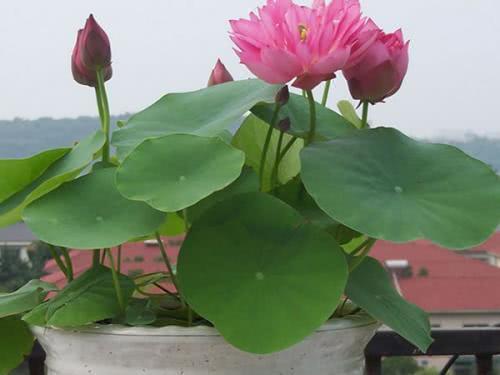
The scientific name of the bowl lotus is the same as that of the lotus; it is a perennial aquatic plant with many jointed rhizomes, its underground stem is long and thick with long nodes, its leaves are shield-shaped and round, its flowering period is from June to September, and its flowers are large and brightly colored with a faint delicate fragrance, making it highly favored by flower enthusiasts.
Many flower enthusiasts care for bowl lotus without lacking fertilizer or light, yet the flowers still bloom very small. Today Hua'er will introduce some tips for caring for bowl lotus, so that it grows lush branches and leaves and blooms brilliantly.
There are many reasons why bowl lotus blooms sparsely and small, but one point is very easily overlooked by everyone, and that is soil. Bowl lotus likes fertile clay rich in organic matter. Not changing the soil for a long time will directly affect the flowering effect, especially when it enters the flowering period, you must change its soil.
Generally, use fertile river mud or vegetable garden soil, first remove some of the gravel and weed roots in the soil, then mix in some bone meal and stir thoroughly until uniform, and then you can directly change the soil.
Besides giving it flower soil, during care you should also pay special attention to these 3 points:
1. Light
Bowl lotus likes light, and strong light at that. Strong light is beneficial to its development. In midsummer, besides being its flowering period, it is also its peak growth period, so it should be given sufficient light, preferably reaching more than 12 hours per day. However, at noon it should be appropriately shaded; if the sunlight is too strong, it will still scorch the leaves.
2. Fertilizer
Bowl lotus likes fertilizer, but is not tolerant of heavy fertilizer; too much fertilizer easily rots the stem, so apply thin fertilizer frequently. You can apply some diluted phosphoric acid liquid fertilizer, which is more conducive to its bud formation and flowering. Every ten days or so, you can use monopotassium phosphate diluted 1000 times and slowly pour it into the water basin, which can extend the flowering period.
3. Pruning
You should prune away some of the residual leaves floating on the water surface and some of the old leaves above, to concentrate nutrients and better promote the growth and flowering of the bowl lotus. If weeds are found around the plant, they should also be cleared away in time to avoid competing with the bowl lotus for nutrients.
The care of bowl lotus is introduced here. If flower enthusiasts have other additions, you can share them with everyone in the comment section below. To learn more about flower care knowledge, you can follow Huajianke!