Chinese juniper bonsai creation: A master's skillful hands give an old tree a complete makeover
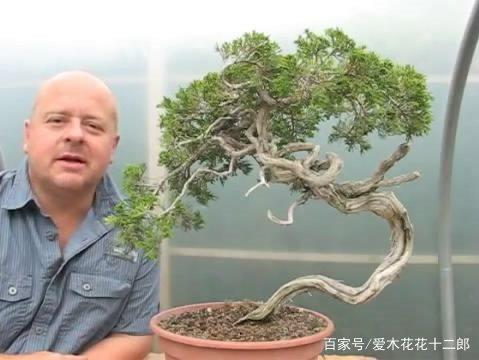
It's been a while since I told a story about Graham and his bonsai, so today I'll tell another one. A couple of days ago I happened to discover that this guy is also a skilled yamadori collector. When he has free time, he goes up into the mountains with his two buddies to dig up trees, and when they dig up more than they can handle, they sell some. This Chinese juniper was one they dug up in France - seems they've pretty much dug out all the good trees in the UK. I have to say, these people are really hardcore. I think of my fellow yamadori collectors back in China, who just work the mountains near their own homes - it's rare to even see someone go to a neighboring village to dig. But these guys? They've gone international with their tree digging.
This is a genuine collected yamadori. To be honest, juniper material shaped like this is rare. How could such a slender, elongated trunk survive the ravages of wind and rain on the mountain? Perhaps it grew behind a large rock where it had some shelter from the wind.
After 4 years of cultivation, the foliage has grown very lush, but it has a bit of a top-heavy feel.
The bark on the main trunk is grayish-white due to accumulated dust and oxidation of the dead surface layer.
But a simple scrub-down is all it takes to reveal its true color. This distinctive brown is a highlight of the water-conducting lines of juniper.
With just a simple scrub, the trunk and branches become very beautiful.
Once the bark is done, it's time to think about the deadwood. This tree isn't particularly old, so the surface oxidation of its deadwood isn't great yet. If you carve along the direction of the wood fibers to create that fine hair-like grain, it will look much more ancient.
Once the deadwood (shari) on the main trunk is done, it's time for the deadwood branches (jin).
As for the process of working on the jin, I think Graham's method should be written into a textbook. First tear, then burn, then brush. Whether this process works - only those who've tried it know.
Next it's time for the branches. Since it's top-heavy, some of them definitely need to be cut off, and then it's time for wiring and styling. And so the messy juniper becomes a classic mushroom-shaped crown.
Compare them - the effort was not wasted.