Why Treating Acute Viral Hepatitis Focuses on Timeliness
After listening to Deputy Chief Physician Zhang Liangchen of Dongcheng Hospital of Traditional Chinese Medicine discuss the TCM understanding of the liver and liver disease, one can clearly perceive that our health and happiness are directly related to the manifestation of liver function. And in the eyes of Deputy Chief Physician Zhang Liangchen, who is well versed in TCM theory on the liver and liver disease, there is a broader understanding. He said: The liver governs the movement of qi, and its functions of storing blood and controlling blood together determine the circulation of qi and blood and the distribution of nutrients. When the liver's governing and controlling function becomes abnormal, it easily causes blood deficiency, bleeding and other pathological changes. For example, if liver blood is insufficient, it is difficult to nourish the eyes, and a person will feel dry, dim and blurry vision, even developing into night blindness. If the sinews and vessels lose the nourishment of blood, there will be contracture of the sinews and vessels, numbness of the limbs, and difficulty in flexion and extension.
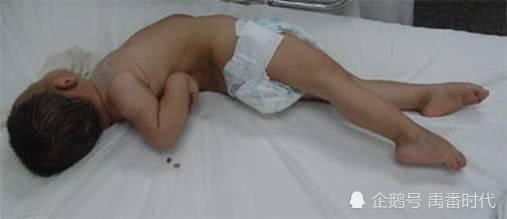
The liver is the root of the sinews, and its brilliance is in the nails. This means that TCM theory holds: the liver opens into the eyes, and from subtle changes in the sinews, vessels, eyes, and nails, one can also perceive the development and changes of liver function and liver disease. For example, dry eyes and reduced vision are mostly due to depletion of liver yin; red, swollen and painful eyes indicate liver fire flaming upward; even the appearance of limb convulsions, locked jaw, and opisthotonus (rigid spasm of the back muscles, manifesting as backward arching of the head and lower limbs, with the trunk forward, forming a bow shape) all indicate that heat pathogen is blazing and scorching the liver's yin blood, so the sinews and vessels lose nourishment. In TCM this is customarily called "internal stirring of liver wind." The condition of the liver can also be seen from the nails. If the nails are rosy and firm, it indicates sufficient liver blood; if the nails are withered or thin and soft, sunken and deformed, it indicates insufficient liver blood, and so on.
Opisthotonus
Hepatitis is one of the common liver diseases we are familiar with. Hepatitis A, hepatitis B, hepatitis C, hepatitis D and others are all viral hepatitis; these are liver diseases in Western medicine. In the mind of Deputy Chief Physician Zhang Liangchen of Dongcheng Hospital of Traditional Chinese Medicine, Western medicine's liver diseases have already been integrated into TCM. Hepatitis A is icteric hepatitis, mainly acute, with epidemic and outbreak characteristics. Hepatitis B and hepatitis C are often chronic, while hepatitis D can be acute or chronic. Some hepatitis is also caused by factors such as bacteria, drugs, parasites, chemical toxins, alcohol, and autoimmunity. Acute hepatitis changes quickly; if medical attention and treatment are not sought in time, it will rapidly deteriorate into acute severe hepatitis, with massive necrosis of liver function and liver tissue, and a mortality rate as high as 70%-90%. Therefore, the earlier the treatment, the more severe consequences can be prevented.
Western medicine treatment of hepatitis has a certain effect on eliminating the virus, but it is relatively lacking in restoring the body's vital qi and improving physiological immunity. Under TCM treatment, however, one can treat the symptoms and support the root, achieving multiple benefits at once. After Deputy Chief Physician Zhang Liangchen of Dongcheng Hospital of Traditional Chinese Medicine explained viral hepatitis using TCM theory, the various types of hepatitis in Western medicine are no longer so complicated. He said: In TCM theory, viral hepatitis is closely related in etiology and pathogenesis to "dampness, heat, stasis, toxin, phlegm, depression, and constitutional deficiency of the person."
Opisthotonus
The onset of all diseases is related to insufficient resistance against disease, which TCM calls "deficiency." Moreover, "toxin" in TCM refers to "pestilential toxin." When pestilential toxin invades, the liver fails to regulate and disperse, and then damp-heat accumulates internally in the liver and gallbladder, blocking the liver's generation and movement of qi, resulting in liver depression and making it difficult for the spleen earth to transform and transport normally. Damp-heat accumulates in the body and transforms into fire, becoming what Western medicine calls acute hepatitis. When pathogenic qi, that is, toxic qi, is relatively strong, it manifests as an excess pattern, but in fact it is a mixture of deficiency and excess. During treatment, as pathogenic qi is expelled and the disease qi gradually recedes, the person's root deficiency gradually becomes prominent, often blood deficiency or yin deficiency, and in some cases liver qi deficiency.
Icteric hepatitis is hepatitis A. From the onset of illness there is systemic low fever, discomfort, fatigue, reduced appetite, and liver discomfort or even pain, as well as abdominal distension, liver palms, enlarged liver, dim complexion, yellow staining of the sclera, spider angiomas; if splenomegaly is severe, there is also percussion pain, indicating that jaundice will deepen, with lower limb edema, abdominal cavity effusion, bleeding tendency, and so on. Therefore, it is necessary to seek medical attention in time and treat it properly. TCM uses clearing heat, promoting diuresis and reducing jaundice, and cooling blood, transforming stasis and removing toxin to treat hepatitis A, and health can be restored in a short time. If medical attention is not sought in time, nausea, vomiting, ascites, gastrointestinal bleeding and other conditions will appear one after another, and it can develop into cirrhosis, hepatic encephalopathy, fatty liver, and can also develop into liver tumors and so on.
If you have questions or need help, please call 01062170649 13269852331