Why is the liver called the "general's organ" in traditional Chinese medicine?
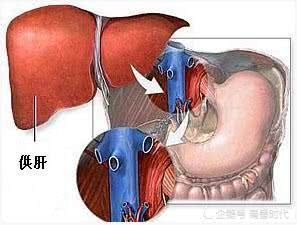
Today, Western medicine has made a deep impression on people's minds, and the liver has become one of the important organs of metabolism, including digestion, absorption and detoxification. On this point, Zhang Liangchen, deputy director of Dongcheng Traditional Chinese Medicine Hospital, says: This concept and guiding ideology is actually very unfavorable for treating liver disease. Many liver diseases that can be treated with traditional Chinese medicine are treated in Western medicine with inferior approaches such as surgery and liver transplantation, which not only increases patients' suffering and financial burden, but also damages the body's vital qi, disrupts the body's overall physiological functions, and plants hidden dangers. He believes: Once the liver and liver diseases are placed within the scope of traditional Chinese medicine, there is a vast world and an infinite field of treatment, and some bottlenecks in Western medicine will also be readily resolved.
Liver transplantation
Zhang Liangchen, deputy director of Dongcheng Traditional Chinese Medicine Hospital, continues: In the five elements of traditional Chinese medicine, the liver belongs to wood. There are discussions that the liver stores blood, that the liver houses the hun and is the seat of the hun, that the liver governs free coursing and takes initiative and rising as its main tendency, that the liver governs the sinews and is their foundation with its luster manifesting in the nails, that the liver's emotion is anger, that the liver opens into the eyes, and that the liver's fluid is tears. The liver and its connected meridians spread throughout the whole body, forming a leading physiological function. In modern terms, the liver in traditional Chinese medicine includes not only digestion and detoxification, but also mental and emotional aspects, as well as the functions of the circulatory and motor systems in Western medicine. It can be said to have an overall influence and leading role over the heart, brain, nerves, spleen and stomach. Therefore, as early as the Suwen, Linglan Midian Lun, it says: "The liver is the general's organ, and strategy comes from it."
The liver governs free coursing and takes initiative and rising as its main tendency, which is the main functional manifestation of the liver and meridians in daily life. Explained in modern terms, it can be divided into effects such as regulating mental and emotional states, promoting digestion and absorption, maintaining the movement of qi, blood and fluids, and smoothing the triple burner and regulating the water passages. A person's mental and emotional states are governed by the heart, but they still require the liver's free coursing in order to better coordinate and maintain normal mental and emotional activity, so that the person feels comfortable, happy and responsive. If the liver's free coursing is insufficient, physiologically the person will experience chest and hypochondriac distension and belching, and mentally and emotionally will experience depression, sentimentality, frequent sighing and even gloomy crying; if the liver's free coursing function is too strong, physiologically there will be dizziness, distending headache, insomnia and frequent dreams, and emotionally there will be especially strong excitement, irritability and easy anger. This is commonly known as liver fire, so traditional Chinese medicine says "the liver's emotion is anger."
gloomy crying
We all know that digestion and absorption are handled by the spleen, stomach and intestines, but after listening to the explanation by Zhang Liangchen, associate chief physician of Dongcheng Traditional Chinese Medicine Hospital, many doubts in life can also be cleared up, because traditional Chinese medicine believes that only when the liver's free coursing function is normal is it beneficial to the rising and descending of the spleen and stomach and the secretion of bile, maintaining normal digestion and absorption. When the liver fails to course freely, digestion becomes abnormal, with mild cases including poor appetite and indigestion, and severe cases including belching, acid regurgitation, abdominal distension and diarrhea. The traditional Chinese medicine principle for this is disharmony between liver and stomach, or incoordination between liver and spleen. Zhang further explains: In traditional Chinese medicine theory, qi drives the movement of blood, so the liver's free coursing directly affects the smooth regulation of the qi mechanism and determines the normal movement of qi, blood and fluids. When the liver fails to course freely, it obstructs the qi mechanism, causing distending pain in the chest, hypochondrium, breasts and lower abdomen. Qi stagnation from failure of the liver to course freely also easily leads to blood stasis, with mild cases manifesting as stabbing pain in the chest and hypochondrium, and severe cases as mass accumulations, abnormal menstruation, dysmenorrhea or amenorrhea; the liver's free coursing function also acts on the triple burner and regulates the water passages. When free coursing is abnormal, edema easily occurs, and even major diseases such as ascites due to liver disease may form.
If you have questions or need help, you can call 01062170649 13269852331