Soapberry is a tree species that combines multiple functions in one.
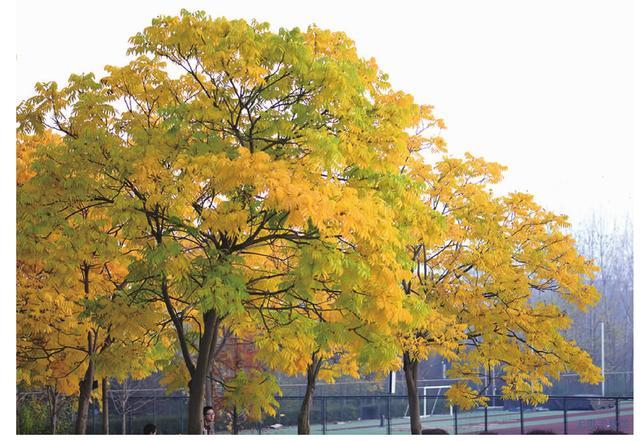
A tree species that combines multiple functions in one: soapberry
Soapberry, Sapindus saponaria, is a tree species of the genus Sapindus in the family Sapindaceae, distributed across most provinces of China south of the Yellow River basin, and in Japan, Korea and multiple countries in South Asia. It is a large deciduous tree, reaching up to 25 m tall, with grayish-brown bark that is usually not fissured. The pinnately compound leaves are even-pinnate; the leaflets are usually nearly opposite or alternate, entire, with oblique bases, hairless or with minute pubescence. The panicle is borne at the top of the branches; the pedicels are covered with short pubescence; the flowers are small, 5-merous, actinomorphic, with petals bearing long claws, and 8 stamens exserted from the corolla. The fruit is nearly spherical, turning from orange-yellow to black when ripe. The flowering period is early June, and the fruiting period is August to November.
I. Landscape applications
1. Specimen trees
Soapberry grows rapidly, has a huge crown form, and relatively dense branches and leaves. It can be planted as a specimen on large lawns, adorning the lawn like a giant umbrella. After autumn sets in, the leaves turn golden yellow, and the color is extremely magnificent, with a strong visual impact. After winter arrives, the leaves all fall, and the branches are vigorous and sturdy, also showing a rather firm beauty.
2. Street trees
Soapberry has a relatively obvious trunk and a large crown, provides excellent shade, and has many advantages such as not affecting light penetration in winter and strong resistance, making it the darling of most landscape designers and a highly competitive street tree species in East China, Central China and even North China.
3. Group plantings
In large spaces such as parks or similar shared places, planting soapberry in large clumps or groups can also create an excellent landscape effect. Due to differences in planting density, together with the influence of other factors such as light, the trunk form and crown size of soapberry will differ noticeably, but overall it can provide very good coverage. In autumn, the autumn foliage can be enjoyed, and the swathes of golden yellow bring viewers an excellent visual experience. Moreover, shade-tolerant evergreen groundcovers or shade-tolerant flowering shrubs can be planted beneath the trees, which can regulate the atmosphere to a certain extent, make the colors richer and the rhythm lighter, and also enrich the winter landscape effect.
4. Tree pits or tree arrays
Tree species used for tree pits or tree arrays generally have certain requirements for drought and barren tolerance and for the crown. Soapberry's superbly strong tolerance of drought and barren conditions happens to fit this well, and coupled with its full, rounded crown shape and its autumn colorful foliage effect, it can play its proper role well whether used in squares or various tree pits.
5. Afforestation
When used for mountain afforestation, especially in landscape forest belts along highways, its many advantages such as a short seedling recovery period, rapid growth, affordable price, extensive management and excellent landscape effect all make it an excellent tree species for mountain greening and afforestation.
II. Pest and disease management
1. Diseases
The main diseases of soapberry are wilt disease, canker disease and sooty mold. Among them, wilt disease mainly occurs under conditions such as overly dense plant spacing, poor ventilation and waterlogging. For the above diseases, prevention should be given priority as much as possible, and during management, external injuries should be avoided as much as possible, mainly mechanical damage to the bark, which can minimize the impact of diseases on it.
2. Insect pests
The main insect pests damaging soapberry include longhorn beetles, bark beetles, ghost moths, psyllids and so on. Among them, longhorn beetles are the most common, and control is generally carried out by spraying insecticide during the mating period of longhorn beetles, combined with the method of killing larvae inside the trunk, which can control them well. Bark beetles cause the most serious damage to soapberry, and if not controlled in time, they are often fatal pests.
III. Other uses
In addition to landscape uses, soapberry also has many economic uses. Because its fruit peel contains a large amount of sapindus saponin, which is an excellent plant surfactant, it can be made into pure natural soapberry soap milk. This natural soap milk does not bring pollution from fluorescent agents, surfactants or environmental hormones, nor does it cause problems such as water eutrophication. In fact, in many places, people already directly use the fruit peel as a natural cleaner. Soapberry seed kernels have an oil content of up to 40%, making them an excellent industrial oil and suitable for promotion and development as a biodiesel plant. In addition, soapberry can also serve as a nectar source plant, its roots and fruits can also be used as medicine, and coupled with its strong pollution resistance, it can also be planted as an environmental protection tree species in factory areas and other polluted areas.