Introduction, Cultivation and Cutting Propagation Techniques of Silvervine Fleeceflower
Introduction, Cultivation and Cutting Propagation of Silvervine Fleeceflower
Silvervine fleeceflower (Polygonum aubertii) is a perennial deciduous semi-shrubby vine of the genus Polygonum in the family Polygonaceae. It is light-loving yet shade-tolerant, drought-tolerant and barren-tolerant, and highly cold-hardy, able to overwinter safely in the open at a low temperature of -30°C. Its above-ground parts do not dry up, and new leaves sprout naturally the following year. It is an ideal material for vertical greening and ground cover; it is not only attractive with good greening effects, but can also effectively solve the current problems in northern China of few plant resources for landscaping, monotonous landscapes and monotonous colour tones, and it has great development prospects. After several years of introduction trials and cutting propagation, it has been proven that silvervine fleeceflower can grow and reproduce normally in Urumqi, Xinjiang.
1 Biological Characteristics
The stems of silvervine fleeceflower are twining or upright, initially herbaceous, becoming woody or nearly woody after 1 to 2 years, with vines 10 to 15 m long. The leaves are alternate or clustered, smooth and hairless on both surfaces, triangular or ovate-triangular, entire, 4 to 9 cm long, with reticulate veins; the apex is sharply pointed, the base is hastate, the margin is often wavy, and the petiole is 3 to 5 cm long; the ochrea is short and tubular and falls early. The stems are soft, round, hairless and without ridge lines; young branches are pale green, smooth on the surface, with distinct white dot-like lenticels; old stems, more than 3 years old, are entirely lignified. The root system is well developed, mainly distributed 30 to 40 cm below the topsoil, and the roots have a very strong regenerative capacity. Silvervine fleeceflower has a long flowering period, with each spike flowering for about 1 month and the population flowering for about 60 d; it is a good climbing and nectar plant. It likes a sunny, humid environment, is drought-tolerant, has almost no pests or diseases, and blooms profusely; it is a deciduous vine with strong adaptability and rapid growth. Silvervine fleeceflower is easy to cultivate, is not demanding about soil, grows vigorously under extensive management, and grows even more luxuriantly in fertile, moist soil.
2 Introduction and Cultivation Trials of Silvervine Fleeceflower
In 2009, healthy, pest- and disease-free silvervine fleeceflower seedlings were introduced from the Qinghai Botanical Garden and planted respectively in the southern mountains of Urumqi and in Changji. In Shuixigou Town in the southern mountains of Urumqi, the soil is gravelly chestnut soil, with a total salt content of 0.104%, an organic matter content of 0.94%, and a pH value of 7.93; it is a typical regionally organic-matter-poor, phosphorus-poor and nitrogen-poor soil with harsh natural conditions. The average annual temperature is 7.5°C, the average temperature from July to June is 26.85°C, the extreme minimum temperature is -23.1°C, and the extreme maximum temperature is 36.7°C. The total annual precipitation is 266.9 mm, and the annual evaporation is 2730 mm.
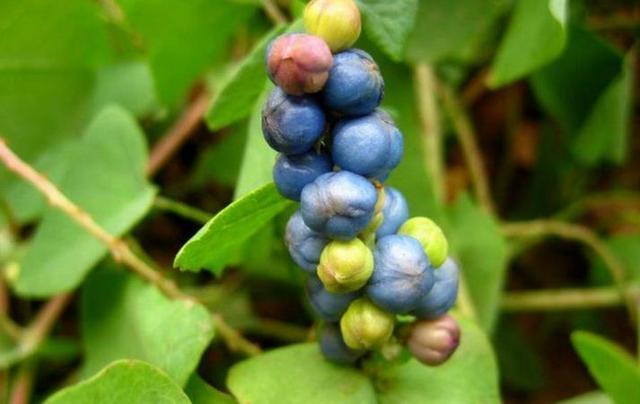
After 6 years of growth observation, the performance was as follows: it can overwinter normally, begins to sprout in early May, and has an annual growth increment of more than 1.8 m; it branches profusely, sheds leaves relatively late, and old stems thicken by 8 to 15 mm per year, with obvious longitudinal cracks in the outer bark. Its green period lasts as long as 7 months. It flowers in September; the flowers are white, and when in full bloom, clusters of white flowers float above the green leaves, creating a truly spectacular scene; it is a relatively ideal vertical greening material for foliage, flowers and fruit. Frost damage to shoot tips occurs every year, mainly concentrated on the top 20 to 30 cm of non-lignified tender shoots, and does not affect the overall growth effect; under drought conditions, a certain amount of irrigation is still needed to guarantee growth, otherwise the growth increment of silvervine fleeceflower will be affected.
3 Propagation Techniques for Silvervine Fleeceflower
Silvervine fleeceflower is propagated by cuttings. Cuttings can be taken in spring, summer and autumn; when taking cuttings, select mature, pest- and disease-free, lignified or semi-lignified branches, and the substrate should preferably be sandy soil, disinfected with ferrous sulfate, and kept moist during cutting; when taking cuttings, a substrate temperature above 18°C and an air temperature above 20°C are preferable. The cuttings are soaked in clean water, then treated with ABT rooting powder and gibberellin; after cutting, the relative air humidity should be maintained at about 80%, shading is required, roots form in about 20 d, the cutting survival rate can reach 93%, and transplanting can be done in 30 d. In summer, layering can also be used for propagation: bend the trailing branches and bury them about 10 cm deep in the soil, keeping it moist; this method roots very easily. Transplanting is generally carried out in spring and autumn. If conditions permit, a certain amount of base fertilizer can be applied at transplanting to help the plants grow; in autumn, pay attention to controlling water, and after leaf fall in winter, light pruning can be done to remove excessive branches, reduce water loss, and alleviate frost damage to shoot tips.
4 Conclusion
Silvervine fleeceflower can grow normally in arid regions, can overwinter without protection, and has a long flowering period; it grows relatively quickly, its branches twine around each other, and it covers buildings over a relatively large area. It is not only attractive, with good greening and artistic effects, but also easy to propagate, highly adaptable, strongly resistant, extensively managed, and relatively low in greening cost; it extends the green period of urban greening and has great development prospects. It is an excellent urban greening vine worthy of widespread promotion and application. At present, there is relatively little research on the domestication and improved-variety selection of silvervine fleeceflower; at the same time, research should also be strengthened on its physiological and ecological adaptability and on cultivation methods for silvervine fleeceflower in different urban greening settings, so as to provide technical support for its promotion and application and lay a solid applied foundation for its development and use.