How to grow Persian buttercup? Detailed guide to cultivation methods and precautions
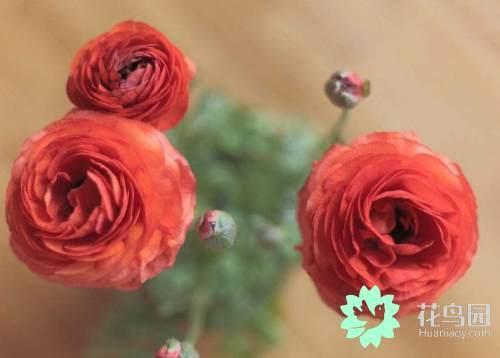
Persian buttercup, also known as celery flower, has rich flower colors, but its flower shape closely resembles that of a peony, so friends who see it often feel as if they are looking at the shadow of "someone else." But this similarity not only does not make people dislike it, but makes them love it even more, attracting a large group of true fans. Persian buttercup is a perennial bulbous flower. Next, follow the editor to learn its planting methods.
How to sow Persian buttercup seeds
1. Sowing time
The optimal temperature for Persian buttercup seed germination is between 10-15°C. Generally, sowing is carried out in October. To extend the growth period, sowing can also begin in September.
2. Sowing box
For convenient management, Persian buttercup is often sown in a sowing box. Persian buttercup likes sandy soil rich in humus, loose and fertile, with strong permeability, so the sowing soil should be prepared before sowing.
At the bottom of the sowing box with drainage holes, cover the bottom with broken tiles, then spread a 1 to 2 cm thick layer of coarse sand, and then fill with the prepared sowing soil until it is 2 to 3 cm from the box opening. Use a wooden board to scrape it level and compact it.
3. Sowing
Use fresh seeds for sowing, because fresh seeds have relatively high viability. Then broadcast them on the sowing box and cover with fine soil. The thickness of the covering soil should be such that the seeds are no longer visible. Then gently compact with a wooden board, and place it into a water container (or into a pre-dug ground trench and add water to the trench), so that water seeps into the box from the bottom and moistens the soil. Note that when soaking the box, the water level must not be higher than the surface layer of the box soil, so as not to wash away the seeds.
Planting methods
1. Soil: Persian buttercup prefers well-drained, fertile and loose neutral or slightly alkaline soil, and sufficient base fertilizer should be applied when planting. Potted cultivation requires a sandy culture soil rich in humus, loose and fertile, with strong permeability. You can use 2 parts garden soil and 1 part each of leaf mold and barnyard manure as the potting soil.
2. Light: Persian buttercup is not tolerant of strong light and prefers a semi-shaded environment. In winter, light should be sufficient. In spring, as the temperature rises and light intensity increases, moderate shading should be provided and ventilation strengthened. In addition, Persian buttercup is a long-day plant, and its flowering period can be controlled according to this characteristic.
3. Watering: Persian buttercup likes moisture and fears waterlogging, and is relatively drought-tolerant, but should not be excessively dry. After planting, the first watering should be thorough. After that, watering should be timely and balanced, and the soil should not be too dry or too wet. The appropriate degree of watering is when the soil surface is dry but the leaves do not show wilting.
4. Fertilizer: Before planting Persian buttercup, choose decomposed cake fertilizer or livestock manure and other organic fertilizers as base fertilizer, and spread them evenly. After transplanting, start topdressing when the plant shows obvious growth or grows new leaves. In the early stage, mainly use urea, and in the later stage, mainly use compound fertilizer, applying once every 7 days.
5. Temperature: Persian buttercup likes a cool environment. The optimal growth temperature during the day is 15-20°C, and at night it is 7-8°C. The temperature should not be too high or too low, and the temperature difference between day and night should not be too large, otherwise the growth and development of Persian buttercup will be affected, leading to a decrease in the number and quality of its flowers.
Precautions
1. Pests: During the growth period of Persian buttercup, if there is high temperature and high humidity, it is easy to cause leggy growth, yellow leaves, and stem base rot. The main pests are root maggots and leafminers, which can be killed by spraying with 1000 times dilution of 40% omethoate emulsifiable concentrate. For root rot, irrigate with 1000 times dilution of 50% benomyl wettable powder.
2. Pruning: Persian buttercup is an ornamental flower plant with a beautiful plant shape and bright flower colors, and it grows relatively quickly. In the early bud stage, keep 3-5 robust buds per plant and remove the rest. At this time, the potting soil should be slightly dry. After flowering, if seeds are not needed, promptly cut off the spent flowers.