Beautiful tuberous plants are also a must to care for at home
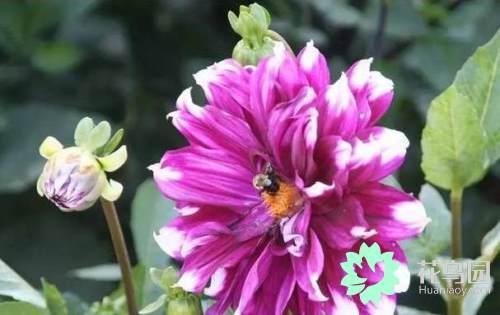
First of all, I must admit that now is not the right time to plant tuberous plants, but it is a good time to buy them, such as my favorites: dahlias, pelargoniums, begonias, gladioli and cannas, as well as calla lilies and other tuberous plants.
PS: They are generally planted in spring, from March to April, once the weather turns warm and mild, and now they are blooming!
Common summer-blooming tuberous plants
1. Begonia
Begonias (Begonia) include flowering types and foliage types. And among the flowering begonias, there are large-flowered types as well as varieties that bear small flowers.
For the ones we generally grow in gardens and pots, most are distinguished by their roots: there are types with underground stems and types with tuberous roots.
The most popular large-flowered type in gardens is generally the tuberous-rooted kind. Most of these are planted under trees in gardens. Begonias cannot stand heat or drought, and they die back very easily; when it is too hot, the petals also tend to scorch and the edges turn yellow.
Their flowers are large and beautifully shaped. The colors range from white, pink and red to yellow and apricot, and some have edges in a different color, or are bicolored with a differently colored center.
The petals can be cup-shaped like a rose, or have wavy edges. The flowers are generally around 6-7 cm, but special varieties can reach as much as 15 cm in diameter. I hear some are even fragrant.
This type of begonia is a relatively short plant, suitable for planting in shaded flower beds and under trees. In a flower bed, plant it at the front because it is shorter. There are also trailing types, which are suitable for hanging baskets.
After begonia flowers fade, it is best to remove the flowers immediately, as this is the only way new flowers will appear. And if you do not remove the flowers, the stems will grow longer and longer without producing flowers.
2. Calla lily
The calla lily's flowers are very beautiful. In the tropics they are generally planted by the water. In some tropical places they even grow wild and spread very readily, but in temperate and cold zones they can only be grown as pot plants.
What is called the flower of the calla lily is actually not a flower, but a spathe, mostly white, with a yellow spadix. There are also purple, yellow, and white with green stripes. They generally have a faint fragrance and are very elegant.
Growing calla lilies is like growing tulips and other bulbous plants: this underground stem contains all the nutrients for the entire plant. It is not hardy at all, so you have to wait until spring to plant it, or you can buy young plants and transplant them.
3. Canna
Canna is a plant familiar to people in tropical regions, with large leaves like a banana tree, and the flowers are also large. In a suitable environment it grows very vigorously. It is generally more than one meter tall. The taller varieties can even exceed about 2.5 m.
Canna leaves are mostly plain green, and some have straight stripes, which adds to their beauty. There are also newer varieties with brown, purple, or bronze leaves. The flowers are mostly red and yellow, with apricot and even white being less common.
Canna is afraid of cold, so it can only be planted in the ground after there is absolutely no frost. It is very drought-tolerant and heat-tolerant, and it tends to prefer soil with more organic matter.
If you want to keep the underground stems, you can dig them up after the leaves wither in autumn and store them.
As for soil, it is best to have plenty of organic soil, compost, peat moss, animal manure, etc. In addition, drainage must be good.
Because the plant is tall and eye-catching, it can be planted at the back of a flower bed, or in the center of a flower bed. It is also suitable for growing on its own. Planting several of the same color together gives an even better effect.
Canna can also be grown in pots, but it needs a fairly large pot, and there must be sufficiently large drainage holes at the bottom, with drainage that is very good. Because it looks best planted in a group of three, it is best to use a large pot and a sufficiently deep pot. Put small stones and sand at the bottom to increase drainage.
If grown in a pot, it can be kept indoors in winter, so there is no need to dig up the underground stems.
To grow from seed, first soak the seeds in warm water for 24 hours, then plant them in moist peat moss or moist perlite.
In spring, when the weather is warm, you can plant the underground stems in a pot more than 25 cm in diameter. Do not plant too deep; just cover with a layer of soil. Maintain a temperature of around 16°C. After that, once there is no frost, they can be moved outdoors.
4. Dahlia
Dahlias may be the most popular of the summer-blooming tuberous flowers. Most people plant the tubers in spring, but because dahlias are very afraid of frost, you must wait until there is no danger of frost before planting them in the soil. It is best to wait until the soil temperature reaches 15°C before planting them in the soil.
Dahlias belong to the aster family, and the flowers resemble chrysanthemums. However, most of the flowers are larger and more showy than chrysanthemums. There are even new varieties with extremely large flowers, said to be as big as a plate.
If you grow this type, besides choosing large-flowered ones when buying, you should also remove the smaller buds before flowering, leaving only the central one.
Dahlias are afraid of frost, but also afraid of heat. When growing them in very hot areas, choose a spot with shade at noon. When growing them in cooler places, choose a sunny area. When planting the tubers, do not cut them; plant them about 6-8 inches deep. The part with the eye or shoot tip should face upward.
Taller varieties must have stakes put in place at planting time. Do not water right after planting, to prevent the tubers from rotting. Water again after the shoots emerge. Do not fertilize too quickly either.
If you want to see flowers earlier, you can plant the tubers indoors in pots one month earlier, and transplant them to the flower bed when the weather is warm.
For fertilizer, use a low-nitrogen fertilizer, preferably a 5-10-10 ratio. Also start using fertilizer only after the shoots appear. Once every 3-4 weeks is enough.
After the flowers fade, remove them so that new flowers appear more quickly.
In zones above 8, dahlias can overwinter in the ground. Just cover the surface soil with a layer of mulch in winter; in other places, dig them up at the end of autumn and store them.
5. Pelargonium
This generally refers to the annual large-flowered plants in flower beds. Although called large-flowered, they are actually a cluster of small flowers gathered into a flower ball. The most eye-catching colors are bright red and pink. But there are also white, apricot, and variegated types.
Pelargoniums need sunlight to bloom, especially the large-flowered types, which need at least six hours of light each day. At the same time, they cannot be left without water, because their roots are shallow; if it does not rain for a few days, you have to water them. If growing them in a dry tropical area, a little shade is fine, and you should pay even more attention to watering regularly.
The most important thing in growing pelargoniums is deadheading. When the flowers fade, remove (cut off) the flower head, otherwise the plant will start setting seed and stop blooming.
6. Gladiolus
Gladiolus is also a tropical flower with an underground stem, but its underground stem is not a bulb (like garlic), nor ginger, but rather like a dried persimmon, or a garlic head without cloves.
When growing it in cold zones, you have to dig up the underground stems and store them every autumn when the leaves wither, then plant them again next year. Otherwise you have to buy new ones.
Gladiolus is a very popular cut flower in China, because the flowers open from the bottom upward, which carries the good meaning of rising step by step. And because the flowers open one after another, they can also last a long time.
Gladiolus is very afraid of frost; it can only overwinter in the ground above 5°C, so it should be planted after the danger of frost has passed. Its cold sensitivity is about the same as that of tomatoes.
Most people grow gladiolus for cut flowers, because in the ground, since the plants are slender, they often need staking; otherwise a single rain may knock them over.
If you want to cut them for a vase, you can cut them once the lowest flowers have opened, and that way they will bloom for a long time.
When growing gladiolus in overly hot areas, covering the ground with some organic soil as fertilizer can keep the flowering period going longer. In zones 7-8, cover the soil in winter too, or use straw, to keep the ground from getting too cold and freezing the underground stems.
After the flowers fade, it is best to remove the flowers so they do not set seed and use up nutrients. When all the flowers have faded, cut off the flower stems and keep the leaves for photosynthesis, so the underground stems can continue to absorb nutrients and bloom again next year. Unless you do not want to keep the underground stems, then it does not matter. (Tulips and daffodils are handled this way too.)
Care of summer tuberous plants
The tubers can be ones you have stored well yourself, but most flower lovers buy new ones from the flower shop.
This type of summer-blooming tuberous plant can be lifted and stored in autumn, kept in a cool place in the basement, or stored in sand about 15 above and below.
1. Choosing potting soil
From March to April they can be taken out, the soil shaken off a little, and planted in clean pots; you must use newly bought or newly mixed potting soil.
Do not use old soil that other potted plants have used, to avoid mold or pests.
2. Handling abnormalities
Before planting, you can check whether the tubers are healthy and whether there are any moldy parts. If there are, you can cut them off with a sterilized sharp knife. When planting, the eye side should face up and the rooting side down. First put more than one inch of soil in the pot, then place the tuber on it, and cover with more than 3 cm of soil on top.
3. Points to note
You can plant one tuber in a small pot, or plant several in a large pot. Note that the drainage holes of the pot must be large enough, to prevent water accumulating in the potting soil and causing root rot.
After the shoots emerge, place it at a bright window. When the weather is warm enough that there will be no frost at night, it can be transplanted to the flower bed.
4. Tuberous plants that dislike transplanting
Among them, gladiolus is not very suitable for planting in pots first and then transplanting; it is best to plant it directly in the flower bed in spring.
This type of tuberous plant likes warm weather and should be planted in a sunny flower bed. Because if you want annual plants to keep blooming, you cannot let them go without water, and you also need to fertilize regularly.