How to grow Malus micromalus? Learn the correct care methods
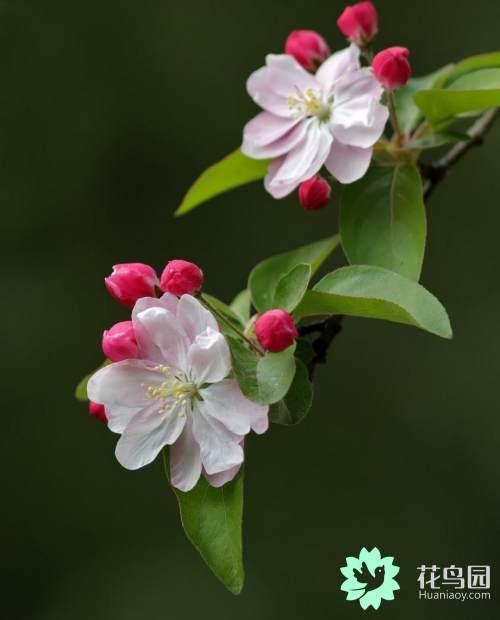
As a crabapple variety unique to China, Malus micromalus has very high landscaping and ornamental value. It grows well in the dry regions of northern China and is a commonly cultivated fruit tree and ornamental tree. Its tree form is upright, its flowers are dense, and there are many cultivated varieties. It is deeply loved by people, so what are its cultivation methods? Below, the editor will take everyone through them.
Cultivation methods for Malus micromalus
1. Planting: Malus micromalus is generally planted in the ground. The best time is before bud break in early spring or after leaf fall in early winter. Keeping the root system of the seedlings intact when they leave the nursery is the key to survival. Generally, large seedlings should be kept with a soil ball, while small seedlings should retain some native soil depending on the situation. After planting, care and management should be strengthened, and the soil should often be kept loose and fertile.
2. Watering and fertilizing: During the growing season in spring and summer, Malus micromalus needs appropriately more watering. During the high temperatures of midsummer, watering should be timely and sufficient; if water is lacking, leaf edges are prone to scorching. After the weather cools in autumn, gradually reduce watering, and after leaf fall in winter, water even less to prevent root rot. However, because Malus micromalus is a deciduous tree species, it is not suitable to spray too much water on the branches and leaves. Malus micromalus likes fertilizer and can be given appropriately more, but attention should be paid to using nitrogen, phosphorus, and potassium together. If too much nitrogen fertilizer is used, it easily causes lush branches and leaves but sparse flowering. After flowering in spring, nitrogen fertilizer should be the main type applied to promote branch and leaf growth. In summer and autumn, apply more phosphorus and potassium fertilizer to favor flower bud differentiation and ensure abundant flowers and vivid colors. Fertilizers can include cake fertilizer, human manure and urine, bone meal, chicken manure, fish waste water, and so on.
3. Pruning: Malus micromalus has strong sprouting ability and grows quickly, so attention should be paid to shaping and pruning it. From after leaf fall in winter to before sprouting in spring, remove dead branches, diseased and pest-infested branches, thin and weak branches, crossing branches, overlapping branches, overly dense branches, and other messy branches. After flowering in spring, according to shaping needs, appropriately shorten overly long branches to encourage side branch formation, increase the number of flower buds, and ensure abundant flowering the following year. In addition, after sprouting in spring, excess, overly dense, and poorly positioned buds can be removed.
4. Pest control: For Malus micromalus, attention should be paid to controlling pests such as scarab beetles, leaf rollers, aphids, bagworms, and red spiders, as well as diseases such as rot disease and red star disease. Control can involve removing diseased trees, burning diseased branches to reduce sources of pathogens, spraying lime sulfur in early spring, or brushing lime mixture on the trunks. At the early stage of disease, cuts about 0.5 cm apart in a crisscross pattern can be made on the diseased spots, reaching deep into the xylem, and then a fungicide can be sprayed on.
Propagation methods for Malus micromalus
1. Grafting: Malus micromalus grafting is divided into bud grafting and scion grafting, and rootstock of the same genus is mostly used. Bud grafting of Malus micromalus is suitable in August, while scion grafting is suitable in spring.
2. Root burial method: In early spring from February to March, cut the roots of mature Malus micromalus plants into lengths of about 15 cm, lay them flat and bury them in the soil, cover with 7-8 cm of soil, water thoroughly, and afterward keep the soil moist regularly.
3. Division method: Division of Malus micromalus is suitable in early spring in March before sprouting. Small shoots will sprout around older Malus micromalus plants. Cut the small shoots off from the mother plant with their roots and transplant them. Appropriate shading is needed, and the soil should be kept moist.
Precautions for Malus micromalus
1. Do not expose it to direct strong light from the sun, so as to avoid damaging the leaves. In winter, place it in a sunny, wind-sheltered spot for care. In the dry and hot season in summer, pay attention to ventilation and shading, and do not let it receive sunlight all the time.
2. When pruning Malus micromalus, you can cut off worthless long branches and thin, weak branches each year, and shorten the remaining long branches. When the Malus micromalus plant enters a declining state, some larger branches can be cut off so that the branches retract. During the growing period, among the newly grown branches, the spindly and weak branches need to be removed. Apart from retaining relatively robust branches with suitable directions, all aging branches can be cut off.