How to grow Paphiopedilum (slipper orchids)? Keep this care tips guide handy
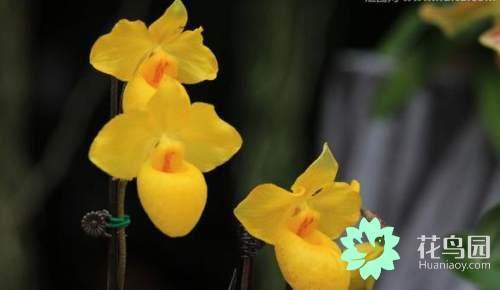
To grow Paphiopedilum well, we first need to understand its characteristics. Paphiopedilum is a terrestrial or semi-epiphytic orchid, and it has no pseudobulbs. There are generally two major types: one is the green-leaf type, and the other has marble-like patterns on the leaves, so it is called the mottled-leaf type. Green-leaf Paphiopedilum leaves are slightly thicker and fleshy, with a smooth, hairless surface, and can store a certain amount of nutrients. They usually bloom in winter and spring. Mottled-leaf Paphiopedilum leaves are very thin, covered with hairs on the surface, usually purple on the underside and grayish green on the upper side, and usually bloom in summer and autumn. The roots of both types of Paphiopedilum are running roots with hairs. Paphiopedilum generally produces side shoots from the top, and running roots also propagate; sometimes the tips of running roots emerge from the soil surface and become a complete plant.
Paphiopedilum likes a warm, humid, and semi-shaded environment, and is afraid of heat and strong direct sunlight. So it should be placed in a shaded spot or on a balcony on the shady side. Paphiopedilum roots rot very easily, so the growing medium is required to have good air permeability. I have tried many kinds of growing media: Clivia soil, orchid stone, pure sphagnum moss, and leaf mold are all fine. I once saw someone use all gravel, the kind of crushed stone used for paving roads, and also grow them very well, but my friend's orchid shed once lost hundreds of Paphiopedilum in a single summer. It is best to use hard media such as orchid stone plus some soft media, with the same formula as orchid soil; this kind of medium makes watering easier to control. Pure sphagnum moss is also very good, but if using pure sphagnum moss, you cannot use a large pot because it dries slowly. So Paphiopedilum very easily dies for no apparent reason, especially in summer. Therefore, the growing medium must be breathable. Paphiopedilum has no water-storage organs, so its drought tolerance is very weak; once it lacks water, it is basically very hard to save. Some friends use the semi-hydroponic method, which is said to work very well. Friends who are interested can search for it on Baidu.
Paphiopedilum grows relatively slowly, and old leaves will wither, so it cannot be considered lush and leafy. Apart from when it blooms, there is basically not much change at other times. But its roots are still actively running. So its fertilizer requirements are not very high. But you also cannot completely stop fertilizing, especially near the flowering period. Personally, I prefer to use slow-release fertilizer specially for orchids, which is more convenient to use. Paphiopedilum's flowering period is relatively long. After flowering, try not to let water remain on the flowers, especially do not let water accumulate in the pouch.
Because the roots of Paphiopedilum need to stay moist for a long time, if ventilation is poor, bacteria are likely to breed. Therefore, drench the roots with drugs such as carbendazim at irregular intervals. An aspirin solution can also be used.
Native Paphiopedilum species in China, such as Paphiopedilum armeniacum, Paphiopedilum micranthum, and Paphiopedilum malipoense, are basically protected plants. In recent years, some well-connected people have only recognized American Paphiopedilum brought in from South America. American Paphiopedilum flowers are brightly colored, making up for the lack of rich colors in domestic Paphiopedilum. The cultivation method is similar to that of domestic Paphiopedilum.
Overall, Paphiopedilum is relatively difficult to cultivate. If you do not have a suitable environment, it is best not to grow it.