The vicious weed farmers hate in rice paddies, yet now some people are getting rich from it
Friendly reminder
Hemu Report aims to share and popularise information about various plants and their uses, for reference only. If medicinal use is needed, it is recommended to consult a professional physician to avoid problems!
In rural areas, the most common thing is wild grass. Whether on land such as the wild and mountain forests, or in water such as paddy fields and lakes, all kinds of wild grass can be seen. Farmers have mixed opinions about these wild grasses. Take Houttuynia cordata, for example: because it gives off a strange odour, many people dislike it, but it is also a very good wild vegetable, which makes many people love it. So no matter what kind of wild grass it is, it has two sides. Below, the author introduces one such wild grass that once made farmers hate it as a "vicious weed", but now some farmers are using it to get rich.
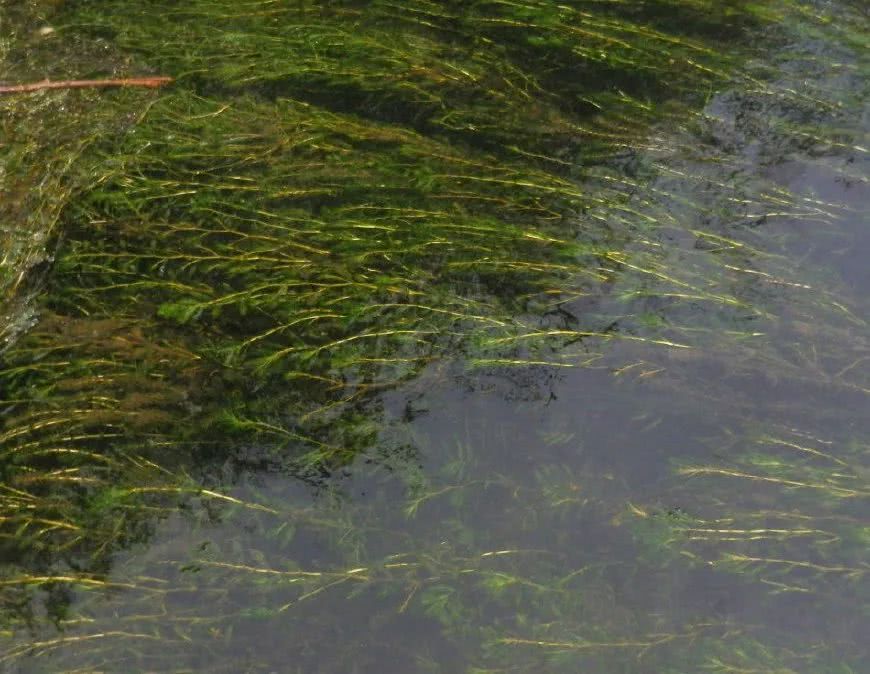
This wild grass is an aquatic wild grass. It is actually a very common wild grass. Anyone who has fished has basically seen it in rivers and lakes, but many people cannot name it. This aquatic wild grass is "Potamogeton crispus" (curly-leaf pondweed). In rural areas, farmers also call this wild grass shrimp algae, shrimp grass, wheat-yellow grass, crab grass and so on.
Potamogeton crispus likes to grow most in ponds, lakes, streams, ditches and rice paddies, and it is a perennial aquatic wild grass. Speaking of this Potamogeton crispus, the author remembers that it was once regarded as a "vicious weed" in rice paddies, and many farmers hated it deeply.
The author remembers that such a thing happened in the village where he lived. Farmers who have planted rice should know that after the rice seedlings are planted, water is pumped from nearby canals or ponds to irrigate the rice paddies, and at this time the seeds, rhizomes and buds of Potamogeton crispus are often pumped in as well.
Under normal circumstances, the seeds, rhizomes and buds of Potamogeton crispus can reproduce rapidly, and its leaves are dense, usually with a thick and broad base and often sharp teeth along the edges. After the buds fall off and sink to the bottom of the water, they can reproduce again. This causes Potamogeton crispus to multiply in large numbers, not only competing for the crops' nutrients, but also harming the crops, leading to reduced crop yields. Therefore, many farmers who grow rice greatly dislike Potamogeton crispus.
However, although Potamogeton crispus does great harm to crops in rice paddies, on the other hand, it is also a very good wild grass, because it is one of fish's favourite feeds. In particular, fish such as grass carp, blunt snout bream and Changchun bream like to eat Potamogeton crispus most. Potamogeton crispus can also provide a large amount of organic matter and nutrient salts for water bodies, promoting the massive proliferation of planktonic bait resources, which is beneficial to the proliferation of bait resources for economically important fish such as carp, crucian carp and black carp, promoting their growth and increasing yields. Therefore, many farmers engaged in aquaculture love Potamogeton crispus.
In addition, the tender stems and leaves of Potamogeton crispus are now also a first-class wild vegetable, and its nutritional value is quite rich. Every kilogram of Potamogeton crispus contains 281 mg of vitamin C and 550 mg of carotene, which shows its value. So although Potamogeton crispus is a "vicious weed" in rice paddies, it does not prevent other farmers from loving it. Nowadays in rural areas, some farmers specially grow Potamogeton crispus to get rich. According to farmers who grow Potamogeton crispus, it has strong reproductive capacity, high yield, strong adaptability and is easy to manage, and one jin costs about 30 yuan, which is quite good.
Dear friends, do you know about Potamogeton crispus? Have you eaten Potamogeton crispus? You are welcome to leave a message and exchange ideas.
Text/Hemu Report, images/Internet
If you like Hemu's articles, you are welcome to follow.