DIY mesh ring pot-in-pot method for Phalaenopsis: lush green leaves, beautiful and stable
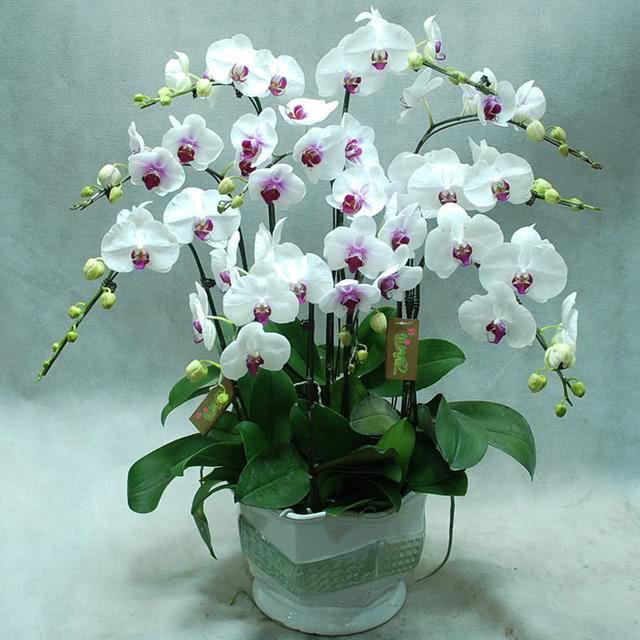
The Phalaenopsis you buy are all planted in sphagnum moss, and the pots are small and light, so they don't sit stable. Repotting into a larger pot risks waterlogging the roots. These past two days I remembered the porcelain pot method I used before, so I bought a piece of plastic mesh screen with holes of about half a centimeter on the street, cut it into long strips a bit shorter than the pot, and formed a ring slightly smaller than the pot's mouth. I tied the joint of the ring with fine string, put it into the pot, then cut a piece of mesh of the right size to line the bottom, thus creating a pot-in-pot effect. After placing the Phalaenopsis in, I added coarse potting medium, and filled some coarse material into the gap between the pot wall and the mesh. Treated this way, the pot will absolutely never waterlog, and this mesh can likewise be used for growing in porcelain pots. Phalaenopsis quite likes humid air. This planting method is similar to hanging, and watering once every two days is enough; there will be no waterlogging or root rot.
Potting medium: coarse peat, medium-grade Kanuma soil, and tree fern fiber.
For better aeration, first put some granules at the bottom of the pot; the mesh ring is in effect suspended in the pot.
Place the Phalaenopsis in and hold it upright while adding potting medium; the aerial roots outside can be placed in the gap between the walls.
Planted.
For flowers that fear waterlogging, and for growing flowers in porcelain pots, you must pay attention. After planting, cover the pot surface with some granules for a prettier look.
The walls of a porcelain pot are not breathable, and the bottom hole is not as large as that of an unglazed clay pot, so growing flowers in it easily leads to poor root development due to poor aeration. This method can likewise be used, and the gap between the walls can be filled with granules to form an air layer. This method has been used for many years and can be considered mature. For planting Phalaenopsis, you don't need to fill it solid; leaving a bit of space around is more in line with its growth requirements.
As for watering, generally with coarse orchid potting medium you can water more frequently, while with fine potting medium you must not water often. Sometimes the surface is fairly dry but it is still fairly moist one or two centimeters below, so there is no need to water; getting rained on on a rainy day and watering at high temperatures are not the same thing. On rainy days there is no sunlight and the temperature is relatively lower, the pot temperature is also lower, while on hot days with strong sunlight the pot's soil .