Why do dozens of pots of succulents end up as nothing but empty pots after summer
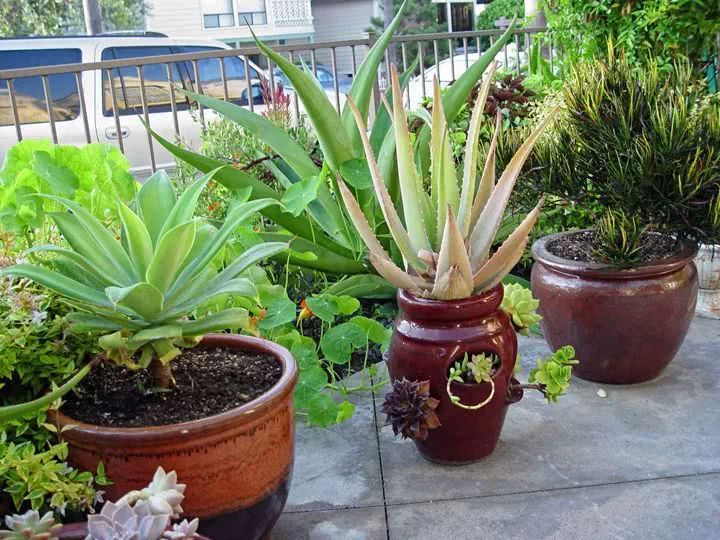
You buy hundreds of pots of succulents in spring, and once summer passes, basically all that is left is a bunch of empty pots. Why is that? In summer, the environment in most places is hot, stuffy and humid, and this is exactly the kind of growing environment succulents fear most. After the temperature exceeds 33°C, you need to shade them, improve ventilation, and control watering, otherwise the plants are prone to sunburn.
The following are the things to pay attention to for succulents in summer
Point one: provide appropriate shade
Although succulents like an environment with plenty of sunlight, once the temperature exceeds 33°C they need appropriate shading. Otherwise, the blazing direct sunlight of summer will scorch the leaves of succulents, and scorched leaves cannot recover; they will permanently keep scars.
In summer, when the temperature is high and the sunlight is intense, you can place succulents in a spot with appropriate shade. In the morning or evening, they can get some light, while at noon and in the afternoon, when the sunlight is strong, they need to be shaded.
Of course, you can also put up a shade net beside your succulents. You can buy shade nets with different shading levels according to how intense the sunlight is; generally a 50-70% shade cover is used.
Point two: care notes for newly bought succulents
If they are newly bought succulents, in summer they should be kept in a shaded place and must not be exposed to the sun at first. After two or three weeks, gradually give them bright, indirect light. However, in places with high temperatures, it is best to avoid buying delicate succulents online, otherwise they are easily damaged by stuffiness during transit, especially during periods of high temperature.
However, in summer you can grow some summer-growing succulents, such as the rosary vine (Ceropegia woodii). That is, succulent varieties that do not go dormant in summer or have a very short dormancy period. Avoid growing succulents that go dormant in summer or succulents that are especially afraid of heat.
It is best not to choose to buy leaf-propagated succulents in summer. Propagating succulents in summer is also not very convenient; even if they survive, it is very hard for them to grow large.
Point three: strengthen ventilation
In summer, succulents are very prone to fungal diseases. Their leaves easily turn to mush, and in serious cases this can cause black rot and other conditions, and it also easily triggers pest problems.
When caring for succulents in summer, be sure to keep the environment ventilated. Do not grow them in a closed, stuffy space. Strengthening ventilation can provide better heat dissipation and also lower the surrounding temperature.
If the environment is not ventilated, succulents easily die. Besides placing them in a well-ventilated spot, you can also put a small fan beside them to artificially strengthen ventilation.
Point four: the key to watering
Many friends find that most of their succulents die in summer, and in many cases the reason is watering too frequently. In summer, succulents need controlled watering. Most succulents slow their growth rate when the temperature is high, and some plants even stop growing.
Avoid watering at noon and in the afternoon when it is hot. If succulents are grown outdoors and it rains, and a lot of water collects in the leaf rosettes, promptly clear away these water droplets at noon and in the afternoon to avoid the plants being scorched.
When the temperature is especially high and the weather is clear, you can choose to water at night. This way you can avoid the plants being scorched by too much water, and the watering frequency should also be controlled a little.
Point five: notes on pest and disease protection
In summer, succulents are prone to pest and disease problems, so regular protection is needed. Besides keeping the environment ventilated and providing appropriate shade, promptly clean up dead leaves and diseased leaves at the base.
Regularly clean up standing water around them and keep the environment clean. Succulents can be given some fungicide regularly. Avoid using old soil for planting; if using old flower pots, they must also be sterilized and disinfected before use.
If you find aphids and scale insects, you can directly wipe them off with a cotton swab dipped in alcohol. Promptly isolate them from other healthy succulents. If you find ants around them, promptly clear them away.