How to grow orchids? Do these 5 routine care tasks well, and the blooms will be beautiful
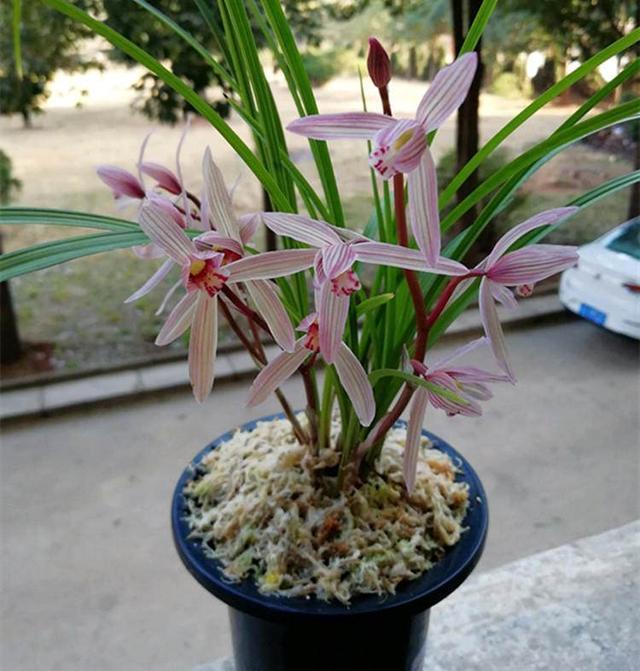
Orchids have a delicate fragrance, elegant flower colors, and a dignified, upright flower posture. Using them to accent a garden or decorate an interior makes them excellent flowering potted plants. Their leaves stay green through all four seasons, with a graceful form that balances strength and softness. More and more flower lovers enjoy growing orchids. However, few can grow orchids well. In fact, to grow orchids, do these 4 "routine tasks" well, and the blooms will be beautiful.
The first "routine task": choose good potting soil
For potting orchids, the soil is best a loose mountain soil rich in humus, black or brown in color (commonly known as orchid soil). Next is to use 70 percent sandy loam mixed with 30 percent humus soil, and fired soil can also be used instead of mountain soil. In short, the soil should be loose and fertile, drain well, have good water permeability and water retention, and be slightly acidic.
The second "routine task": choose a good growing location
The location for growing orchids should be high, open, airy, clean, warm, and humid. If it is a garden site, it is best to spread crushed stone, coal cinders, and the like to reduce weed growth, and the ground can be sprinkled with water frequently to increase air humidity. Orchids should be protected from coal ash, smoke and dust pollution, and from harsh sun, strong wind, and heavy rain.
The third "routine task": master the watering step
The saying "dry orchids, wet chrysanthemums" is because orchid leaves have a small surface area and orchids have fleshy roots, so they should not be watered too much, while chrysanthemums have a large leaf surface area and evaporate more, so they need more water. In early spring, when orchids grow new shoots and new roots, keep them moist. After the Start of Summer in early May, watering should gradually increase, but drainage must be smooth to prevent waterlogging.
The fourth "routine task": fertilize lightly rather than heavily
Orchid fertilizer must be fully fermented and decomposed. From late May to early and mid-July and during September, apply several light applications of special liquid orchid fertilizer. Fertilizers used for growing orchids include soybean cake, rapeseed cake, fishy fertilizer, and so on. After fermentation and decomposition, remove the residue, dilute its liquid with clean water, then spray the leaf surfaces and leaf bases with clean water to prevent the fertilizer water from rotting the leaf crowns.
The fifth "routine task": shade from the sun in time
From the Start of Summer in early May to the Autumn Equinox in late September, prevent direct sunlight and use reed blinds for shading. In the evening, roll up the reed blinds so that they catch dew at night.