How to thicken bonsai branches? These practical tips you need to master
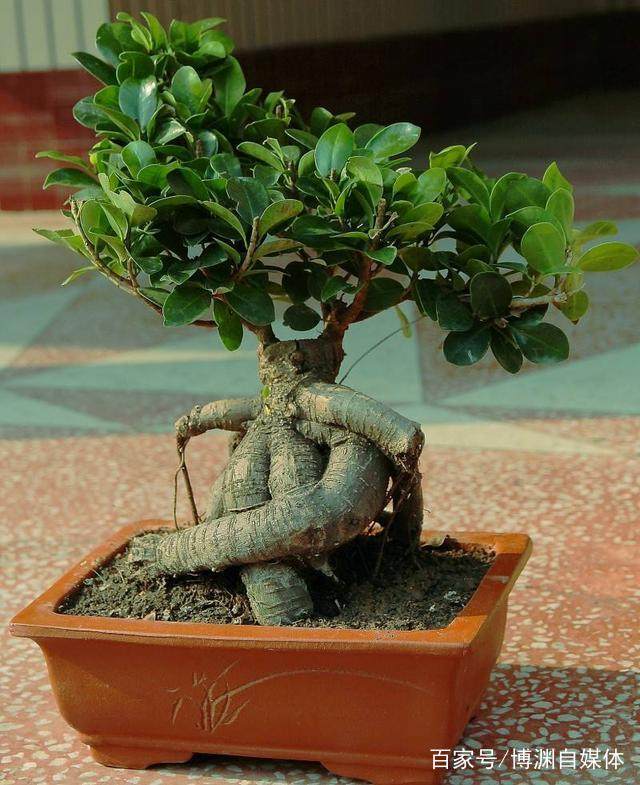
Thickening bonsai branches is a problem many bonsai enthusiasts want to solve. Here, the editor has compiled and summarized a set of methods for rapidly thickening branches by shaking the trunk to loosen the subcutaneous tissue. Compared with other methods, this method has the characteristics of being more convenient, easier, faster in effect, and low in cost. The specific operation is as follows:
I. Operation method.
When you find that a branch trunk at a confirmed retention point is too thin, use the index finger and thumb of your left hand to pinch the base of the branch emergence point to prevent the base from falling off and cracking, and use your right hand to grasp the middle of the branch trunk, then slowly shake the branch trunk in small angles forward, backward, left, and right. The shaking amplitude should go from small to large, shaking the branch trunk until each side angle reaches about 45 degrees. Each angle must be shaken seven to eight times. The purpose is to loosen the local tissue, stimulate the cortex at the shaken area, and promote cell regeneration within the plant. This is because the growth of plant tissues, organs, and even the whole plant is based on cell growth, that is, it is achieved through cell division, increasing cell number, and through cell expansion, increasing volume.
II. Operation timing.
It should be determined during the peak growing season of the plant. Different types of plants require different growing temperatures. For subtropical plants such as Chinese elm, Sageretia thea, Chinese hackberry, and firethorn, the suitable growing temperature is normally 25-35°C. We consider April to September each year in East China to be the peak growing season for tree stumps, and this stage is the best period for operation. During the day, morning or evening is more suitable, and try to avoid operating during the high temperatures at noon.
III. Operation frequency.
For branch trunks that have been loosened by shaking, observe more often how much they have thickened. The interval between each shaking operation should be about 10 days, and repeat the operation once every ten days. When the appropriate thickness is reached, shaking should be stopped immediately, otherwise it will cause excessive size and thickness, resulting in secondary branches having the same thickness as primary branches. After multiple shakings by this method, local branch trunks can all thicken to more than three times their original size within the same year.
IV. Precautions:
① If the branch trunk is too thin and the base diameter is less than 0.3 cm, it is not suitable for operation.
② If newly grown buds have not yet lignified, it is not suitable for operation:
③ When shaking, the movements should be slow, and the local bark must not be allowed to crack.
④ During operation, protect the bud eyes on the branch trunk to prevent future bud deficiency.
⑤ After each shaking, promptly fix the future direction angle of the branch trunk to create favorable conditions for the next styling.
All images are from the internet