Prune jasmine like this with two cuts, and flower buds will all pop out and fill the pot with blooms
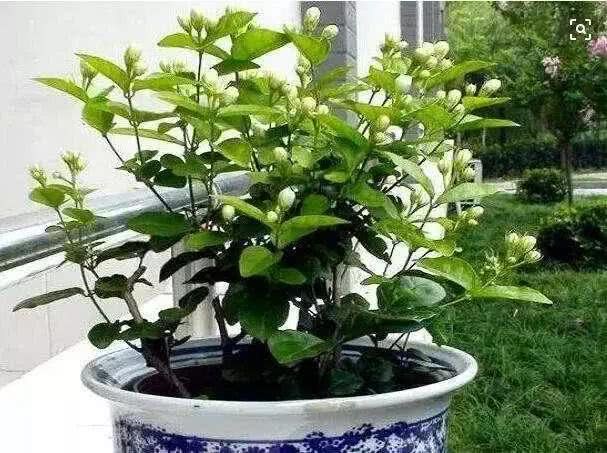
Jasmine needs frequent pruning and fertilizing to sprout more side branches and bloom more, so how should we normally prune jasmine?
This pot of jasmine is blooming, and the leaves at the bottom are gradually drying up and withering. This is because jasmine all have apical dominance, and the branches at the top will grow very vigorously and bloom, with nutrients fully supplied to the top for blooming, while the leaves and branches at the bottom will lack nutrients and wither, turning yellow and dry. Therefore, jasmine must be pruned and pinched back frequently so that its plant shape is beautiful, with many side branches and many flowers
After blooming, promptly prune off the spent flowers, keeping two nodes on the branch, that is, two pairs of leaves, and prune off all the rest. Also prune off all the weak branches, diseased branches, dead branches, and overly dense branches. Jasmine has very strong sprouting ability, and in about a week it can sprout many side buds
If you want the plant shape to be beautiful and symmetrical, when the new shoots have grown to two or three nodes, pinch them back. Pinch back the faster-growing terminal buds, and let the nutrients go to the slower-growing bud points. When the new shoots have all grown to about the same length, you can let them bloom. In this way, the plant shape will be neat and symmetrical, and the flowers will all open from the top, very beautiful
After blooming and pruning, promptly apply a multi-element fertilizer to the jasmine, such as homemade organic fertilizer, cake fertilizer, compound fertilizer, etc., to replenish the nutrients consumed by blooming. After about ten days, apply a phosphorus-potassium fertilizer again to promote flower bud differentiation and more blooming. Then, after blooming, replenish with a multi-element fertilizer again, and repeat this cycle
If you want to repot the jasmine with fresh soil, you can use leaf mold, large-particle river sand, and garden soil mixed together, plus one part pine needles. This kind of soil is loose and breathable, and also slightly acidic, very suitable for jasmine growth. You can also use peat soil, perlite, and vermiculite mixed in a 4:1:1 ratio. Of course, you can also use local materials, as long as it is loose, breathable, fertile, and slightly acidic
During the growing period, jasmine needs a sufficient supply of water and fertilizer, plenty of sunlight, and timely pruning. The jasmine will definitely grow very well and bloom abundantly
If you like growing flowers, please follow the WeChat public account: Balcony Garden Vegetable Garden