What is print disease in ornamental fish?
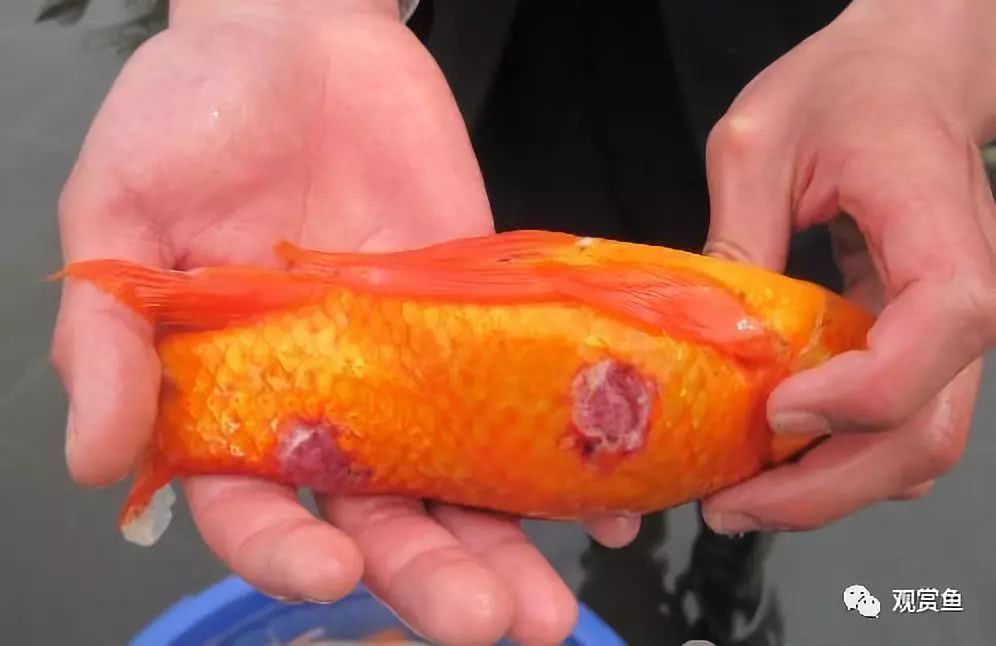
Print disease, also known as "rotten skin disease", is a bacterial infectious disease caused by infection of injured fish bodies by Aeromonas punctata subsp. punctata. Many fish keepers have probably never encountered it. It mainly harms larger goldfish and koi; fish from fry to broodstock can all be infected, and broodstock are especially vulnerable. In many cases, improper handling injures the fish body, leading to infection by the pathogenic bacteria.
This disease can occur in all four seasons, but is more likely to occur in summer and autumn. A water temperature of 28-30°C favors the occurrence and spread of the disease. Fish of all ages can be infected, but it mainly harms adult fish over 1 year old and broodstock. Sporadic outbreaks occur throughout the country. In affected ponds, the infection rate can reach over 80%. Cases of mass mortality are rare, but the disease severely affects the growth, reproduction and commercial value of the fish.
Main symptoms
In affected fish, the lesions mainly occur on the trunk behind the dorsal fin and anal fin, followed by the sides of the belly or near both sides of the anus, and in a few cases on the front part of the fish body. In the early stage, the skin and muscle at the affected area become inflamed, then begin to rot, and the scales in the middle part fall off; the boundary between the lesion and the surrounding tissue is distinct. The rotting epidermis disintegrates and falls off, exposing the dermis and producing red patches. The affected area is irregularly round, oval or elliptical, with congested edges, as if a red seal had been stamped on the fish's skin, hence the common name "print disease". As the disease progresses further, both the diameter and depth of the lesion gradually expand, forming a pot-bottom-shaped small hole. In severe cases, the muscle rots through, exposing bones and internal organs, and the diseased fish dies quickly. Diseased fish have reduced appetite, swim slowly and become emaciated; in severe cases the eyeballs sink, and the fish eventually dies of exhaustion.
Key points for diagnosis
A preliminary diagnosis can be made based on the epidemiological characteristics of this disease and the special symptoms that appear at specific sites on diseased fish.
Preventive measures
Strengthen feeding management and do not let the fish body be injured.
Feed reasonably and provide the fish with sufficient feed to enhance their disease resistance.
Keep the water clean and fresh, frequently add new water, and regularly splash the whole tank with bleaching powder at 1 gram per cubic meter of water to disinfect the water.
Treatment measures
Wipe the wounds of diseased fish with hydrogen peroxide to remove rotting tissue, then wipe the affected areas with potassium permanganate solution, generally 1 gram of potassium permanganate per 500 grams of water; at the same time, bathe the diseased fish in a solution of erythromycin at 2.0-2.5 grams per cubic meter of water for 10-20 minutes, once a day for 3-5 consecutive days, until the condition improves. Each ornamental fish may also be injected with 100,000 international units of penicillin or tetracycline hydrochloride. Improve feeding management, give diseased fish more nutrition and enhance their resistance.
Notes on diagnosis and treatment
When using antibacterial drugs to treat this disease, drugs to which the pathogen is sensitive should be selected. However, considering differences in drug resistance among local strains of the pathogen, if conditions permit it is best to choose drugs after performing a drug sensitivity test on the isolated pathogenic strain, to ensure treatment effectiveness. In addition, the drugs and disinfectants chosen should be low in irritation and corrosiveness, to avoid causing secondary damage to the fish's wounds.
I hope the above content can help everyone. Thank you. If there are any shortcomings, I hope you will all offer your guidance.