This red-skinned, red-fleshed fruit was called the "fruit of the liver" by the ancients; it would be a shame to miss it in May
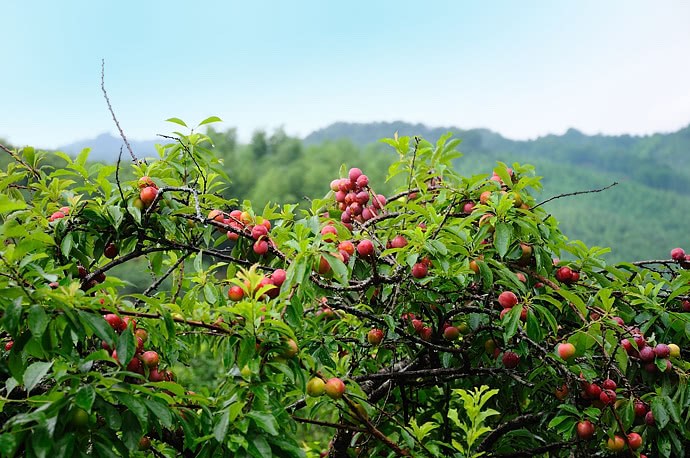
May is almost over, and all kinds of seasonal fruits are coming onto the market one after another. You must have eaten quite a few fruits by now. Peaches, plums, cherries, apricots and other fruits are not only early to market, but eating them in moderation is very good for your health. Today let's talk about a fruit that has been praised since ancient times as the "fruit of the liver." It is blood-red inside and out, with red skin and red flesh, is highly nutritious, and is good for the liver. Right now is its season, so how many people have tried it?
This fruit is called "Sanhua plum." It is a specialty of Sanhua Town in Guangdong, China, and was selected as a national geographical indication product in 2010. It is a very precious plum variety. The biggest characteristic of the Sanhua plum is its red skin and red flesh; when cut open, it is purplish-red, and the flesh has a honey flavor. It is crisp and delicious to eat, and a single fruit weighs more than 40 grams. The skin of the Sanhua plum has a layer of white bloom, which is its fruit powder, and it can be eaten together with the skin. In addition, its flesh is thick, with a large edible portion and a small pit. It can not only be eaten fresh, but also processed into preserved fruit, and its quality is among the finest of plums.
The Sanhua plum is praised as the "fruit of the liver." Sun Simiao, the famous "King of Medicine" of the Tang Dynasty, described it in Qianjin Shizhi as follows: "It is suitable to eat for liver disease," considering it an excellent fruit for nourishing the liver. According to modern medical analysis, Sanhua plums are rich in vitamin B12, which can promote the regeneration of hemoglobin and has the effect of nourishing liver blood and beautifying the face. In traditional Chinese medicine in China, plums are generally considered sweet and sour in nature, with the effects of clearing the liver and dispelling heat, helping to promote body fluids, and benefiting urination. To nourish and protect the liver, one can eat a few plums a day.
Sanhua plums come onto the market starting in May. Compared with other plums, their taste is sweet and delicious, with almost no sourness, so they are extremely popular in the market. In May, early-ripening Sanhua plums can sell for 35 yuan per jin, far exceeding other fruits. By the time Sanhua plums are abundantly on the market, the price is around 18 yuan per jin. Authentic Sanhua plums have a wholesale price of around 10 yuan per jin, making them a fruit that has enriched local farmers.
Dear readers, have you ever eaten this red-skinned, red-fleshed fruit? If you see this fruit in May, don't miss it, or it would be a great shame.