The European primrose is the flower of Saint Juliana
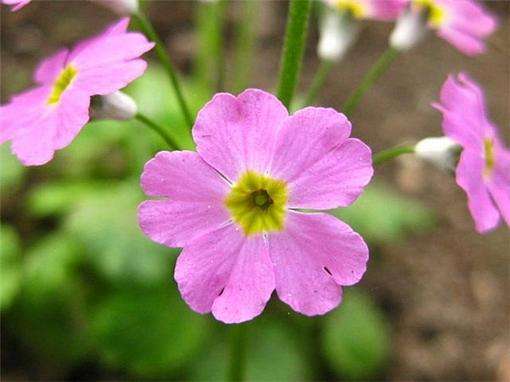
February 16 birthday flower European primrose, native to Europe and North Africa, it is a small wild primrose, and it also grows in northern England, the mountains of Scotland and other places.
Plant form:
Perennial herbaceous plant with rhizomes, the rhizome is brown, leaves basal, elliptical or nearly round. The corolla is salver-shaped, larger than that of the primrose, blooming successively from spring to autumn, with a very long flowering period (January--May), capsule, seeds tiny, dark brown. There are two major types: tall-flowered and short-flowered. The optimum growth temperature is 13--18°C, and sandy loam soil rich in humus is most suitable.
European primrose
Flower language: sage
The English name of the European primrose is "bird's-eye primrose." Because the yellow center of the flower looks just like a bird's eye, and in the myths of many places, the bird's eye serves as the proxy eye of the gods, indicating that nothing can escape its observation, hence its flower language is "sage." People born under the blessing of this flower possess keen observation and insight. Whether choosing a job or a lover, if they can make use of this talent, their life will undoubtedly be a success.
European primrose
A fourth-century Italian virgin martyr, the flower of Saint Juliana
Since ancient times, Christianity has had the custom of linking saints with specific flowers. This arose because when the church commemorates saints, it often decorates the altar with blooming flowers! In the medieval Catholic monasteries, various flowers were even cultivated like in a gardening center. Over time, the church paired the 366 saints of the year with different flowers, forming the so-called flower calendar. At that time, most monasteries were located in Southern Europe, and Southern Europe has a Mediterranean climate, extremely suitable for growing flowers and plants. The European primrose was chosen as the flower to commemorate the early fourth-century Italian virgin martyr--Saint Juliana. Its origin is Europe and North Africa, it is a small wild primrose, and it also grows in northern England, the mountains of Scotland and other places.
European primrose