After watering the rose with soy sauce, it grew like crazy, with blooms bigger than a face, leaving gardening friends delighted
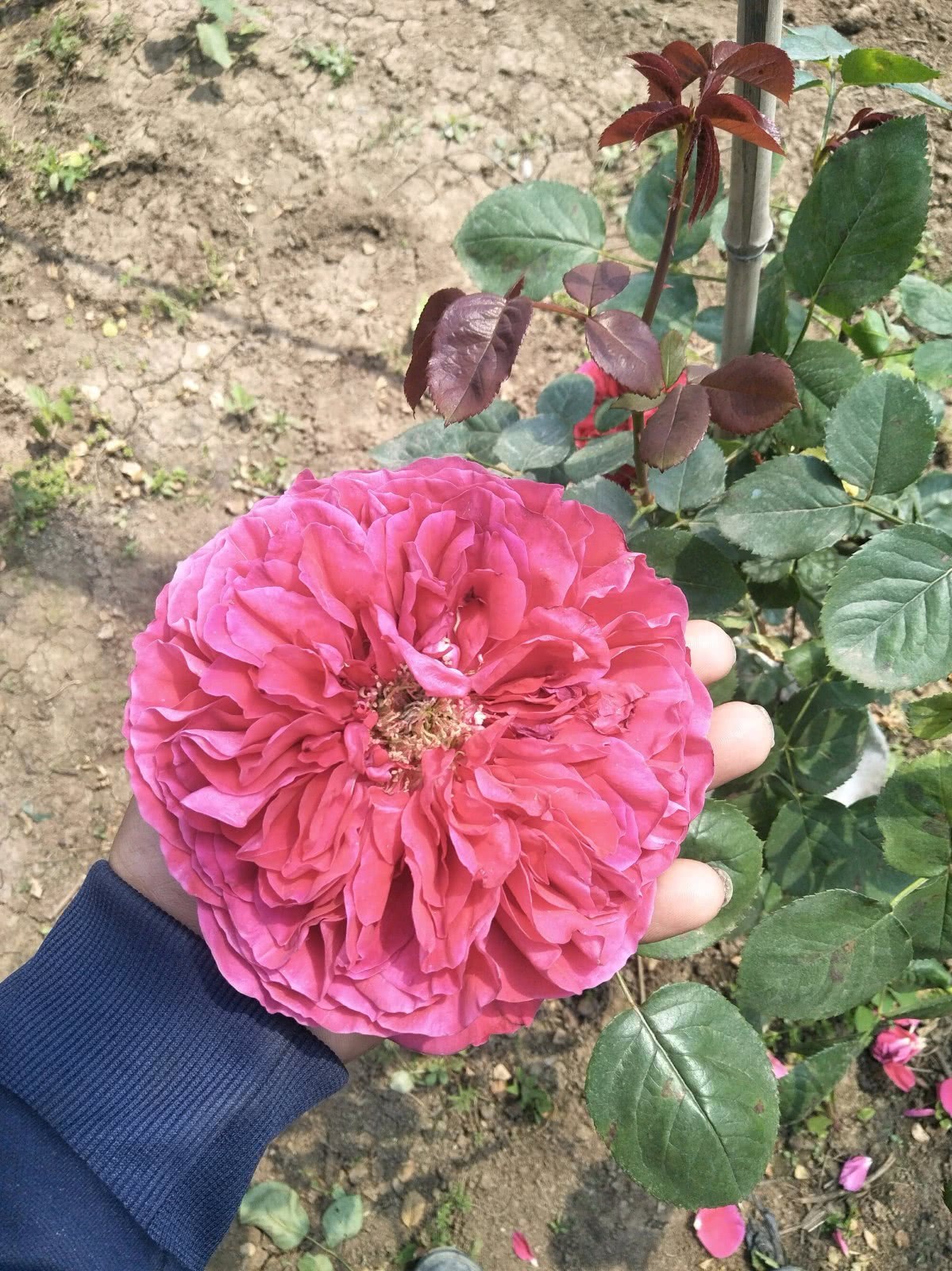
Yesterday a gardening friend invited us over to his place, saying he had something good to share with us, so a bunch of us happily rushed over. As soon as we got to his door, we were drawn to the red dragon rose in front of his house, each bloom bright red, blooming bigger than a face. This guy used to grow roses that were tiny little things, so how did he suddenly become such a master?
I may be a girl who has seen countless flowers, but this was the first time I had seen a red dragon rose blooming so large, bigger than my own face, so I quickly asked my friend for his care tips, and now I am typing them up to share with everyone.
1. Fertilizing. Roses love fertilizer, and potted roses need frequent feeding. During the growing season, water with a dilute fertilizer solution once every 10 days. Fertilizer is not something to choose carelessly; using the wrong fertilizer can easily harm the seedlings. What he chose was an organic nutrient solution specially made for roses, made from sugarcane molasses. It looks dark and murky, just like soy sauce, but it smells faintly sweet, with not the slightest pungent odor. It is an organic nutrient solution formulated for roses that can promote blooming.
Tips for fertilizing roses: add liquid fertilizer solution once every half month, which can keep the leaves thick, deep green and glossy; during the flowering period, be careful not to fertilize, and after the flowers fade in June, you can apply liquid fertilizer once more. When fertilizing, it is better to keep the concentration dilute rather than strong, so as not to damage the root system.
2. Water control. Summer temperatures are high and water evaporates quickly. In the southern regions where temperatures are relatively high, water generally 2-3 times a week. In the northern regions, the watering interval can be a bit longer, about 2 times a week. If the temperature exceeds 25 degrees, you can mist the leaves to increase humidity.
3. Sunlight. Roses love sunlight. Those grown outdoors generally grow better, while potted ones on balconies need to get plenty of sunlight. With ample sunlight, the plant's photosynthesis is strong, and its own disease resistance will be much better too.
4. Pruning. During the growth process, be sure to prune side branches and blind branches in time to avoid wasting nutrients. At the bud stage, you should remove buds and axillary buds, leaving only one flower per branch, and it will be ever so big.