The Tale of Growing Peach Eggs: A Few-Yuan Peach Egg Raised by Mom into a Quail Egg
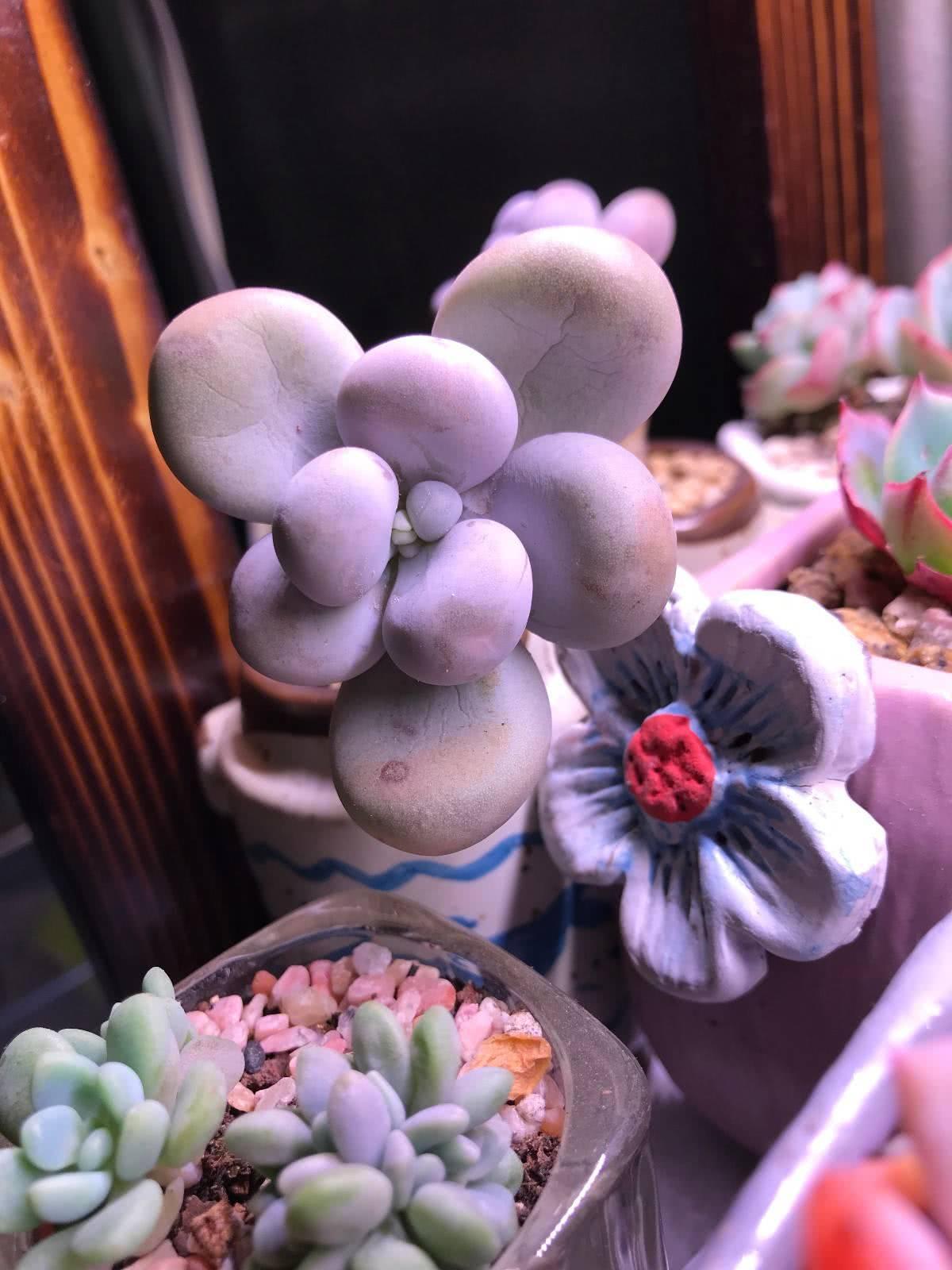
May is already drawing to a close, and temperatures in many regions have exceeded 30 degrees. Before going on my business trip, I was still worried about my Peach Eggs, with all kinds of rot from overwatering and black stem rot appearing in my mind countless times. Even though I only bought them for a few yuan, they have still accompanied me for several months, and I feel endless reluctance to part with these succulents.
Before the trip, I reminded my mom over and over again to take good care of my succulents. Although my mom has decades of experience growing flowers, she is still a primary school student when it comes to growing succulents. After returning from a one-month business trip, I was stunned. My Peach Eggs had turned into quail eggs, each one round and plump. Haha, with her daughter away from home, my mom raised the Peach Eggs like her own dear daughter. She really is a true mom. What matters need attention when growing succulents in summer?
1. Light. Although succulents love sunlight, the summer sun is very harsh, so never expose them to blazing sun; just a bit of sun in the morning and evening is enough. It is best if they can be grown outdoors. If they cannot be grown outdoors, it is best to place them on a windowsill or balcony. At noon, when the temperature is above 35 degrees, be sure to use a shade net for shading, but remember to keep them ventilated, otherwise the succulents can easily be stifled and ruined.
2. Watering. The principle for watering succulents is "water when dry, and water thoroughly when you do." During the high heat of midsummer, many succulents enter a dormant state. If you water frequently, it is easy to make the potting soil too wet, causing the stems and leaves to grow leggy, and it can also cause the basal leaves to turn yellow and rot, and in severe cases even the whole plant to die. When watering, use a small-spouted watering can specially for succulents and pour a circle along the inner wall of the pot. Be careful not to let water splash onto the leaves.
3. Fertilizing. If you want succulents to grow plump and chubby, fertilizing is essential, but choosing what fertilizer to use in summer is very important, otherwise with one careless move you may fertilize the succulents to death. For fertilizer, you can choose an organic nutrient solution specially for succulents, dilute it a bit more lightly, and apply it together with water. Fertilizing in summer is aimed at summer-growing succulents. If a succulent variety has already entered dormancy, be sure not to fertilize it.
4. The last point is that if the temperature is really too high, reaching above 40 degrees, you can put the succulents in an air-conditioned room or splash water around the succulents, which helps evaporation carry heat away from them. Succulent lovers can insert a plant and flower detector into the succulent's potting soil to monitor the plant's temperature, water, and fertilizer conditions in real time 24 hours a day, telling you when the plant needs watering, fertilizing, or cooling down, making it easier to get through the summer.